Peri-implantitis and Severity Level
- PMID: 32168529
- PMCID: PMC7069736
- DOI: 10.1055/s-0040-1701162
Peri-implantitis and Severity Level
Abstract
Objectives: Different diagnostic criteria were used for diagnosis of peri-implant diseases. The aim of this cross-sectional study was to explore prevalence of peri-implant diseases and subclassify peri-implantitis based on different levels of radiographic and clinical findings.
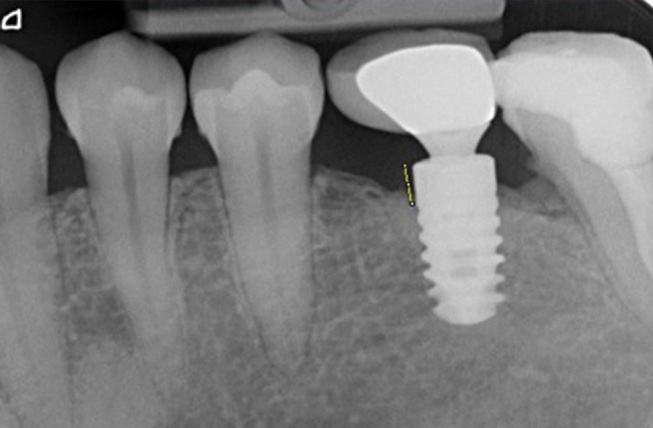
Materials and methods: Two hundred patients having 655 dental implants were included in this study. In addition to clinical measurements, standard long-cone parallel technique was used to evaluate marginal bone level around implants. Following diagnosis of peri-implant diseases, peri-implantitis was further subclassified using a severity leveling in terms of marginal bone level and probing depth.
Results: Mean age of 200 subjects was 52.8 ± 12.2 years and 63% were females. In total, bleeding on probing was present in 93% and suppuration in 27% of implants. On subject basis, 2.5% were diagnosed as healthy, 28% with peri-implant mucositis (PM), and 69.5% with peri-implantitis, whereas on implant basis, 3.6% were healthy, 36% presented PM, and 60.4% peri-implantitis. Furthermore, when severity leveling was applied, peri-implantitis prevalence changed markedly and ranged from 14.5 to 31.0% at the subject level and from 10.0 to 22.0% at the implant level. Subgingival restoration margins were observed in 70.6% of patients for implants with PM and in 44% patients for implants with peri-implantitis. Most of the implants with peri-implantitis were with platform match (71.5%).
Conclusions: Applying different thresholds to the peri-implantitis definition yielded different prevalence rates ranging from 10 to 31%. As no established diagnostic criteria are being used today, results from clinical studies may not reflect the true disease prevalence.
Conflict of interest statement
None declared.
References
-
- Albrektsson T, Isidor F. London: Quintessence Publishing; 1994. Consensus report of session IV; pp. 365–369.
-
- Zitzmann N U, Berglundh T, Marinello C P, Lindhe J. Experimental peri-implant mucositis in man. J Clin Periodontol. 2001;28(06):517–523. - PubMed
-
- Berglundh T, Gislason O, Lekholm U, Sennerby L, Lindhe J. Histopathological observations of human periimplantitis lesions. J Clin Periodontol. 2004;31(05):341–347. - PubMed
-
- van Winkelhoff A J, Goené R J, Benschop C, Folmer T. Early colonization of dental implants by putative periodontal pathogens in partially edentulous patients. Clin Oral Implants Res. 2000;11(06):511–520. - PubMed
-
- Renvert S, Roos-Jansåker A M, Claffey N. Non-surgical treatment of peri-implant mucositis and peri-implantitis: a literature review. J Clin Periodontol. 2008;35 08:305–315. - PubMed
LinkOut - more resources
Full Text Sources