


Citrus Essential Oils (CEOs) and Their Applications in Food: An Overview
- PMID: 32168877
- PMCID: PMC7154898
- DOI: 10.3390/plants9030357
Citrus Essential Oils (CEOs) and Their Applications in Food: An Overview
Abstract
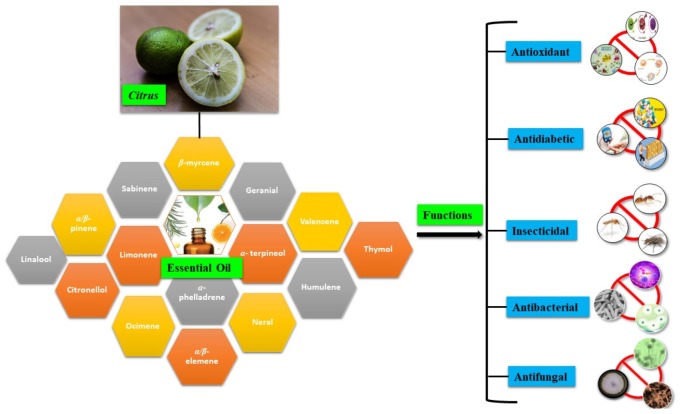
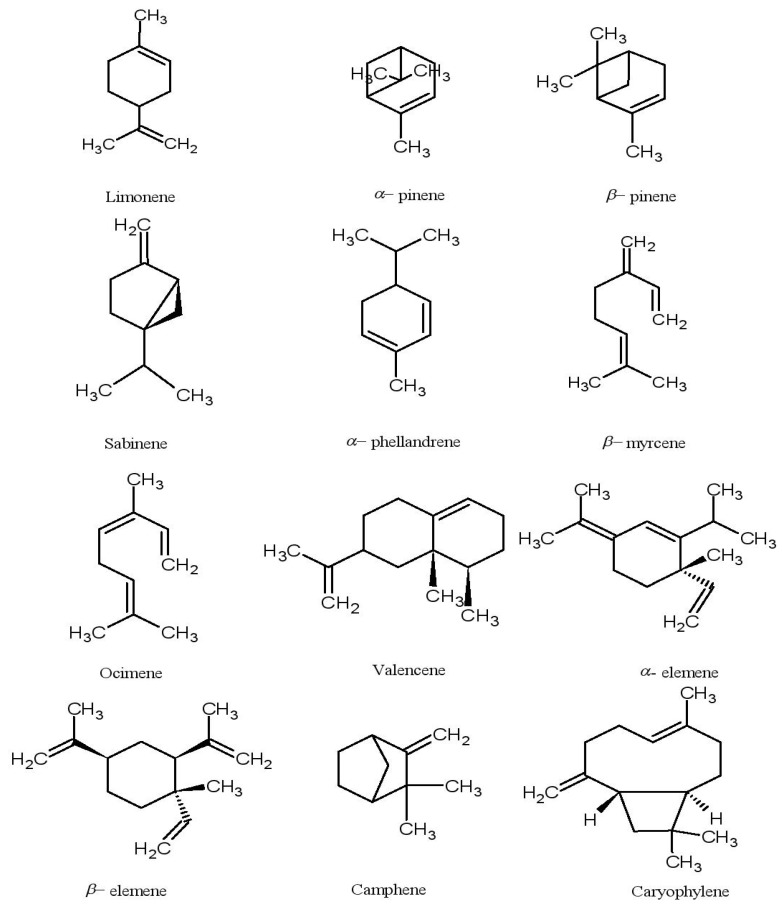
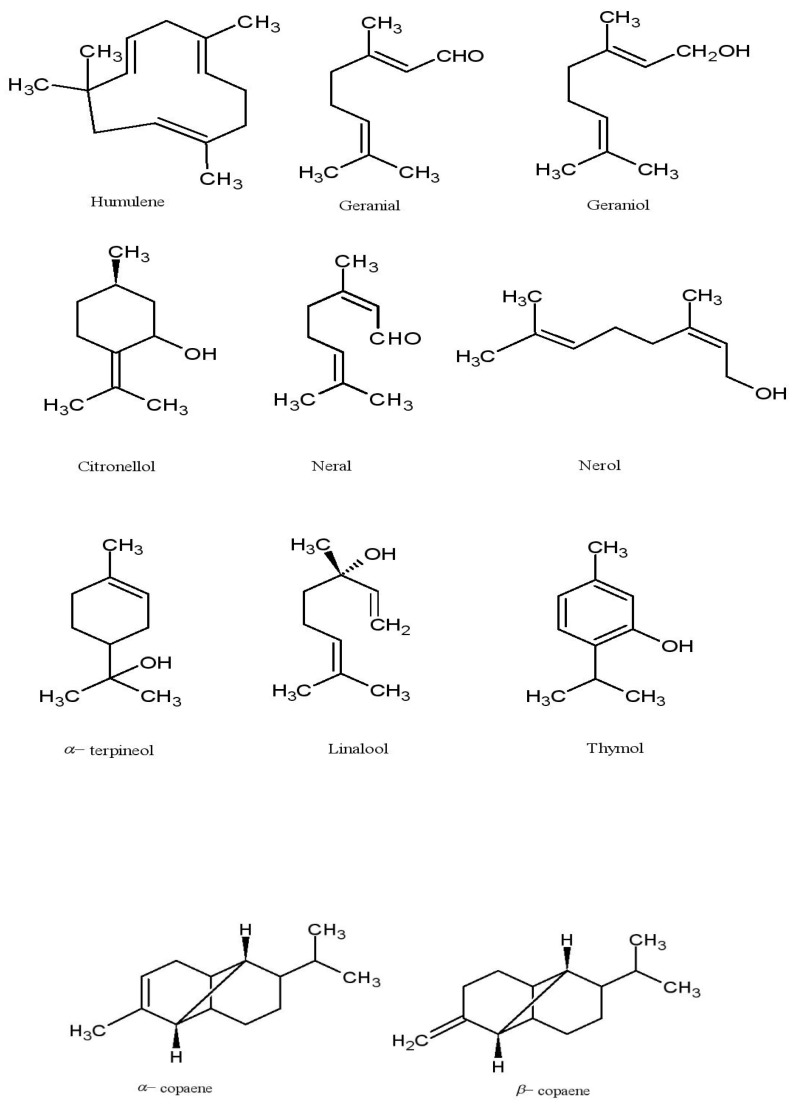
Citrus is a genus belonging to the Rutaceae family and includes important crops like orange, lemons, pummelos, grapefruits, limes, etc. Citrus essential oils (CEOs) consist of some major biologically active compounds like α-/β-pinene, sabinene, β-myrcene, d-limonene, linalool, α-humulene, and α-terpineol belonging to the monoterpenes, monoterpene aldehyde/alcohol, and sesquiterpenes group, respectively. These compounds possess several health beneficial properties like antioxidant, anti-inflammatory, anticancer, etc., in addition to antimicrobial properties, which have immense potential for food applications. Therefore, this review focused on the extraction, purification, and detection methods of CEOs along with their applications for food safety, packaging, and preservation. Further, the concerns of optimum dose and safe limits, their interaction effects with various food matrices and packaging materials, and possible allergic reactions associated with the use of CEOs in food applications were briefly discussed, which needs to be addressed in future research along with efficient, affordable, and "green" extraction methods to ensure CEOs as an ecofriendly, cost-effective, and natural alternative to synthetic chemical preservatives.
Keywords: Citrus essential oils (CEOs); antimicrobial; food packaging and preservation; microencapsulation.
Conflict of interest statement
There is no conflict of interest among the authors.
Figures
References
-
- Anwar F., Naseer R., Bhanger M.I., Ashraf S., Talpur F.N., Aladedunye F.A. Physico-chemical characteristics of citrus seeds and seed oils from Pakistan. J. Am. Oil Chem. Soc. 2008;85:321–330. doi: 10.1007/s11746-008-1204-3. - DOI
-
- Schimmenti E., Borsellino V., Galati A. Growth of citrus production among the Euro-Mediterranean countries: Political implications and empirical findings. Span. J. Agric. Res. 2013;3:561–577. doi: 10.5424/sjar/2013113-3422. - DOI
Publication types
LinkOut - more resources
Full Text Sources
