


Brain Functional Connectivity Correlates of Response in the 7.5% CO2 Inhalational Model of Generalized Anxiety Disorder: A Pilot Study
- PMID: 32170303
- PMCID: PMC7177158
- DOI: 10.1093/ijnp/pyaa019
Brain Functional Connectivity Correlates of Response in the 7.5% CO2 Inhalational Model of Generalized Anxiety Disorder: A Pilot Study
Abstract
Background: The 7.5% CO2 inhalational model can be used to explore potential treatments for generalized anxiety disorder. However, it is unknown how inter-individual variability in the functional architecture of negative affective valence systems might relate to anxiogenic response in this model.
Methods: A total of 13 healthy volunteers underwent functional magnetic resonance imaging during a passive emotional face perception task. We explored task-evoked functional connectivity in the potential threat system through generalized psychophysiological interaction analysis. Within 7 days, these participants underwent prolonged 7.5% CO2 inhalation, and results from the generalized psychophysiological interaction analysis were correlated with CO2 outcome measures.
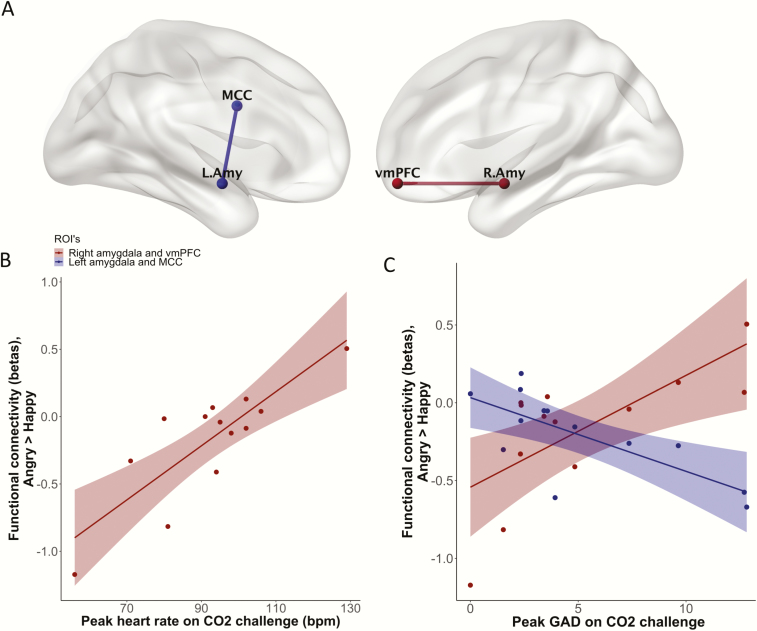
Results: Functional connectivity between ventromedial prefrontal cortex and right amygdala positively correlated with heart rate and subjective anxiety, while connectivity between midcingulate cortex and left amygdala negatively correlated with anxiety during CO2 challenge.
Conclusions: Response to CO2 challenge correlated with task-evoked functional connectivity in the potential threat system. Further studies should assess whether this translates into clinical populations.
Keywords: Anxiety; CO2 challenge; experimental medicine; fMRI; functional connectivity.
© The Author(s) 2020. Published by Oxford University Press on behalf of CINP.
Figures
References
-
- Bailey JE, Kendrick A, Diaper A, Potokar JP, Nutt DJ (2007) A validation of the 7.5% CO2 model of GAD using paroxetine and lorazepam in healthy volunteers. J Psychopharmacol 21:42–49. - PubMed
-
- Damasio AR, Tranel D, Damasio H (1990) Individuals with sociopathic behavior caused by frontal damage fail to respond autonomically to social stimuli. Behav Brain Res 41:81–94. - PubMed
