


Movement pattern biofeedback training after total knee arthroplasty: Randomized clinical trial protocol
- PMID: 32171937
- PMCID: PMC7263966
- DOI: 10.1016/j.cct.2020.105973
Movement pattern biofeedback training after total knee arthroplasty: Randomized clinical trial protocol
Abstract
Introduction: Total knee arthroplasty (TKA) reduces joint symptoms, but habitual movement compensations persist years after surgery. Preliminary research on movement training interventions have signaled initial efficacy for remediating movement compensations and restoring knee joint loading symmetry during dynamic functional tasks after TKA. The purpose of this clinical trial is to determine if physical rehabilitation that includes movement training restores healthy movement patterns after TKA and reduces the risk of osteoarthritis (OA) progression in the contralateral knee.
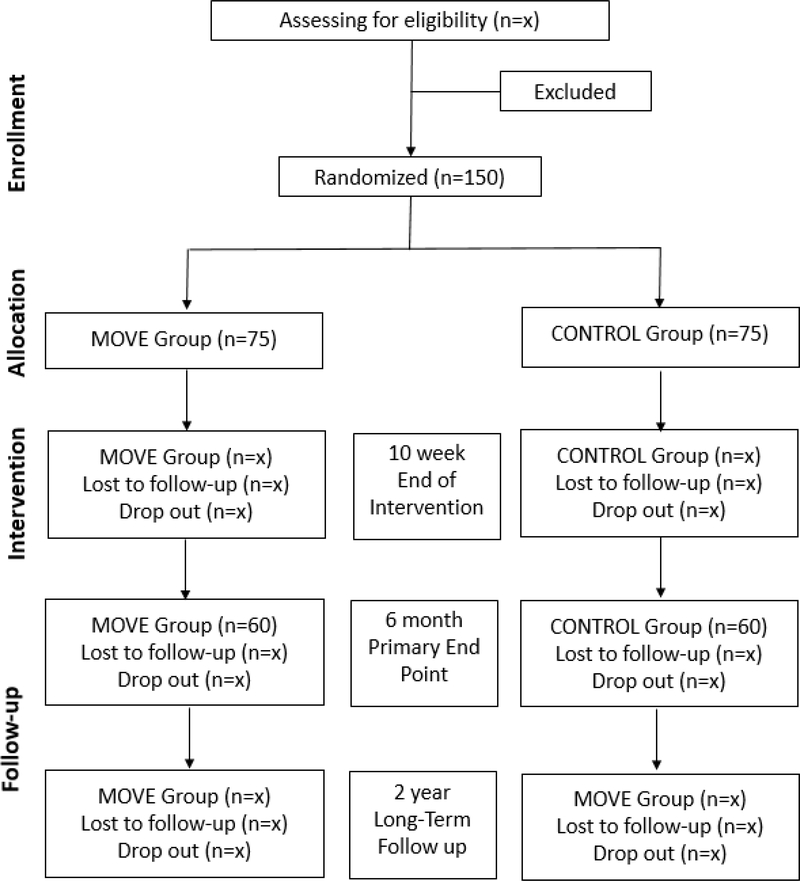
Methods/design: 150 participants will be enrolled into this randomized controlled trial. Participants will be randomly allocated to one of two dose-equivalent treatment groups: standard rehabilitation plus movement training (MOVE) or standard rehabilitation without movement training (CONTROL). Movement training will promote between-limb symmetry and surgical knee loading during activity-based exercises. Movement training strategies will include real-time biofeedback using in-shoe pressure sensors and verbal, visual, and tactile cues from the physical therapist. The primary outcome will be change in peak knee extension moment in the surgical knee during walking, from before surgery to six months after surgery. Secondary outcomes will include lower extremity movement symmetry during functional tasks, physical function, quadriceps strength, range of motion, satisfaction, adherence, contralateral knee OA progression, and incidence of contralateral TKA.
Discussion: This study will provide insights into the efficacy of movement training after unilateral TKA, along with mechanisms for optimizing long-term physical function and minimizing negative sequelae of compensatory movement patterns.
Keywords: Biofeedback; Joint replacement; Osteoarthritis; Physical therapy; Rehabilitation.
Published by Elsevier Inc.
References
-
- Most Frequent Operating Room Procedures Performed in U.S. Hospitals, 2003–2012 2012. https://www.hcup-us.ahrq.gov/reports/statbriefs/sb186-Operating-Room-Pro....
-
- Kurtz S, Projections of Primary and Revision Hip and Knee Arthroplasty in the United States from 2005 to 2030, The Journal of Bone and Joint Surgery (American) 89(4) (2007) 780. - PubMed
-
- Farquhar SJ, Reisman DS, Snyder-Mackler L, Persistence of Altered Movement Patterns During a Sit-to-Stand Task 1 Year Following Unilateral Total Knee Arthroplasty, Phys. Ther. 88(5) (2008) 567–579. - PubMed
