


The developing immune network in human prenatal skin
- PMID: 32173857
- PMCID: PMC7218404
- DOI: 10.1111/imm.13192
The developing immune network in human prenatal skin
Abstract
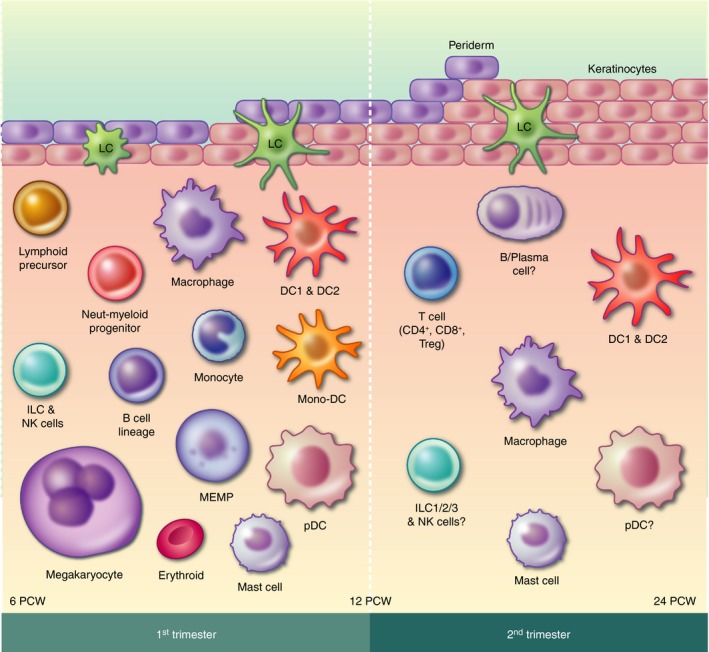
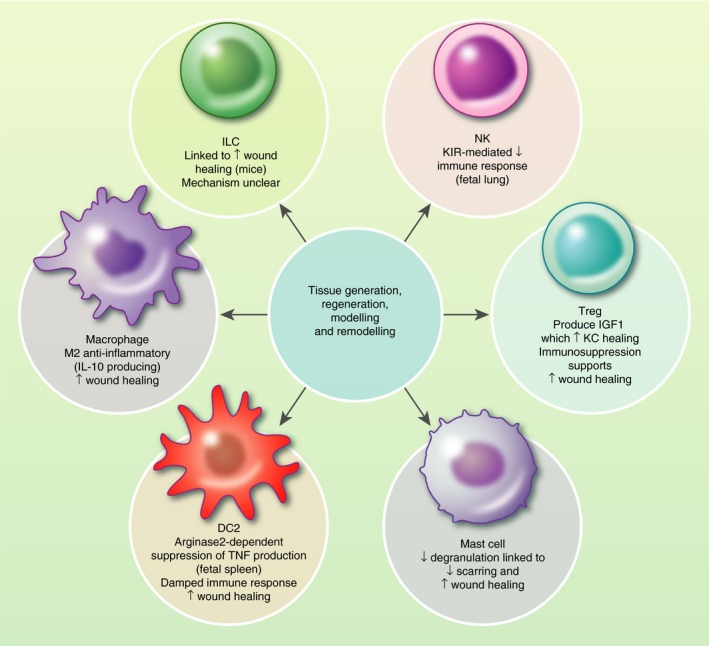
Establishment of a well-functioning immune network in skin is crucial for its barrier function. This begins in utero alongside the structural differentiation and maturation of skin, and continues to expand and diversify across the human lifespan. The microenvironment of the developing human skin supports immune cell differentiation and has an overall anti-inflammatory profile. Immunologically inert and skewed immune populations found in developing human skin promote wound healing, and as such may play a crucial role in the structural changes occurring during skin development.
Keywords: haematopoiesis; immune homeostasis; regulation/suppression; skin.
© 2020 The Authors. Immunology published by John Wiley & Sons Ltd.
Conflict of interest statement
None to declare.
Figures
References
-
- Holbrook KA, Odland GF. The fine structure of developing human epidermis: light, scanning, and transmission electron microscopy of the periderm. J Invest Dermatol 1975; 65:16–38. - PubMed
-
- Ersch J, Stallmach T. Assessing gestational age from histology of fetal skin: an autopsy study of 379 fetuses. Obstet Gynecol 1999; 94(Part 1):753–7. - PubMed
-
- Carlson BM. Human Embryology and Developmental Biology, 5th edn Philadelphia, PA: Elsevier Saunders, 2014.
-
- Sadler TW. Langman’s Medical Embryology, 13th edn Philadelphia, PA: Wolters Kluwer Health, 2015.
Publication types
MeSH terms
Grants and funding
LinkOut - more resources
Full Text Sources
