


Sleep across early childhood: implications for internalizing and externalizing problems, socioemotional skills, and cognitive and academic abilities in preschool
- PMID: 32173864
- PMCID: PMC7812691
- DOI: 10.1111/jcpp.13225
Sleep across early childhood: implications for internalizing and externalizing problems, socioemotional skills, and cognitive and academic abilities in preschool
Abstract
Background: Sleep is thought to be important for behavioral and cognitive development. However, much of the prior research on sleep's role in behavioral/cognitive development has relied upon self-report measures and cross-sectional designs.
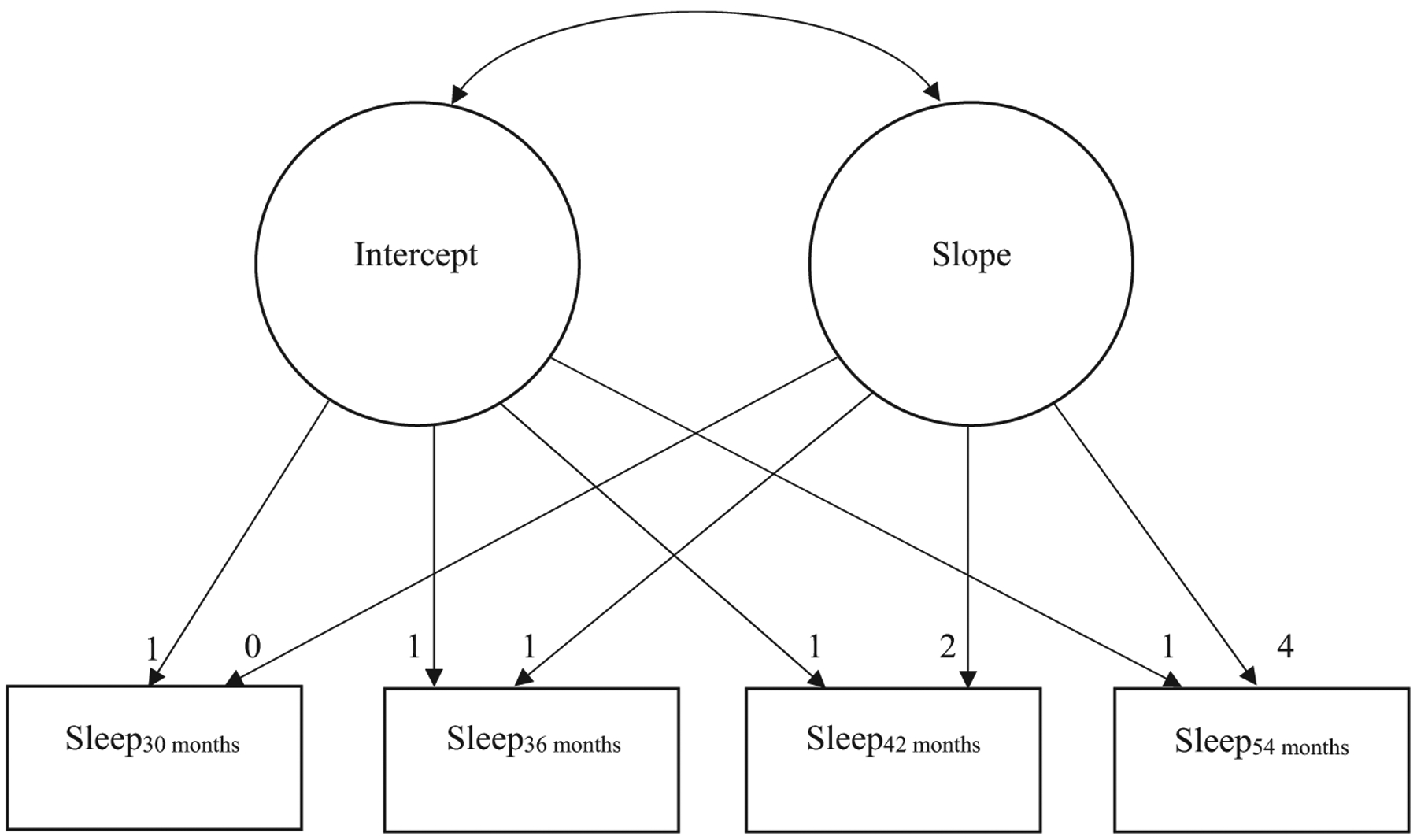
Methods: The current study examined how early childhood sleep, measured actigraphically, was developmentally associated with child functioning at 54 months. Emphasis was on functioning at preschool, a crucial setting for the emergence of psychopathology. Participants included 119 children assessed longitudinally at 30, 36, 42, and 54 months. We examined correlations between child sleep and adjustment across three domains: behavioral adjustment (i.e., internalizing and externalizing problems), socioemotional skills, and academic/cognitive abilities. We further probed consistent associations with growth curve modeling.
Results: Internalizing problems were associated with sleep variability, and cognitive and academic abilities were associated with sleep timing. Growth curve analysis suggested that children with more variable sleep at 30 months had higher teacher-reported internalizing problems in preschool and that children with later sleep timing at 30 months had poorer cognitive and academic skills at 54 months. However, changes in sleep from 30 to 54 months were not associated with any of the domains of adjustment.
Conclusions: Findings indicate that objectively measured sleep variability and late sleep timing in toddlerhood are associated with higher levels of internalizing problems and poorer academic/cognitive abilities in preschool.
Keywords: Sleep; adjustment problems.
© 2020 Association for Child and Adolescent Mental Health.
Conflict of interest statement
Conflict of interest statement: No conflicts declared.
Figures
References
-
- Achenbach TM, & Rescorla L (2000). ASEBA preschool forms & profiles: An integrated system of multi-informant assessment. Burlington, VT: Aseba.
-
- Astill RG, Van der Heijden KB, Van IJzendoorn MH, & Van Someren EJW (2012). Sleep, cognition, and behavioral problems in school-age children: A century of research meta-analyzed. Psychological Bulletin, 138, 1109–1138. - PubMed
-
- Bates JE, Viken RJ, Alexander DB, Beyers J, & Stockton L (2002). Sleep and adjustment in preschool children: Sleep diary reports by mothers relate to behavior reports by teachers. Child Development, 73, 62–75. - PubMed
-
- Bernier A, Beauchamp MH, Bouvette Turcot AA, Carlson SM, & Carrier J (2013). Sleep and cognition in preschool years: Specific links to executive functioning. Child Development, 84, 1542–1553. - PubMed
