


Characterizing Alcohol-Related Neurodevelopmental Disorder: Prenatal Alcohol Exposure and the Spectrum of Outcomes
- PMID: 32173870
- PMCID: PMC9183179
- DOI: 10.1111/acer.14325
Characterizing Alcohol-Related Neurodevelopmental Disorder: Prenatal Alcohol Exposure and the Spectrum of Outcomes
Abstract
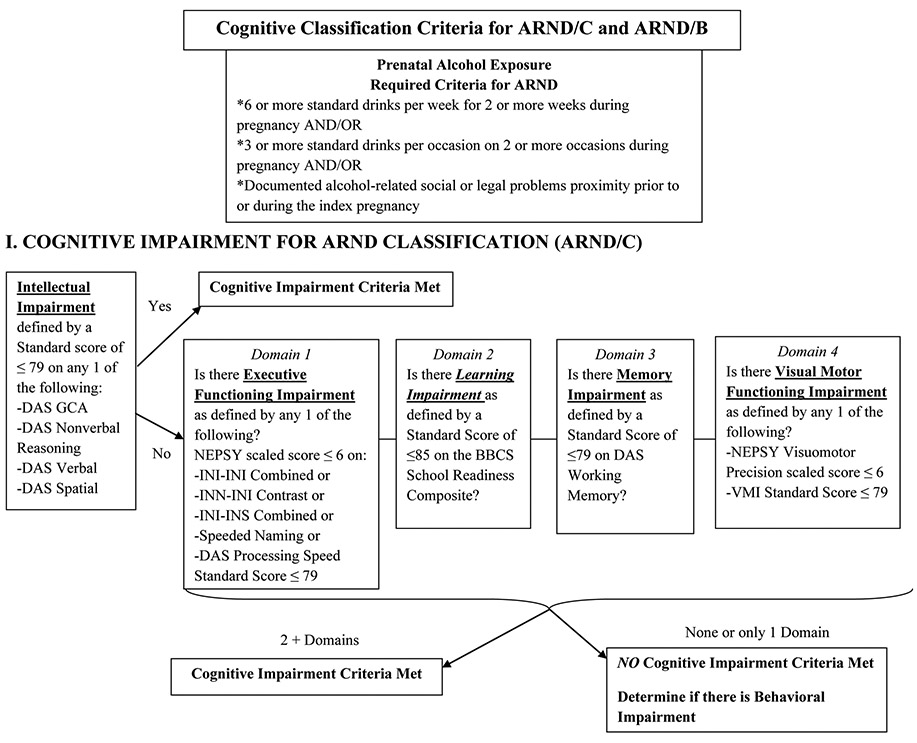
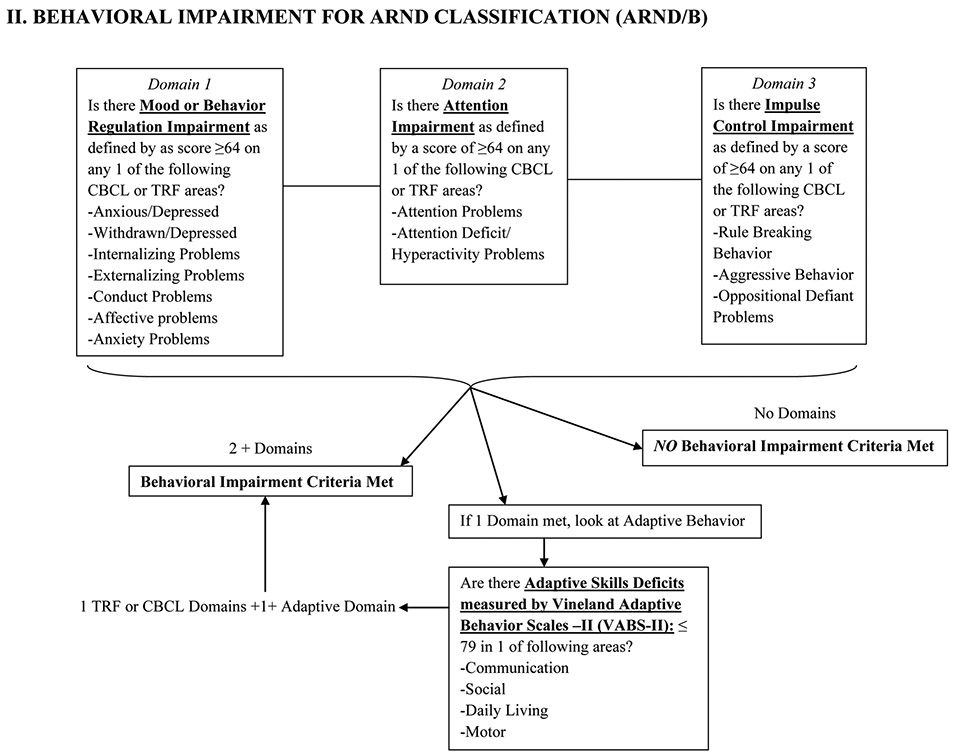
Background: The effects of prenatal alcohol exposure (PAE) are conceptualized as fetal alcohol spectrum disorder, with fetal alcohol syndrome (FAS) as the most severe. Many find it more difficult to characterize behavioral and cognitive effects of exposure on the central nervous system when physical signs are not present. In the current study, an operational definition of alcohol-related neurodevelopmental disorder (ARND) was examined to determine its usefulness in discrimination of children classified as ARND based on behavior (ARND/B) and cognition (ARND/C) from children in 4 contrast groups: (i) children exposed to study-defined "risky drinking"; (ii) children with any reported PAE; (iii) children classified as "Higher Risk" for developmental problems; and (iv) children classified as "Lower Risk."
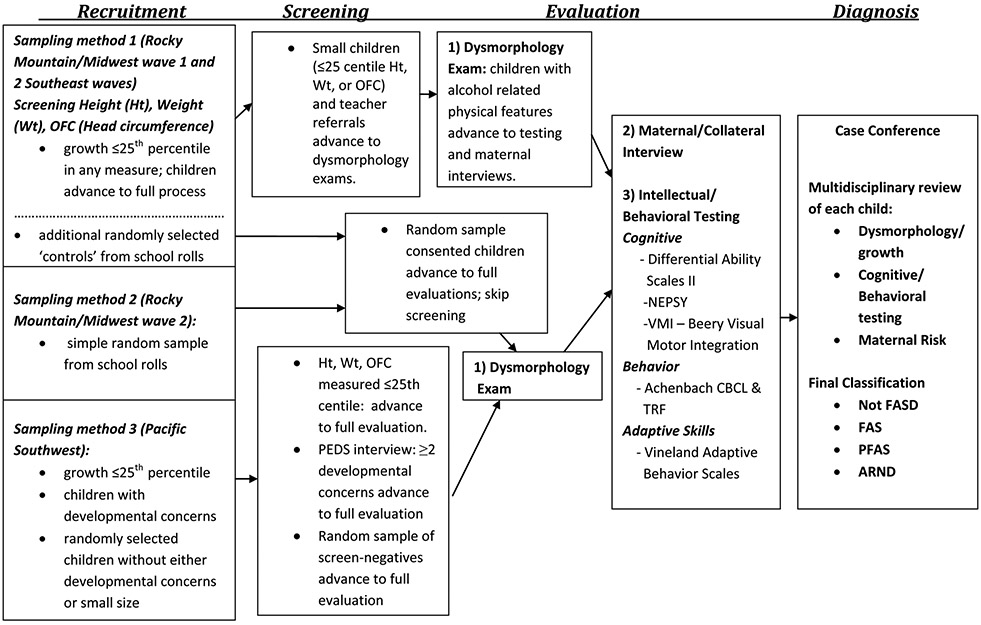
Methods: A total of 1,842 children seen as part of a surveillance study (J Am Med Assoc, 319, 2018, 474) were evaluated for alcohol exposure and physical characteristics of FAS, and completed neurodevelopmental testing. Ninety-one were identified as either ARND/B or ARND/C and contrasted with other groups to further identify distinguishing patterns. Multinomial logistic regression (MLR) was used to examine the accuracy of classification and to identify factors contributing to such classification.
Results: Children described as ARND/C were distinct from other groups based on cognition and behavior as well as demographic factors (e.g., age, race, SES), child characteristics (e.g., gestational age; sex), and other drug exposures, while those described as ARND/B differed only on behavior and other drug exposures. MLR models successfully discriminated ARND groups from children in other groups with accuracy ranging from 79% (Higher Risk) to 86.7% (Low Risk).
Conclusions: ARND has been a subject of debate. This analysis suggests the effects of alcohol on behavior and cognition even in the absence of the characteristic facial features and growth deficiency that can be identified. The results also indicate that it may be possible to distinguish such children from those in other high-risk groups.
Keywords: Alcohol-Related Neurodevelopmental Disorder; Diagnosis; Fetal Alcohol Spectrum Disorders; Prenatal Alcohol Exposure.
© 2020 by the Research Society on Alcoholism.
Conflict of interest statement
The authors have no conflicts of interest to report.
Figures
References
-
- Achenbach TM & Rescorla LA (2001). Manual for the ASEBA School-Age Forms & Profiles. Burlington, VT: University of Vermont, Research Center for children, Youth, & Families.
-
- Beery KE, Beery NA (2004). The Beery-Buktenica Developmental Test of Visual-Motor Integration – 5th Edition. San Antonio, Texas: Pearson Assessment.
-
- Bracken BA (1998). Bracken Basic Concept Scale – Revised. San Antonio Texas: Harcourt Assessment, Inc.
-
- Brown RT, Coles CD, Smith IE, Platzman KA, Silverstein J, Erickson S, & Falek A (1991) Effects of prenatal alcohol exposure at School age. II. Attention and behavior. Neurotoxicol Teratol, 13 (4), 369–376. - PubMed
Publication types
MeSH terms
Grants and funding
LinkOut - more resources
Full Text Sources
Medical
Research Materials
Miscellaneous
