


Alternative lengthening of telomeres: from molecular mechanisms to therapeutic outlooks
- PMID: 32175073
- PMCID: PMC7063710
- DOI: 10.1186/s13578-020-00391-6
Alternative lengthening of telomeres: from molecular mechanisms to therapeutic outlooks
Abstract
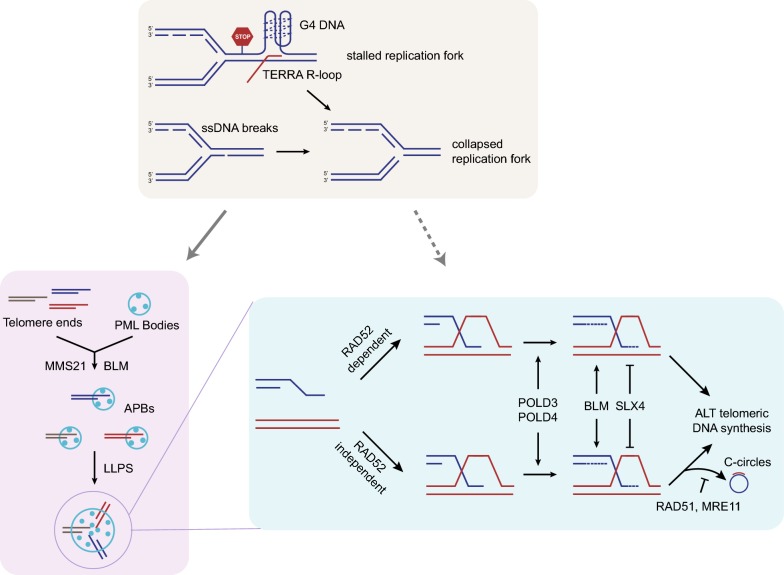
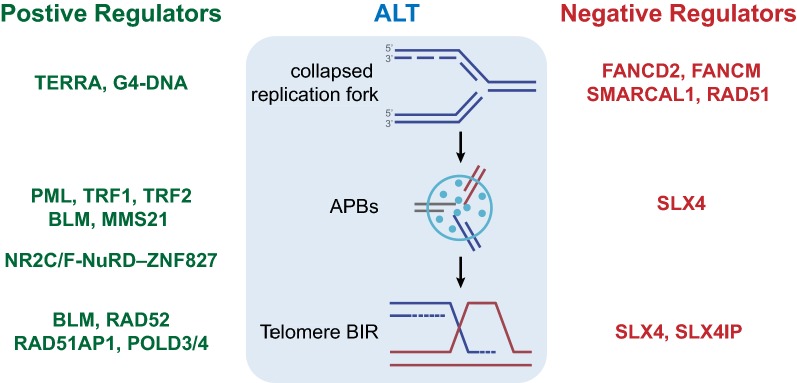
To escape replicative senescence, cancer cells have to overcome telomere attrition during DNA replication. Most of cancers rely on telomerase to extend and maintain telomeres, but 4-11% of cancers use a homologous recombination-based pathway called alternative lengthening of telomeres (ALT). ALT is prevalent in cancers from the mesenchymal origin and usually associates with poor clinical outcome. Given its critical role in protecting telomeres and genomic integrity in tumor cells, ALT is an Achilles heel of tumors and an attractive target for cancer therapy. Here, we review the recent progress in the mechanistic studies of ALT, and discuss the emerging therapeutic strategies to target ALT-positive cancers.
Keywords: ALT telomeric DNA synthesis; APBs; Alternative lengthening of telomeres (ALT); BLM; Clinical therapy; FANCM; Phase separation; RAD52; Telomere; Telomere maintenance mechanism.
© The Author(s) 2020.
Conflict of interest statement
Competing interestsThe authors declares that they have no competing interests.
Figures
References
-
- Palm W, de Lange T. How shelterin protects mammalian telomeres. Annu Rev Genet. 2008;42:301–334. - PubMed
-
- Shay JW, Wright WE. Telomeres and telomerase: three decades of progress. Nat Rev Genet. 2019;20(5):299–309. - PubMed
-
- Hanahan D, Weinberg RA. Hallmarks of cancer: the next generation. Cell. 2011;144(5):646–674. - PubMed
Publication types
LinkOut - more resources
Full Text Sources
Other Literature Sources
Research Materials
