


Effect of continuous nursing care based on the IKAP theory on the quality of life of patients with chronic obstructive pulmonary disease: A randomized controlled study
- PMID: 32176107
- PMCID: PMC7440075
- DOI: 10.1097/MD.0000000000019543
Effect of continuous nursing care based on the IKAP theory on the quality of life of patients with chronic obstructive pulmonary disease: A randomized controlled study
Abstract
Objective: To explore the effect of continuous nursing care based on the Information, Knowledge, Attitude, and Practice (IKAP) theory on the quality of life of patients with chronic obstructive pulmonary disease (COPD).
Methods: This study is a randomized control trial. COPD patients attending the Affiliated Hospital of Inner Mongolia Medical University, China between July 1 and October 31, 2017 were eligible. Following random assignment of participants to either the intervention group or control group, 70 patients (35 in each group) were included in the final sample. The intervention group received nursing care based on the Information, Knowledge, Attitude, and Practice theory, while the control group received standard nursing care. Data were collected before the intervention, 1 month after the intervention, and three months after the intervention. The St. George's Respiratory Questionnaire (SGRQ) was used to measure quality of life.
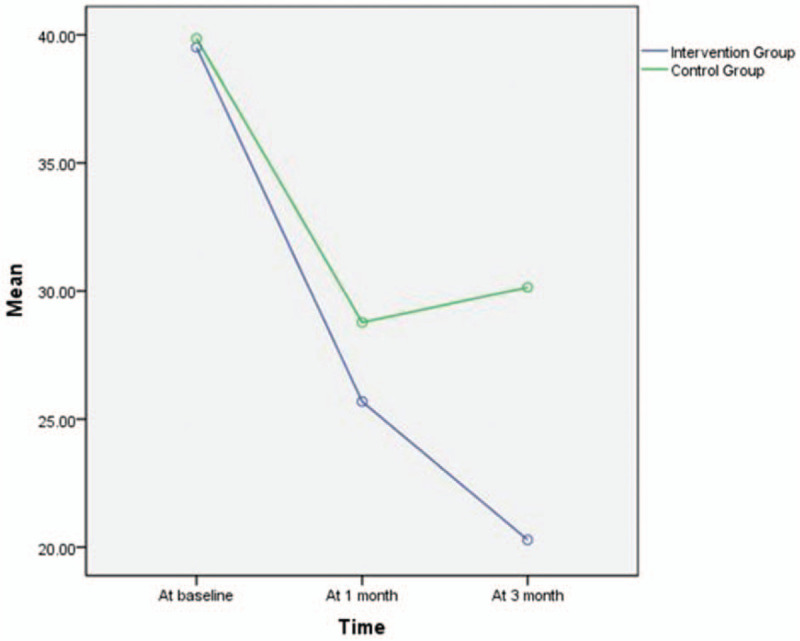
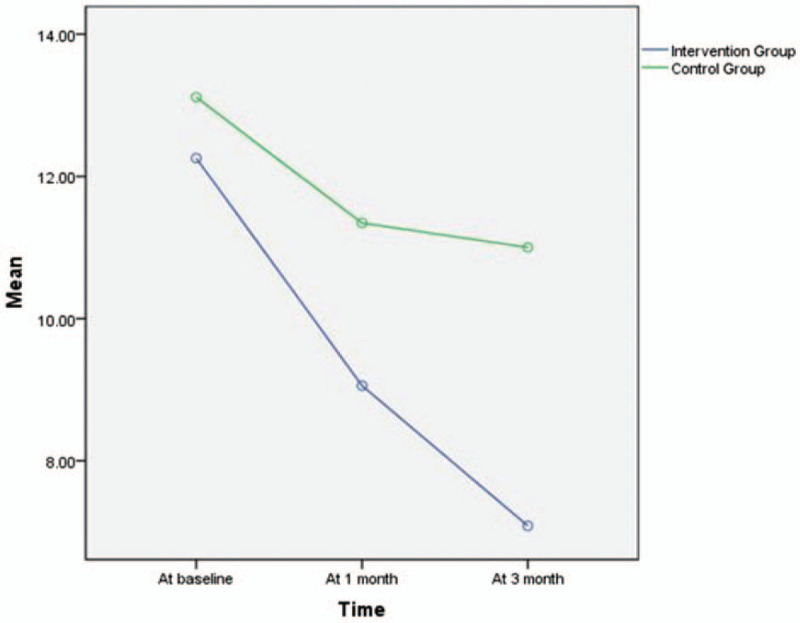
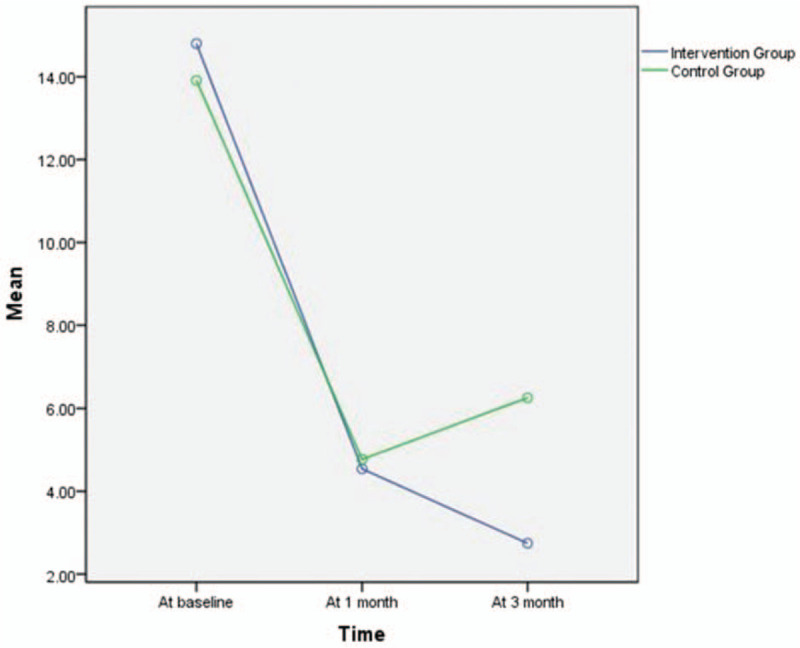
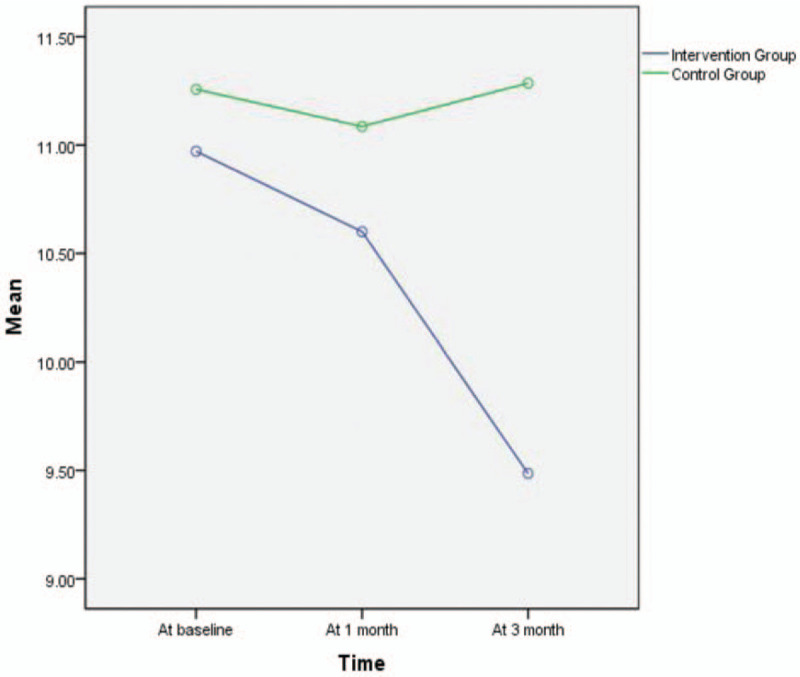
Results: Three months after the intervention, there were significant differences in the total SGRQ score (20.29 ± 10.03 vs 30.14 ± 12.52) and in the three SGRQ dimensions between the intervention group and the control group (P < .05). A repeated-measures analysis of variance showed that the total SGRQ score and the scores for impact and symptoms had a significant time effect (P < .001), that the total SGRQ score and the score for symptoms had a significant interaction effect (P < .05), and that the impact dimension had a significant group effect (P = .042). Pairwise comparisons of the data for the intervention group showed that there were significant differences between the pre-intervention and 1 month after intervention scores as well as between pre-intervention and three months after intervention, for the total SGRQ scores and the scores for impact and symptoms(P < .001). In terms of the impact dimension, there was a significant difference in the intervention group between 1 month after intervention and 3 months after intervention (P = .016).
Conclusion: Continuous nursing care based on Information, Knowledge, Attitude, and Practice theory improved quality of scores at 3 months after intervention among COPD patients. Given limitations of the study, future large-scale studies are needed to validate our results.
Conflict of interest statement
The authors report no conflicts of interest.
Figures
References
-
- Global initiative for chronic obstructive lung disease: Global strategy for the diagnosis, management and prevention of chronic obstructive pulmonary disease updated; 2015:2.
-
- Pauwels RA, Rabe KF. Burden and clinical features of chronic obstructive pulmonary disease (COPD). Lancet 2004;364:613–20. - PubMed
-
- Gershon AS, Warner L, Cascagnette P, et al. Lifetime risk of developing chronic obstructive pulmonary disease: a longitudinal population study. Lancet 2011;378:991–6. - PubMed
-
- Sunde S, Walstad RA, Bentsen SB, et al. The development of an integrated care model for patients with severe or very severe chronic obstructive pulmonary disease (COPD): the COPD-Home model. Scand J Caring Sci 2013;28:469–77. - PubMed
Publication types
MeSH terms
LinkOut - more resources
Full Text Sources
Medical
