. 2020 Mar 12;10(3):440.
doi: 10.3390/biom10030440.

Modulation of Endolysin LysECD7 Bactericidal Activity by Different Peptide Tag Fusion

Affiliations

Modulation of Endolysin LysECD7 Bactericidal Activity by Different Peptide Tag Fusion

Nataliia P Antonova et al. Biomolecules. .

Abstract

The use of recombinant endolysins is a promising approach for antimicrobial therapy capable of counteracting the spread of antibiotic-resistant strains. To obtain the necessary biotechnological product, diverse peptide tags are often fused to the endolysin sequence to simplify enzyme purification, improve its ability to permeabilize the bacterial outer membrane, etc. We compared the effects of two different types of protein modifications on endolysin LysECD7 bactericidal activity in vitro and demonstrated that it is significantly modulated by specific permeabilizing antimicrobial peptides, as well as by widely used histidine tags. Thus, the tags selected for the study of endolysins and during the development of biotechnological preparations should be used with the appropriate precautions to minimize false conclusions about endolysin properties. Further, modifications of LysECD7 allowed us to obtain a lytic enzyme that was largely devoid of the disadvantages of the native protein and was active over the spectra of conditions, with high in vitro bactericidal activity not only against Gram-negative, but also against Gram-positive, bacteria. This opens up the possibility of developing effective antimicrobials based on N-terminus sheep myeloid peptide of 29 amino acids (SMAP)-modified LysECD7 that can be highly active not only during topical treatment but also for systemic applications in the bloodstream and tissues.

Keywords: ESKAPE pathogens; bactericidal activity; endolysin; enzyme properties; peptide tags.


Conflict of interest statement

The authors declare no conflicts of interest. The funders had no role in the design of this study; in the collection, analysis, or interpretation of data; in the writing of the manuscript; or in the decision to publish the results.

Figures
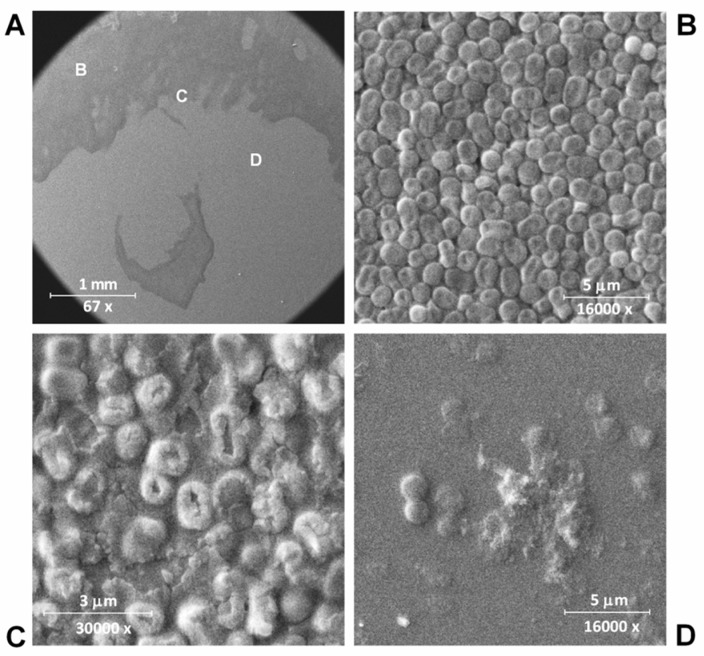
Figure 1
Figure 1
LysECD7-8his-mediated lysis of A. baumannii Ts 50-16 cells on plates. Scanning electron microscopy (SEM) images of the plate imprint of the bacterial lysis zone. (A) General view of the B, C and D imprints is shown; (B) area with no cell lysis (control); (C) the edge of the lysis zone; (D) the deep lysis zone area. The bacterial lawn was treated for 16 h at 37 °C with 10 μL of LysECD7-8his at 1 mg/mL (10 μg in total) before fixation.
Figure 2
Figure 2
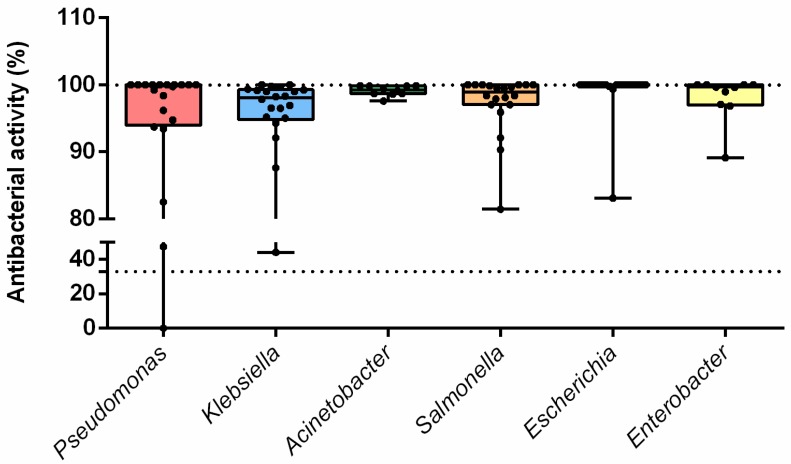
The spectra of antibacterial activity of LysECD7-8his fusion. Lines, medians; boxes, IQR whiskers, min-max. The protein concentration used was 100 µg/mL of LysECD7-8his. The 33% activity cut-off is indicated with a dotted line.
Figure 3
Figure 3
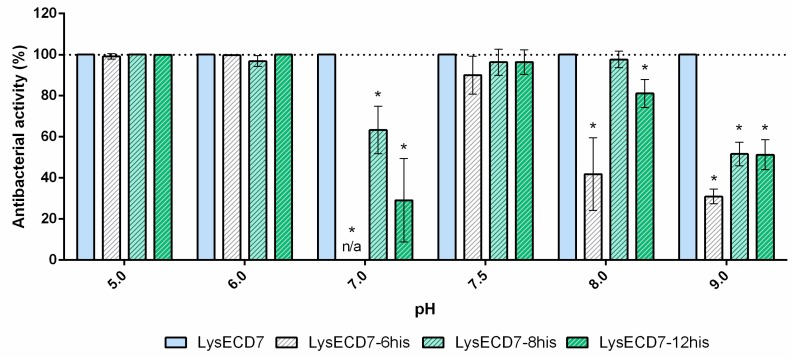
The effect of the histidine tag on the lytic properties of LysECD7 against the A. baumannii Ts 50-16 strain over a pH gradient range at a protein concentration of 1 µg/mL. The bacterial suspension was diluted in 20 mM Tris HCl buffer with different pH values (5.0–9.0) to 1 to 3 × 10⁵ CFU/mL and mixed with the proteins. For all experiments, the mean values are shown from three independent experiments (± standard deviation, SD). n/a, no bactericidal activity detected. An asterisk (*) indicates a significant difference in bactericidal activity compared to the LysECD7 enzyme (p < 0.05, two-way ANOVA with Dunnett’s multiple comparisons test).
Figure 4
Figure 4
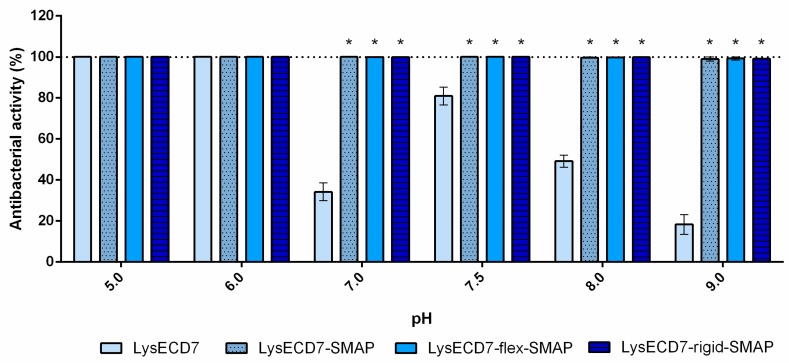
Bactericidal activity of SMAP-modified LysECD7 against the A. baumannii Ts 50-16 strain over the pH gradient range at a protein concentration of 0.5 µg/mL. The bacterial suspension was diluted in 20 mM Tris HCl buffer with different pH values (5.0 to 9.0) to 1 to 3 × 10⁵ CFU/mL and mixed with the proteins. For all experiments, the mean values are shown from three independent experiments ± SD. An asterisk (*) indicates a significant difference in bactericidal activity compared to the LysECD7 enzyme (p < 0.05, two-way ANOVA with Dunnett’s multiple comparisons test).
Figure 5
Figure 5
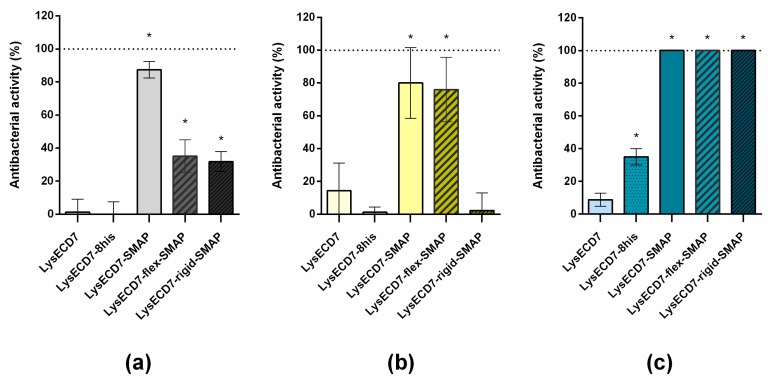
Bactericidal activity of the modified endolysins. (A) Activity of the endolysins against A. baumannii Ts 50-16, diluted in a PBS buffer solution (protein concentration of 1 µg/mL); (B) activity of endolysins against A. baumannii Ts 50-16, diluted in human serum (protein concentration of 10 µg/mL); (C) activity of lysins against the stationary-phase cells of A. baumannii Ts 50-16, diluted in 20 mM Tris HCl buffer pH 7.5 (protein concentration of 10 µg/mL). Culture dilution was 1 to 3 × 10⁵ CFU/mL. For all experiments, the mean values are shown from three independent experiments ± SD. An asterisk (*) indicates a significant effect on bactericidal activity compared to the LysECD7 enzyme (p < 0.05, one-way ANOVA, Dunnett’s multiple comparisons test).
Figure 6
Figure 6
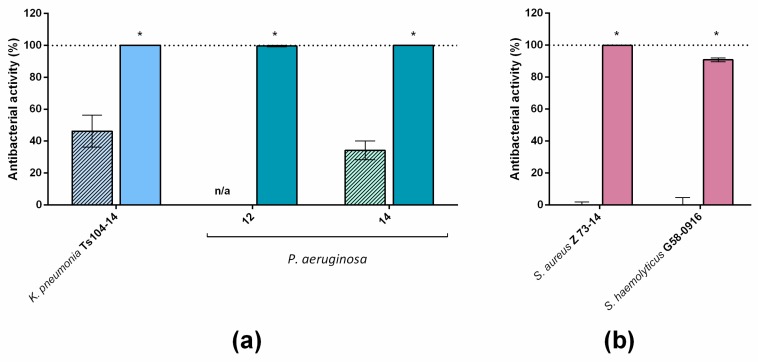
Bactericidal activity of LysECD7-8his (hatched bars) and LysECD7-SMAP (empty bars) on the recalcitrant strains of Gram-negative (a) and Gram-positive (b) bacterial isolates diluted in 20 mM Tris HCl buffer pH 7.5. All proteins were assessed at a concentration of 50.0 µg/mL and the culture dilution was 1 to 3 × 10⁵ CFU/mL. For all experiments, the mean values are shown from three independent experiments ± SD. n/a, no bactericidal activity detected. An asterisk (*) indicates a significant effect on bactericidal activity compared to the LysECD7-8his enzyme (p < 0.05, Mann–Whitney test).

References

    1. Oliveira H., São-José C., Azeredo J. Phage-derived peptidoglycan degrading enzymes: Challenges and future prospects for in vivo therapy. Viruses. 2018;10:292. doi: 10.3390/v10060292. - DOI - PMC - PubMed
    1. Labrou N. Therapeutic Enzymes: Function and Clinical Implication. Springer; Singapore, Singapore: 2019.
    1. Schmelcher M., Donovan D.M., Loessner M.J. Bacteriophage endolysins as novel antimicrobials. Future Microbiol. 2012;7:10. doi: 10.2217/fmb.12.97. - DOI - PMC - PubMed
    1. Vázquez R., García E., García P. Phage lysins for fighting bacterial respiratory infections: A new generation of antimicrobials. Front. Immunol. 2018;9:2252. doi: 10.3389/fimmu.2018.02252. - DOI - PMC - PubMed
    1. Broendum S.S., Buckle A.M., McGowan S. Catalytic diversity and cell wall binding repeats in the phage-encoded endolysins. Mol. Microbiol. 2018;110:879–896. doi: 10.1111/mmi.14134. - DOI - PubMed

Publication types

MeSH terms