


Recent Advances in Metabolic Pathways of Sulfate Reduction in Intestinal Bacteria
- PMID: 32178484
- PMCID: PMC7140700
- DOI: 10.3390/cells9030698
Recent Advances in Metabolic Pathways of Sulfate Reduction in Intestinal Bacteria
Abstract
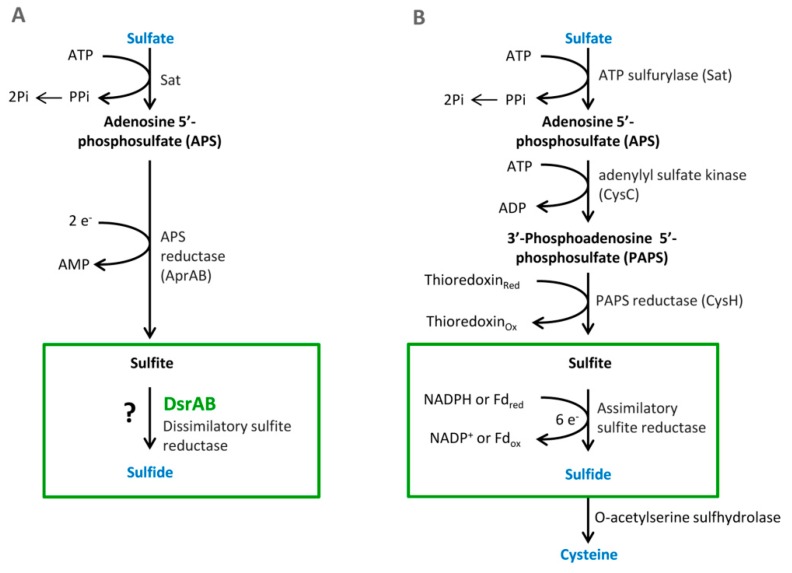
Sulfate is present in foods, beverages, and drinking water. Its reduction and concentration in the gut depend on the intestinal microbiome activity, especially sulfate-reducing bacteria (SRB), which can be involved in inflammatory bowel disease (IBD). Assimilatory sulfate reduction (ASR) is present in all living organisms. In this process, sulfate is reduced to hydrogen sulfide and then included in cysteine and methionine biosynthesis. In contrast to assimilatory sulfate reduction, the dissimilatory process is typical for SRB. A terminal product of this metabolism pathway is hydrogen sulfide, which can be involved in gut inflammation and also causes problems in industries (due to corrosion effects). The aim of the review was to compare assimilatory and dissimilatory sulfate reduction (DSR). These processes occur in some species of intestinal bacteria (e.g., Escherichia and Desulfovibrio genera). The main attention was focused on the description of genes and their location in selected strains. Their coding expression of the enzymes is associated with anabolic processes in various intestinal bacteria. These analyzed recent advances can be important factors for proposing possibilities of metabolic pathway extension from hydrogen sulfide to cysteine in intestinal SRB. The switch from the DSR metabolic pathway to the ASR metabolic pathway is important since toxic sulfide is not produced as a final product.
Keywords: assimilatory; cysteine biosynthesis; hydrogen sulfide; intestinal microbiota; sulfate reduction; sulfate-reducing bacteria; toxicity.
Conflict of interest statement
The authors declare no conflict of interest.
Figures






References
-
- Barton L.L., Fauque G.D. Biochemistry, physiology and biotechnology of sulfate-reducing bacteria. Adv. Appl. Microbiol. 2009;68:41–98. - PubMed
-
- Kushkevych I. Dissimilatory sulfate reduction in the intestinal sulfate-reducing bacteria. Studia Biologica. 2016;10:197–228. doi: 10.30970/sbi.1001.560. - DOI
Publication types
MeSH terms
Substances
LinkOut - more resources
Full Text Sources
