Review
. 2020 Jul:140:104835.
doi: 10.1016/j.nbd.2020.104835. Epub 2020 Mar 14.

Traffic jam at the nuclear pore: All roads lead to nucleocytoplasmic transport defects in ALS/FTD

Affiliations
Review

Traffic jam at the nuclear pore: All roads lead to nucleocytoplasmic transport defects in ALS/FTD

Claudia Fallini et al. Neurobiol Dis. 2020 Jul.

Abstract

Amyotrophic lateral sclerosis (ALS) is a fatal late-onset neurodegenerative disease that specifically affects the function and survival of spinal and cortical motor neurons. ALS shares many genetic, clinical, and pathological characteristics with frontotemporal dementia (FTD), and these diseases are now recognized as presentations of a disease spectrum known as ALS/FTD. The molecular determinants of neuronal loss in ALS/FTD are still debated, but the recent discovery of nucleocytoplasmic transport defects as a common denominator of most if not all forms of ALS/FTD has dramatically changed our understanding of the pathogenic mechanisms of this disease. Loss of nuclear pores and nucleoporin aggregation, altered nuclear morphology, and impaired nuclear transport are some of the most prominent features that have been identified using a variety of animal, cellular, and human models of disease. Here, we review the experimental evidence linking nucleocytoplasmic transport defects to the pathogenesis of ALS/FTD and propose a unifying view on how these defects may lead to a vicious cycle that eventually causes neuronal death.

Keywords: ALS/FTD; Amyotrophic lateral sclerosis; Frontotemporal dementia; Nucleocytoplasmic transport.


Conflict of interest statement

Declaration of Competing Interest None.

Figures
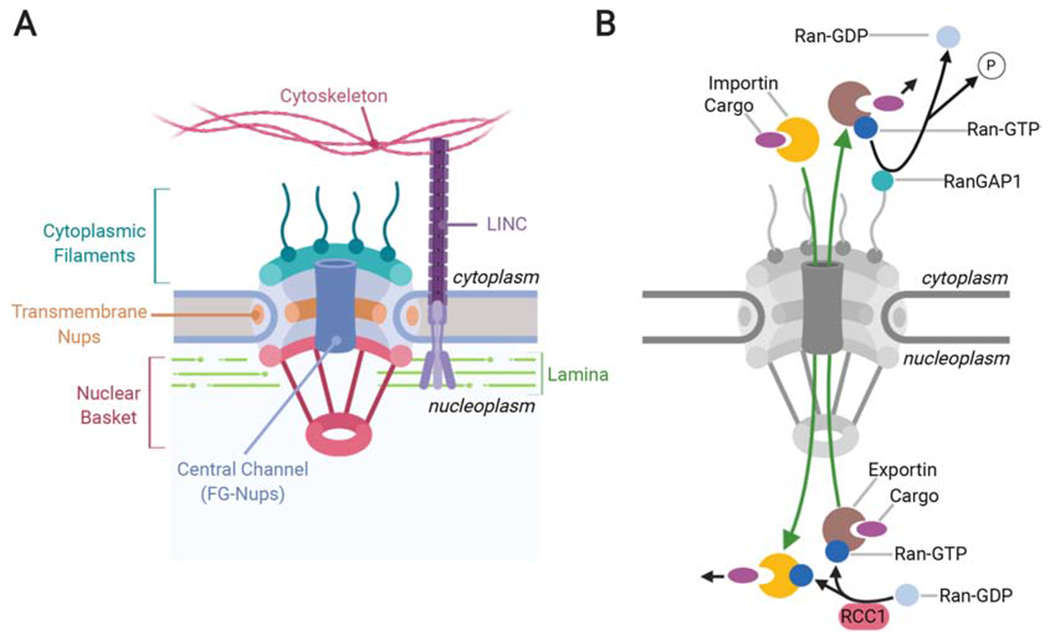
Figure 1:
Figure 1:. The NPC and associated factors.
A. Depiction of the basic structure of the NPC. Cytoplasmic filaments and the nuclear basket extend into the cytoplasm and nucleoplasm respectively, while transmembrane Nups anchor the NPC to the nuclear envelope. The central channel is rich in FG-Nups, that form a selectivity filter to prevent the unregulated passage of large proteins (i.e. ~>40kDa) though the pore. The LINC complex is tightly associated with the nuclear pore and connects the nuclear lamina with the cytoskeleton. B. Representation of the NCT pathway. Importins bind to their cargo and facilitate movement through the NPC. In the nucleoplasm, Ran-GTP either binds to importins to trigger the release of the cargo, or to the exportin-cargo complex, facilitating its transport through the nuclear pore to the cytoplasm. RanGAP1 then hydrolyzes Ran-GTP to Ran-GDP and triggers the release of the cargo into the cytoplasm. RCC1 restores the GTP-bound state of Ran in the nucleoplasm, resetting the cycle.
Figure 2:
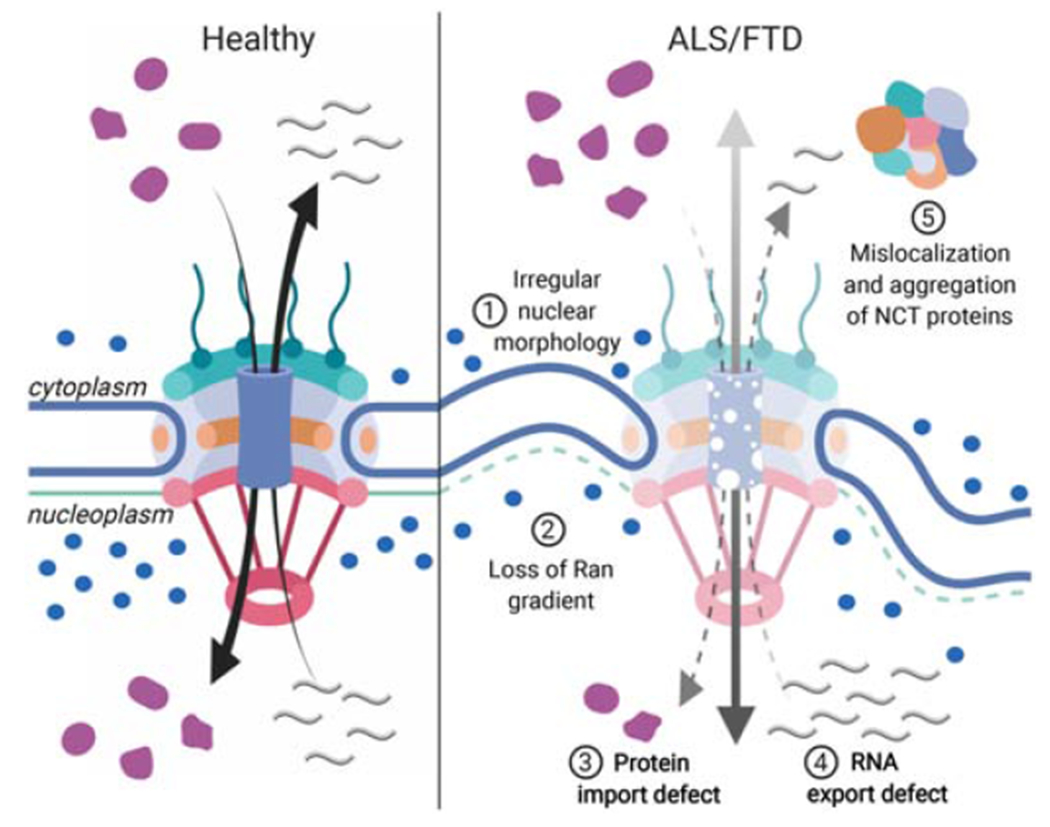
Figure 2:. ALS/FTD-linked defects in the NPC and NCT.
(left panel) In healthy cells, RNA export and protein shuttling through the nuclear pore are tightly regulated processes that depend on the nucleocytoplasmic distribution of GTP-bound Ran (blue circles). (right panel) In ALS/FTD cells, the nuclear pore integrity is compromised and the shuttling of RNAs and proteins is no longer controlled. Irregular nuclear morphology is often observed with deep membrane invaginations and disruption of the lamina (1). The Ran gradient is impaired, leading to increased levels of Ran in the cytoplasm (2). This impairs the import of proteins (3), as well as the export of mature RNAs from the nucleus (4). The mislocalization and aggregation of shuttling proteins sequesters NCT factors such as importins and nucleoporins into the cytoplasm (5), further disrupting the process.
Figure 3:
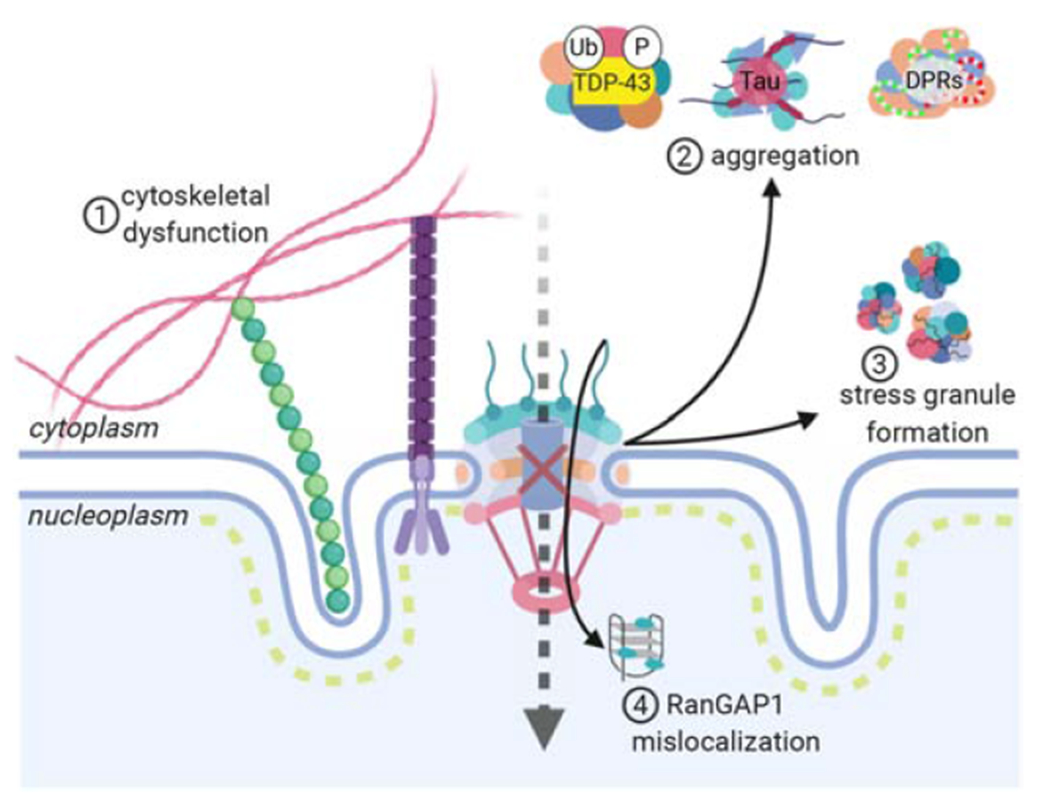
Figure 3:. Cellular disease mechanisms associated with NCT defects in ALS/FTD.
Cytoskeletal dysfunction can lead to an increase in the force exerted on the nucleus, causing the formation of nuclear invaginations and disrupting the integrity of the nuclear lamina (1). Abnormal protein aggregation (2) and stress granule formation (3) sequester nucleoporins and transport proteins in the cytoplasm, affecting the integrity of the nuclear pore and impairing nuclear import. C9-ALS-associated HREs bind and sequester RanGAP1 in the nucleus, thereby disrupting the nuclear gradient of Ran and leading to NCT defects (4).
Figure 4:
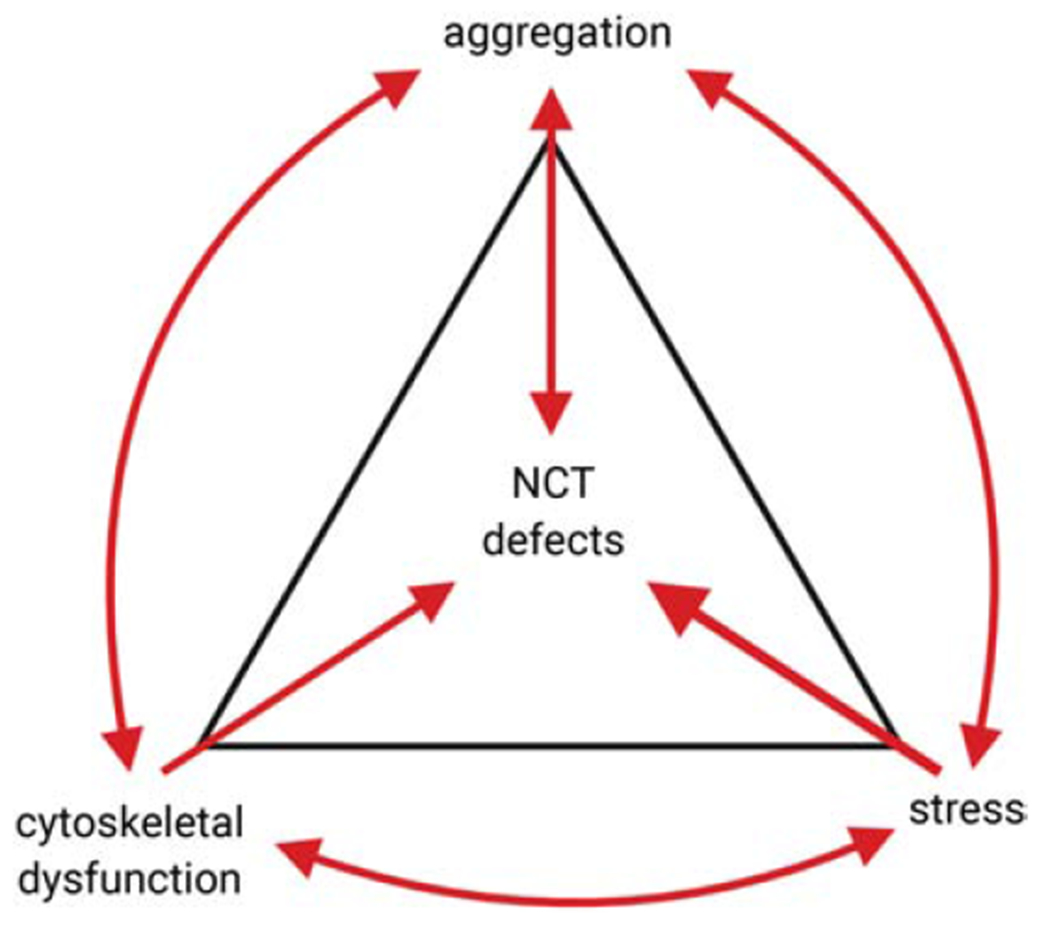
Figure 4:. All roads lead to NCT defects in ALS/FTD.
Cellular stress, protein aggregation, and cytoskeletal dysfunction initiated by disease-causing mutations or by environmental factors such as ageing, all have been independently shown to initiate a cascade of events that culminate in the disruption of normal NCT of proteins and RNAs. However, these pathways are not independent of each other, and each one can induce additional damage by further promoting protein aggregation, cytoskeletal disruption, and cellular stress. We hypothesize that an insult in any of these pathways can result in triggering this vicious cycle, resulting in NCT defects and neuronal death in ALS/FTD.

References

    1. Aizawa H, Yamashita T, Kato H, Kimura T, Kwak S, 2019. Impaired Nucleoporins Are Present in Sporadic Amyotrophic Lateral Sclerosis Motor Neurons that Exhibit Mislocalization of the 43-kDa TAR DNA-Binding Protein. J. Clin. Neurol 15, 62–67. doi: 10.3988/jcn.2019.15.1.62 - DOI - PMC - PubMed
    1. Aramburu IV, Lemke EA, 2017. Floppy but not sloppy: Interaction mechanism of FG-nucleoporins and nuclear transport receptors. Semin. Cell Dev. Biol 68, 34–41. doi: 10.1016/j.semcdb.2017.06.026 - DOI - PMC - PubMed
    1. Archbold HC, Jackson KL, Arora A, Weskamp K, Tank EM-H, Li X, Miguez R, Dayton RD, Tamir S, Klein RL, Barmada SJ, 2018. TDP43 nuclear export and neurodegeneration in models of amyotrophic lateral sclerosis and frontotemporal dementia. Sci. Rep 8, 4606. doi: 10.1038/s41598-018-22858-w - DOI - PMC - PubMed
    1. Baskaran P, Shaw C, Guthrie S, 2018. TDP-43 causes neurotoxicity and cytoskeletal dysfunction in primary cortical neurons. PLoS One 13, e0196528. doi: 10.1371/journal.pone.0196528 - DOI - PMC - PubMed
    1. Bellouze S, Baillat G, Buttigieg D, de la Grange P, Rabouille C, Haase G, 2016. Stathmin 1/2-triggered microtubule loss mediates Golgi fragmentation in mutant SOD1 motor neurons. Mol. Neurodegener 11, 43. doi: 10.1186/s13024-016-0111-6 - DOI - PMC - PubMed

Publication types

MeSH terms

Supplementary concepts