


An in vitro evaluation of the effect of polishing on the stainability of different CAD/CAM ceramic materials
- PMID: 32180670
- PMCID: PMC7063477
- DOI: 10.1016/j.sdentj.2019.08.005
An in vitro evaluation of the effect of polishing on the stainability of different CAD/CAM ceramic materials
Abstract
Purpose: To determine the effect of coffee on the stainability of CAD/CAM ceramics after different surface treatment protocols.
Methods: Ninety specimens (2 mm × 10 mm) of CAD/CAM ceramic materials (Vitablocs Mark II, VITA Enamic, and VITA Suprinity) were prepared. The specimens were subdivided (n = 10) into three groups: G1: Glazed (control group), G2: Subjected to finishing and polishing, and G3: Re-glazed after finishing and polishing. The surface treatment was performed using a diamond polishing system for porcelain (Diapol) followed by applying a diamond polishing paste (Diapolisher). The specimens were immersed in distilled water for 24 h, and the baseline color measurement after finishing and polishing was recorded. Each group was then immersed in a staining solution (coffee) for one week, and the second color measurement was recorded.
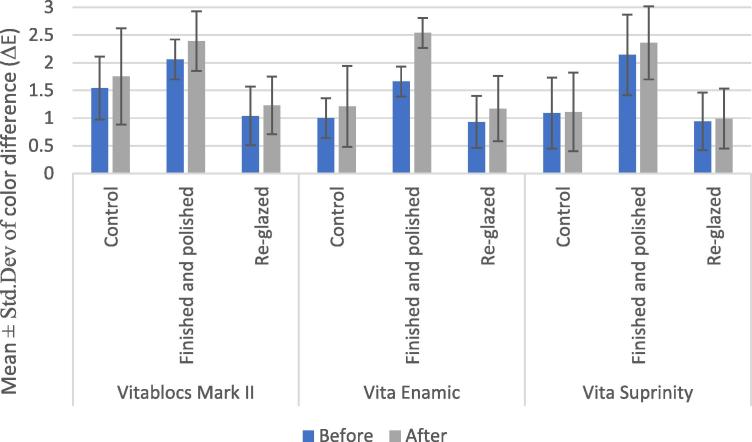
Results: The color of the CAD/CAM ceramic materials in the finishing and polishing groups changed significantly after staining (P < 0.05). Statistically significant differences were noticed after staining in the polished groups of Vita Enamic and Vita Suprinity compared with the glazed group (control). However, the color change between the re-glazed and control groups was insignificant for all the materials (P > 0.05). Although the color change values of the three CAD/CAM materials increased, these changes were within the clinically acceptable value (ΔE < 3.3).
Conclusion: Staining of the tested CAD/CAM ceramic materials increased the color change values within the clinically acceptable range in all the groups, with the highest values found after finishing and polishing. Re-glazing is recommended after surface adjustment for all the tested materials to increase their resistance to staining.
Keywords: CAD/CAM; Ceramics; Color stability; Stainability; Surface treatment.
© 2019 The Authors.
Figures
References
-
- Acar O., Yilmaz B., Altintas S.H., Chandrasekaran I., Johnston W.M. Color stainability of CAD/CAM and nanocomposite resin materials. J. Prosthet. Dent. 2016;115(1):71–75. - PubMed
-
- Alessandretti R., Borba M., Benetti P., Corazza P.H., Ribeiro R., Della Bona A. Reliability and mode of failure of bonded monolithic and multilayer ceramics. Dent. Mater. 2017;33(2):191–197. - PubMed
-
- Alp G., Subasi G., Johnston W.M. Effect of surface treatments and coffee thermocycling on the color and translucency of CAD-CAM monolithic glass-ceramic. J. Prosthet. Dent. 2018;120(2):263–268. - PubMed
-
- Al-Wahadni A., Martin D.M. Glazing and finishing dental porcelain: a literature review. J. Can. Dent. Assoc. 1998;64(8):580–583. - PubMed
-
- Ardu S., Braut V., Gutemberg D., Krejci I., Dietschi D., Feilzer A.J. A long-term laboratory test on staining susceptibility of esthetic composite resin materials. Quintessence Inter. 2010;41(8):695–702. - PubMed
LinkOut - more resources
Full Text Sources
Miscellaneous
