


Pulmonary vasodilation in acute pulmonary embolism - a systematic review
- PMID: 32180938
- PMCID: PMC7057411
- DOI: 10.1177/2045894019899775
Pulmonary vasodilation in acute pulmonary embolism - a systematic review
Abstract
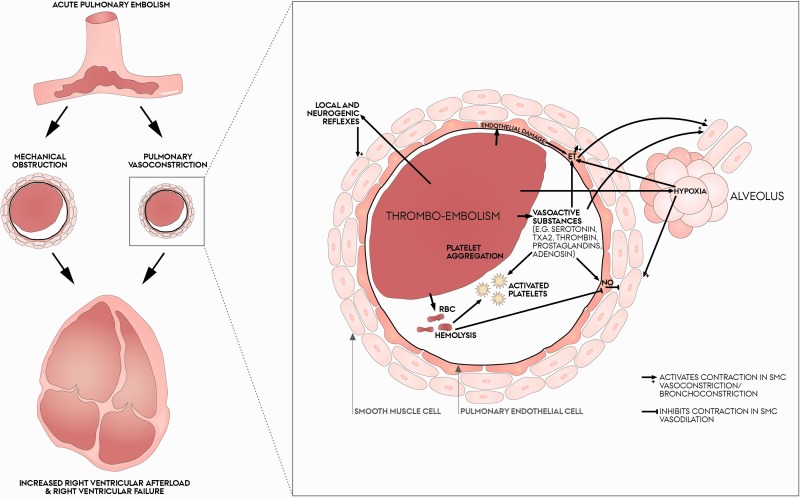
Acute pulmonary embolism is the third most common cause of cardiovascular death. Pulmonary embolism increases right ventricular afterload, which causes right ventricular failure, circulatory collapse and death. Most treatments focus on removal of the mechanical obstruction caused by the embolism, but pulmonary vasoconstriction is a significant contributor to the increased right ventricular afterload and is often left untreated. Pulmonary thromboembolism causes mechanical obstruction of the pulmonary vasculature coupled with a complex interaction between humoral factors from the activated platelets, endothelial effects, reflexes and hypoxia to cause pulmonary vasoconstriction that worsens right ventricular afterload. Vasoconstrictors include serotonin, thromboxane, prostaglandins and endothelins, counterbalanced by vasodilators such as nitric oxide and prostacyclins. Exogenous administration of pulmonary vasodilators in acute pulmonary embolism seems attractive but all come with a risk of systemic vasodilation or worsening of pulmonary ventilation-perfusion mismatch. In animal models of acute pulmonary embolism, modulators of the nitric oxide-cyclic guanosine monophosphate-protein kinase G pathway, endothelin pathway and prostaglandin pathway have been investigated. But only a small number of clinical case reports and prospective clinical trials exist. The aim of this review is to give an overview of the causes of pulmonary embolism-induced pulmonary vasoconstriction and of experimental and human investigations of pulmonary vasodilation in acute pulmonary embolism.
Keywords: animal models; pulmonary circulation; right heart failure; right ventricular afterload.
© The Author(s) 2020.
Figures
References
-
- Cohen A, Agnelli G, Anderson F, et al. Venous thromboembolism (VTE) in Europe. Thromb Haemost 2007; 98: 756–764. - PubMed
-
- Konstantinides SV, Meyer G, Becattini C, et al. 2019 ESC Guidelines for the diagnosis and management of acute pulmonary embolism developed in collaboration with the European Respiratory Society (ERS). Eur Heart J 2019; 39: 4208. - PubMed
-
- Wakefield TW, Myers DD, Henke PK. Mechanisms of venous thrombosis and resolution. Arterioscler Thromb Vasc Biol 2008; 28: 387–391. - PubMed
Publication types
LinkOut - more resources
Full Text Sources
