Electronic clinical decision support algorithms incorporating point-of-care diagnostic tests in low-resource settings: a target product profile
- PMID: 32181003
- PMCID: PMC7050342
- DOI: 10.1136/bmjgh-2019-002067
Electronic clinical decision support algorithms incorporating point-of-care diagnostic tests in low-resource settings: a target product profile
Abstract
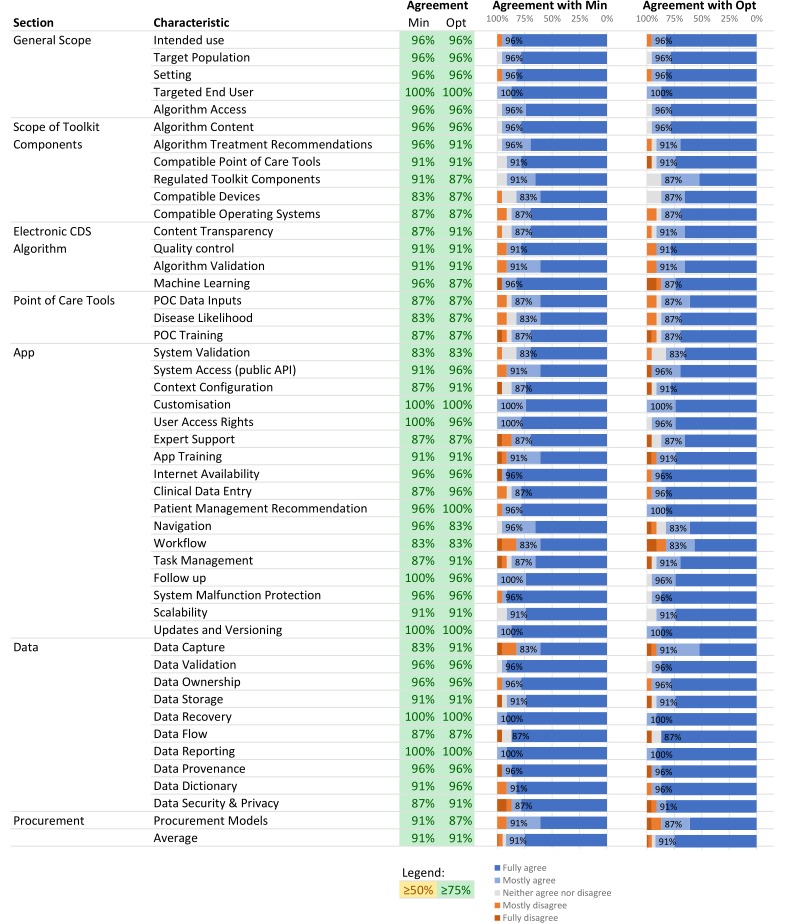
Health workers in low-resource settings often lack the support and tools to follow evidence-based clinical recommendations for diagnosing, treating and managing sick patients. Digital technologies, by combining patient health information and point-of-care diagnostics with evidence-based clinical protocols, can help improve the quality of care and the rational use of resources, and save patient lives. A growing number of electronic clinical decision support algorithms (CDSAs) on mobile devices are being developed and piloted without evidence of safety or impact. Here, we present a target product profile (TPP) for CDSAs aimed at guiding preventive or curative consultations in low-resource settings. This document will help align developer and implementer processes and product specifications with the needs of end users, in terms of quality, safety, performance and operational functionality. To identify the characteristics of CDSAs, a multidisciplinary group of experts (academia, industry and policy makers) with expertise in diagnostic and CDSA development and implementation in low-income and middle-income countries were convened to discuss a draft TPP. The TPP was finalised through a Delphi process to facilitate consensus building. An agreement greater than 75% was reached for all 40 TPP characteristics. In general, experts were in overwhelming agreement that, given that CDSAs provide patient management recommendations, the underlying clinical algorithms should be human-interpretable and evidence-based. Whenever possible, the algorithm's patient management output should take into account pretest disease probabilities and likelihood ratios of clinical and diagnostic predictors. In addition, validation processes should at a minimum show that CDSAs are implementing faithfully the evidence they are based on, and ideally the impact on patient health outcomes. In terms of operational needs, CDSAs should be designed to fit within clinic workflows and function in connectivity-challenged and high-volume settings. Data collected through the tool should conform to local patient privacy regulations and international data standards.
Keywords: child health; diagnostics and tools; health systems; public health; treatment.
© Author(s) (or their employer(s)) 2020. Re-use permitted under CC BY-NC. No commercial re-use. See rights and permissions. Published by BMJ.
Conflict of interest statement
Competing interests: VD’A reports grants from Fondation Botnar, during the conduct of the study. In addition, VD’A has a patent free licence on a CDSA called ALMANACH.
Figures
References
-
- World Health Organisation Integrated management of childhood illness (who), 2014. Available: http://apps. who.int/iris/bitstream/10665/104772/16/9789241506823_Chartb... [Accessed May 2019].
-
- World Health Organisation Integrated management of childhood illness: caring for newborns and children in the community. 2011. World Health organization. Available: http://www.who.int/iris/handle/10665/44398 [Accessed May 2019].
-
- World Health Organisation Integrated management of adolescent and adult illness (Imai). Available: http://www.who.int/3by5/publications/documents/imai/en/ [Accessed May 2019].
-
- WHO and TDR Dengue: guidelines for diagnosis, treatment, prevention and control: new edition. 2009 (WHO/HTM/NTD/DEN/2009.1). Available: https://www.who.int/tdr/publications/training-guideline-publications/den... [Accessed May 2019]. - PubMed
Publication types
MeSH terms
Grants and funding
LinkOut - more resources
Full Text Sources