Increased expression of the mitochondrial derived peptide, MOTS-c, in skeletal muscle of healthy aging men is associated with myofiber composition
- PMID: 32182209
- PMCID: PMC7138593
- DOI: 10.18632/aging.102944
Increased expression of the mitochondrial derived peptide, MOTS-c, in skeletal muscle of healthy aging men is associated with myofiber composition
Abstract
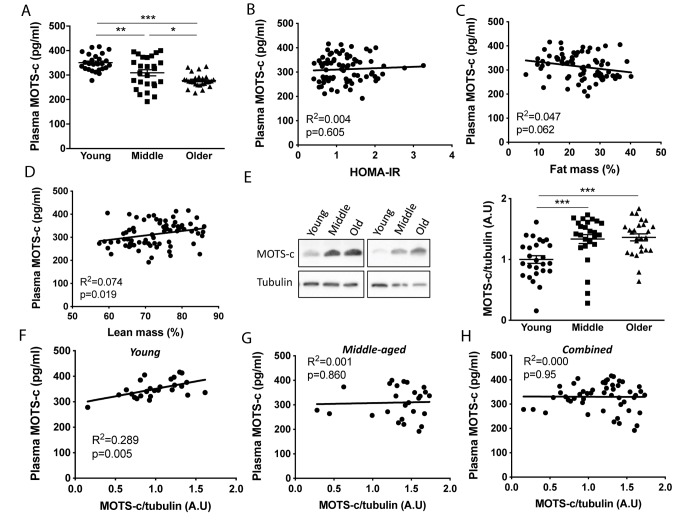
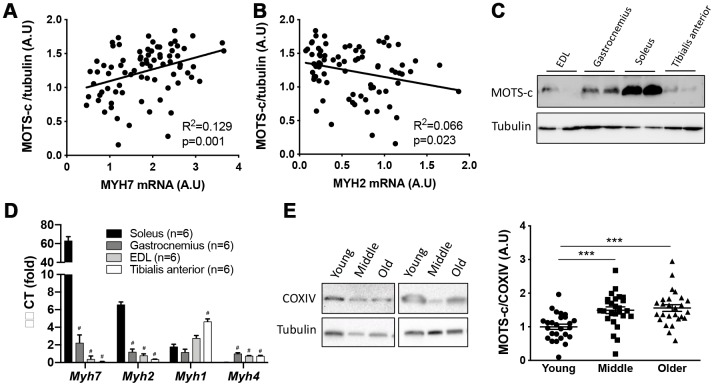
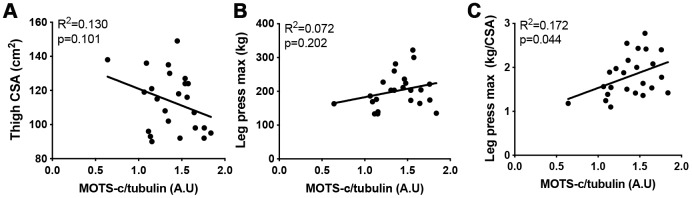
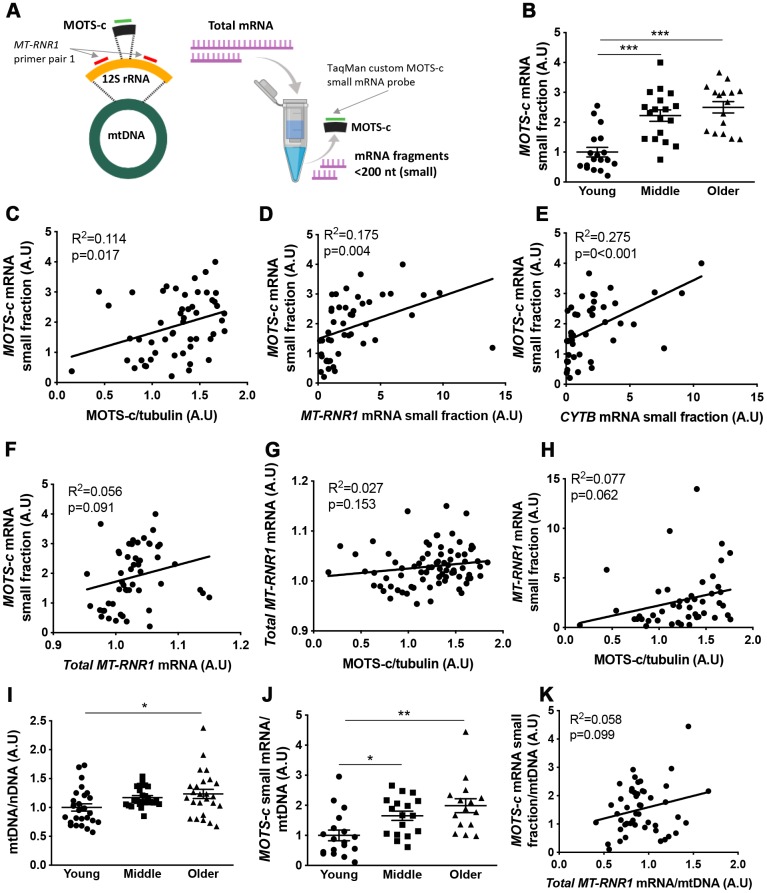
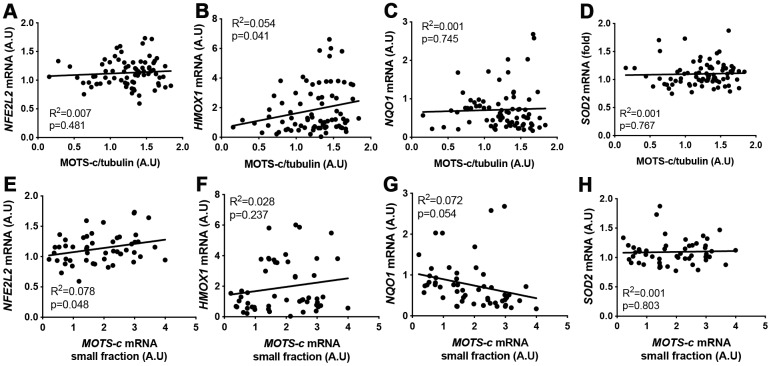
Mitochondria putatively regulate the aging process, in part, through the small regulatory peptide, mitochondrial open reading frame of the 12S rRNA-c (MOTS-c) that is encoded by the mitochondrial genome. Here we investigated the regulation of MOTS-c in the plasma and skeletal muscle of healthy aging men. Circulating MOTS-c reduced with age, but older (70-81 y) and middle-aged (45-55 y) men had ~1.5-fold higher skeletal muscle MOTS-c expression than young (18-30 y). Plasma MOTS-c levels only correlated with plasma in young men, was associated with markers of slow-type muscle, and associated with improved muscle quality in the older group (maximal leg-press load relative to thigh cross-sectional area). Using small mRNA assays we provide evidence that MOTS-c transcription may be regulated independently of the full length 12S rRNA gene in which it is encoded, and expression is not associated with antioxidant response element (ARE)-related genes as previously seen in culture. Our results suggest that plasma and muscle MOTS-c are differentially regulated with aging, and the increase in muscle MOTS-c expression with age is consistent with fast-to-slow type muscle fiber transition. Further research is required to determine the molecular targets of endogenous MOTS-c in human muscle but they may relate to factors that maintain muscle quality.
Keywords: MOTS-c; aging; mitochondria; mitochondrial derived peptides; muscle.
Conflict of interest statement
Figures
References
Publication types
MeSH terms
Substances
Grants and funding
LinkOut - more resources
Full Text Sources
Medical
Molecular Biology Databases