


Assessing the efficacy and safety of fecal microbiota transplantation and probiotic VSL#3 for active ulcerative colitis: A systematic review and meta-analysis
- PMID: 32182248
- PMCID: PMC7077802
- DOI: 10.1371/journal.pone.0228846
Assessing the efficacy and safety of fecal microbiota transplantation and probiotic VSL#3 for active ulcerative colitis: A systematic review and meta-analysis
Abstract
Background: Fecal microbiota transplantation is an effective treatment for many gastrointestinal diseases, such as Clostridium difficile infection and inflammatory bowel disease, especially ulcerative colitis. Changes in colonic microflora may play an important role in the pathogenesis of ulcerative colitis, and improvements in the intestinal microflora may relieve the disease. Fecal bacterial transplants and oral probiotics are becoming important ways to relieve active ulcerative colitis.
Purpose: This systematic review with meta-analysis compared the efficacy and safety of basic treatment combined with fecal microbiota transplantation or mixed probiotics therapy in relieving mild to moderate ulcerative colitis.
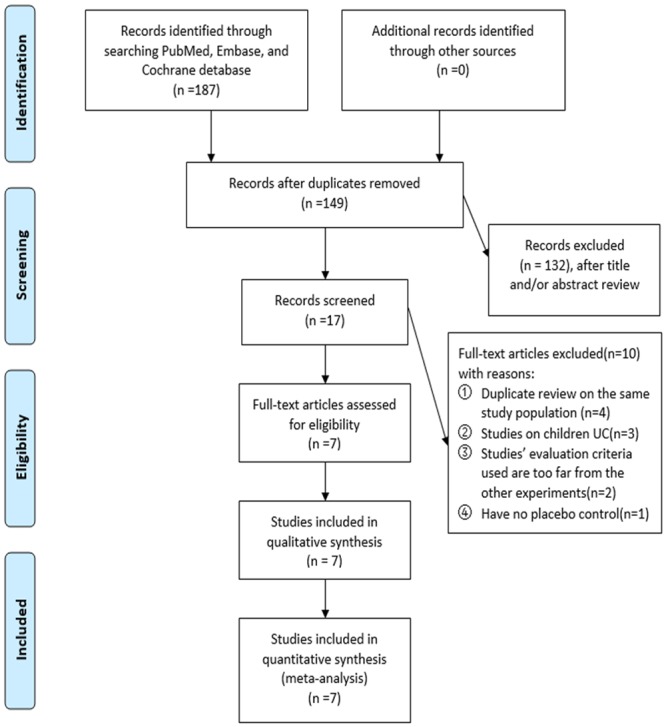
Methods: The PubMed, Embase, and Cochrane libraries (updated September 2019) were searched to identify randomized, placebo-controlled, or head-to-head trials assessing fecal microbiota transplantation or probiotic VSL#3 as induction therapy in active ulcerative colitis. We analyze data using the R program to obtain evidence of direct comparison and to generate intermediate variables for indirect treatment comparisons.
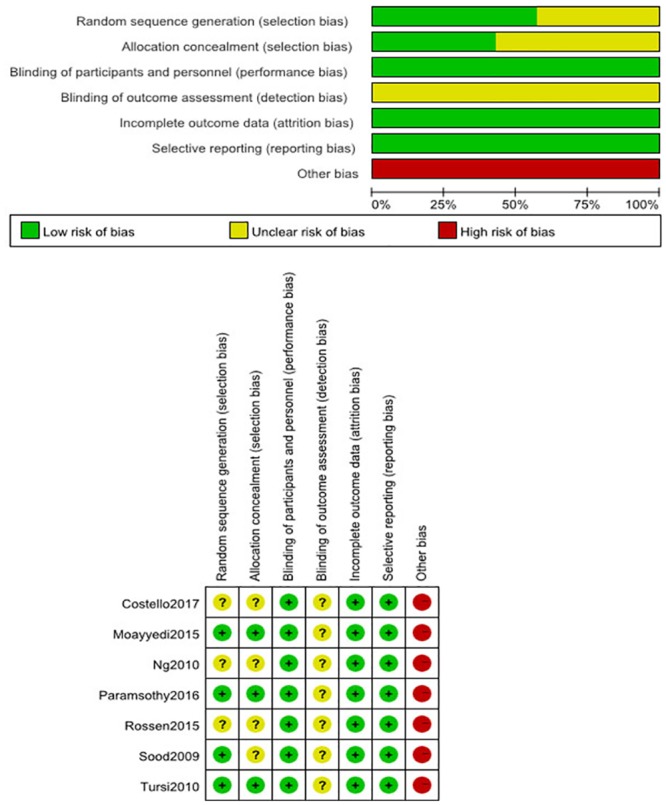
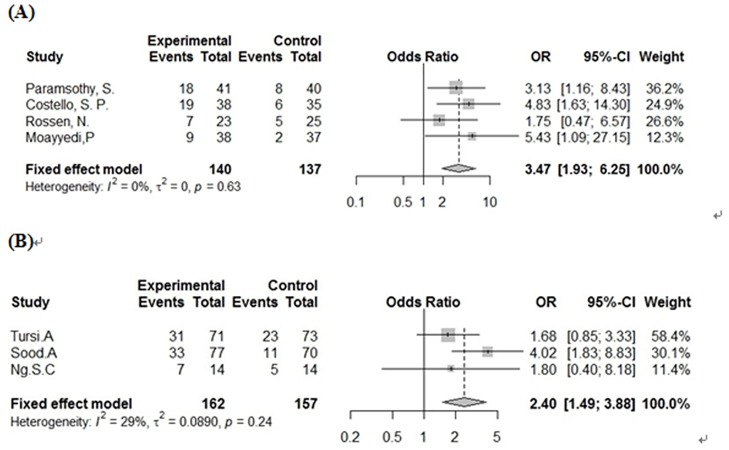
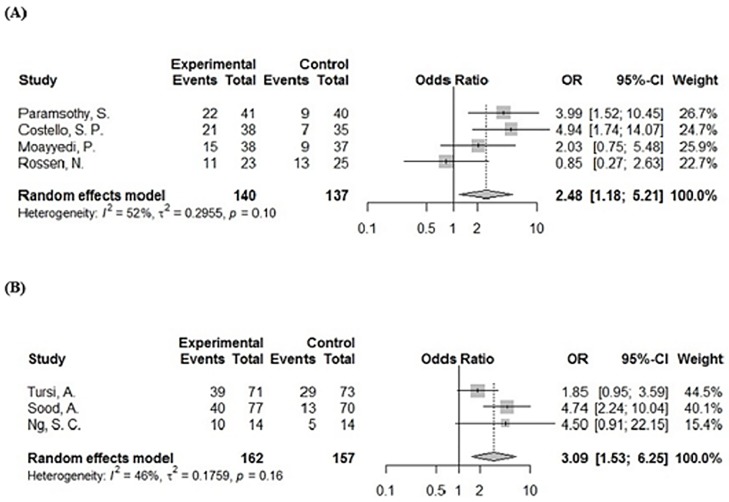
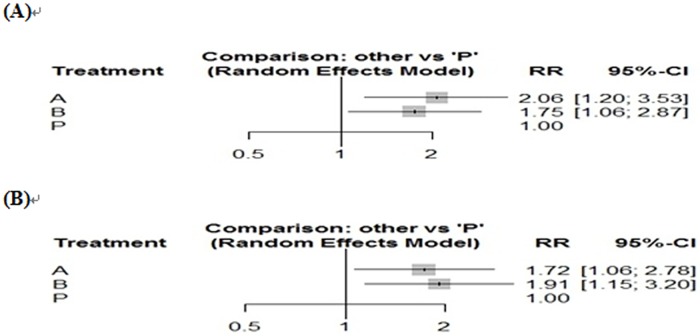
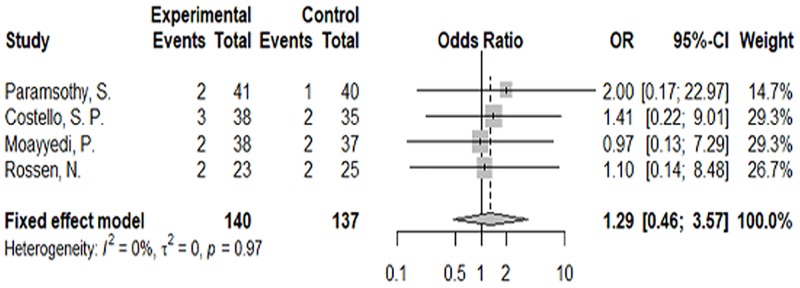
Results: Seven randomized, double-blind, placebo-controlled trials were used as the sources of the induction data. All treatments were superior to placebo. In terms of clinical remission and clinical response to active ulcerative colitis, direct comparisons showed fecal microbiota transplantation (OR = 3.47, 95% CI = 1.93-6.25) (OR = 2.48, 95% CI = 1.18-5.21) and mixed probiotics VSL#3 (OR = 2.40, 95% CI = 1.49-3.88) (OR = 3.09, 95% CI = 1.53-6.25) to have better effects than the placebo. Indirect comparison showed fecal microbiota transplantation and probiotic VSL#3 did not reach statistical significance either in clinical remission (RR = 1.20, 95% CI = 0.70-2.06) or clinical response (RR = 0.95, 95% CI = 0.62-1.45). In terms of safety, fecal microbiota transplantation (OR = 1.15, 95% CI = 0.51-2.61) and VSL #3 (OR = 0.90, 95% CI = 0.33-2.49) showed no statistically significant increase in adverse events compared with the control group. In terms of serious adverse events, there was no statistical difference between the fecal microbiota transplantation group and the control group (OR = 1.29, 95% CI = 0.46-3.57). The probiotics VSL#3 seems more safer than fecal microbiota transplantation, because serious adverse events were not reported in the VSL#3 articles.
Conclusions: Fecal microbiota transplantation or mixed probiotics VSL#3 achieved good results in clinical remission and clinical response in active ulcerative colitis, and there was no increased risk of adverse reactions. There was no statistical difference between the therapeutic effect of fecal microbiota transplantation and that of mixed probiotics VSL#3. However, the use of fecal microbiota transplantation and probiotics still has many unresolved problems in clinical applications, and more randomized controlled trials are required to confirm its efficacy.
Conflict of interest statement
The authors have declared that no competing interests exist.
Figures
References
-
- Ahmed J, Reddy BS, Mølbak L, Leser TD, MacFie J. Impact of probiotics on colonic microflora in patients with colitis: a prospective double blind randomised crossover study. International journal of surgery (london, england) [Internet]. 2013; 11(10):[1131–6 pp.]. Available from: http://cochranelibrary-wiley.com/o/cochrane/clcentral/articles/138/CN-00.... - PubMed
Publication types
MeSH terms
LinkOut - more resources
Full Text Sources
Medical
