


ICAM-1: A master regulator of cellular responses in inflammation, injury resolution, and tumorigenesis
- PMID: 32182390
- PMCID: PMC7977775
- DOI: 10.1002/JLB.2MR0220-549R
ICAM-1: A master regulator of cellular responses in inflammation, injury resolution, and tumorigenesis
Abstract
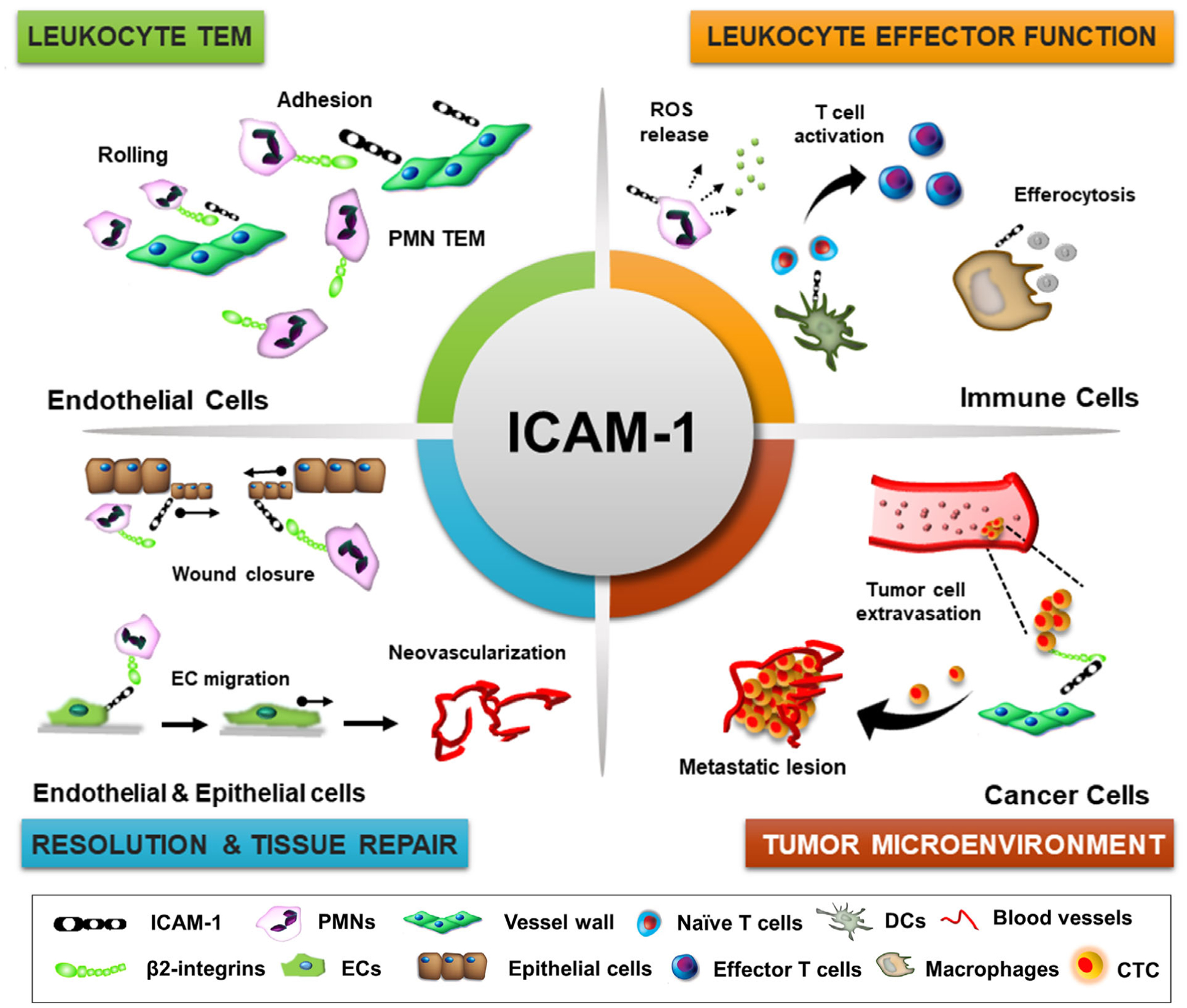
ICAM-1 is a cell surface glycoprotein and an adhesion receptor that is best known for regulating leukocyte recruitment from circulation to sites of inflammation. However, in addition to vascular endothelial cells, ICAM-1 expression is also robustly induced on epithelial and immune cells in response to inflammatory stimulation. Importantly, ICAM-1 serves as a biosensor to transduce outside-in-signaling via association of its cytoplasmic domain with the actin cytoskeleton following ligand engagement of the extracellular domain. Thus, ICAM-1 has emerged as a master regulator of many essential cellular functions both at the onset and at the resolution of pathologic conditions. Because the role of ICAM-1 in driving inflammatory responses is well recognized, this review will mainly focus on newly emerging roles of ICAM-1 in epithelial injury-resolution responses, as well as immune cell effector function in inflammation and tumorigenesis. ICAM-1 has been of clinical and therapeutic interest for some time now; however, several attempts at inhibiting its function to improve injury resolution have failed. Perhaps, better understanding of its beneficial roles in resolution of inflammation or its emerging function in tumorigenesis will spark new interest in revisiting the clinical value of ICAM-1 as a potential therapeutic target.
Keywords: Inflammation; adhesion molecules; immune cells; metastasis; migration; tumorigenesis; wound healing.
©2020 Society for Leukocyte Biology.
Conflict of interest statement
DISCLOSURES
The authors declare no conflicts of interest.
Figures
References
-
- Cavallaro U, Dejana E. Adhesion molecule signalling: not always a sticky business. Nature Rev Mol Cell Biol. 2011;12:189–197. - PubMed
-
- Hubbard AK, Rothlein R. Intercellular adhesion molecule-1 (ICAM-1) expression and cell signaling cascades. Free Radical Biol Med. 2000;28:1379–1386. - PubMed
-
- Gorina R, Lyck R, Vestweber D, Engelhardt B. beta2 integrin-mediated crawling on endothelial ICAM-1 and ICAM-2 is a prerequisite for transcellular neutrophil diapedesis across the inflamed blood-brain barrier. J Immunol. 2014;192:324–337. - PubMed
Publication types
MeSH terms
Substances
Grants and funding
LinkOut - more resources
Full Text Sources
Other Literature Sources
Miscellaneous
