


The Biology of Prostaglandins and Their Role as a Target for Allergic Airway Disease Therapy
- PMID: 32182661
- PMCID: PMC7084947
- DOI: 10.3390/ijms21051851
The Biology of Prostaglandins and Their Role as a Target for Allergic Airway Disease Therapy
Abstract
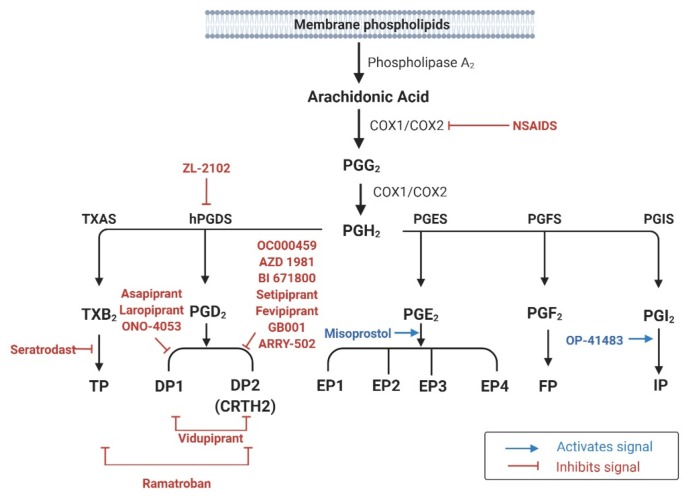
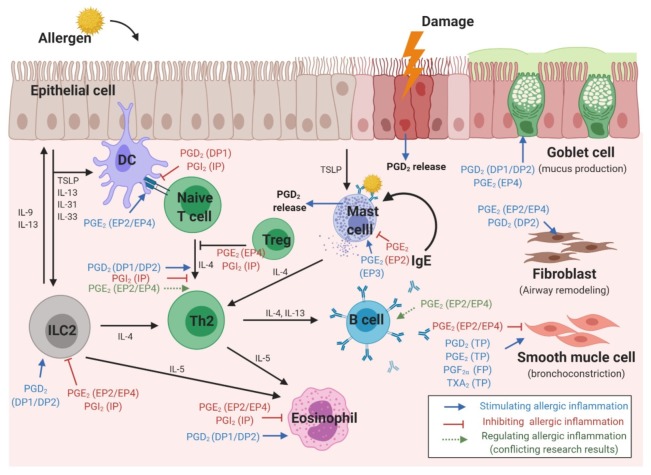
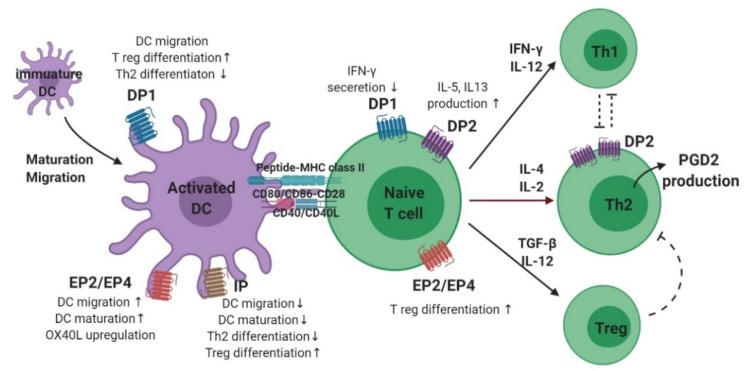
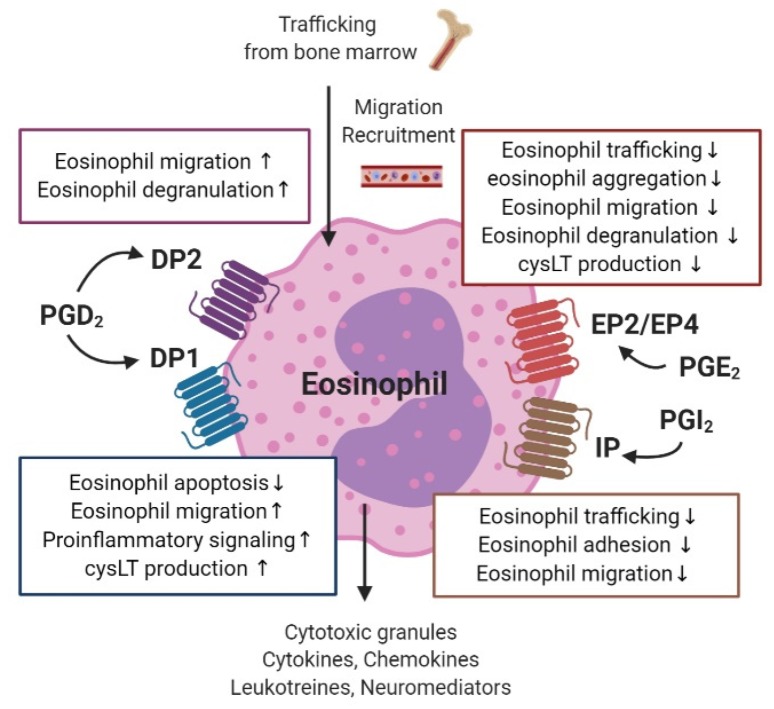
Prostaglandins (PGs) are a family of lipid compounds that are derived from arachidonic acid via the cyclooxygenase pathway, and consist of PGD2, PGI2, PGE2, PGF2, and thromboxane B2. PGs signal through G-protein coupled receptors, and individual PGs affect allergic inflammation through different mechanisms according to the receptors with which they are associated. In this review article, we have focused on the metabolism of the cyclooxygenase pathway, and the distinct biological effect of each PG type on various cell types involved in allergic airway diseases, including asthma, allergic rhinitis, nasal polyposis, and aspirin-exacerbated respiratory disease.
Keywords: AERD; PGD2; PGE2; allergic rhinitis; allergy; asthma; prostaglandins.
Conflict of interest statement
The authors declare no conflicts of interest.
Figures

References
Publication types
MeSH terms
Substances
Grants and funding
LinkOut - more resources
Full Text Sources
Medical
Miscellaneous
