


Pre-School Teachers' Knowledge, Belief, Identification Skills, and Self-Efficacy in Identifying Autism Spectrum Disorder (ASD): A Conceptual Framework to Identify Children with ASD
- PMID: 32183022
- PMCID: PMC7139893
- DOI: 10.3390/brainsci10030165
Pre-School Teachers' Knowledge, Belief, Identification Skills, and Self-Efficacy in Identifying Autism Spectrum Disorder (ASD): A Conceptual Framework to Identify Children with ASD
Abstract
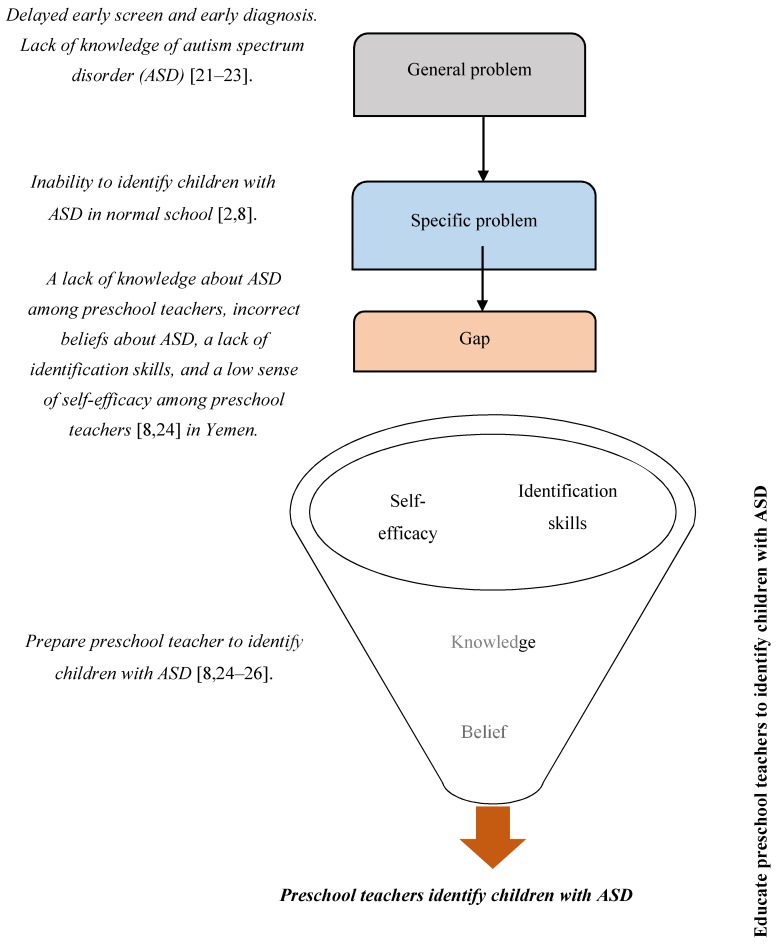
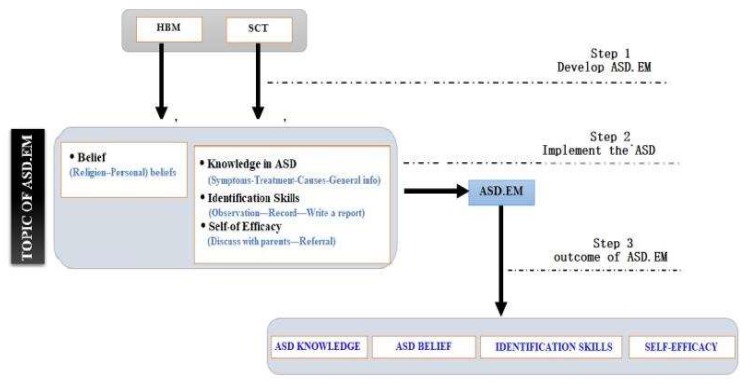
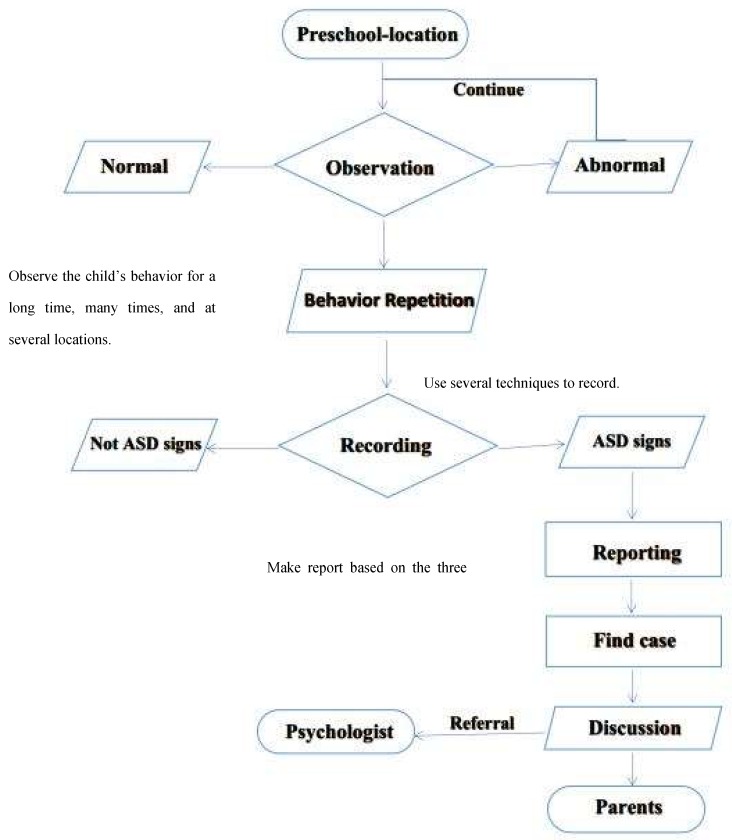
Recently, the identification and detection of children with autism spectrum disorder (ASD) has become an essential issue under ASD intervention services. The high percentage of ASD among children requires preschool teachers to recognizse children's abnormal development and identify them at an early stage, followed by referral to specialists. Therefore, this identification calls for a specific ability among preschool teachers, identified as knowledge, belief, identification skills, and self-efficacy (KBISSE). This conceptual framework aims to utilize the current literature to present a discussion on preschool teachers' KBISSE in identifying children with ASD and making decisions to refer children suspected with ASD to specialists. The conceptual framework is discussed based on social cognitive theory (SCT) and the health belief model (HBM). The conceptual framework emphasizes the need for preschool teachers to be educated in ASD via an educational module that could increase teachers' self-efficacy in identifying children with ASD. Besides, knowledge in ASD, belief in ASD, and identification skills are also necessary variables for building the educational module. The educational module is useful for guiding future research on preschool teachers' identification of children with any disability, one of which is ASD, and subsequent specialist referral at an early stage.
Keywords: autism spectrum disorder (ASD); belief; identify; knowledge; preschool teachers; self-efficacy; skills.
Conflict of interest statement
The authors declare no conflict of interest.
Figures
References
-
- Neely-Barnes S.L., Hall H.R., Roberts R.J., Graff J.C. Parenting a Child With an Autism Spectrum Disorder: Public Perceptions and Parental Conceptualizations. J. Fam. Soc. Work. 2011;14:208–225. doi: 10.1080/10522158.2011.571539. - DOI
-
- Barrie D. Master’s Thesis. University of Windsor; Windsor, ON, Canada: 2010. Factors That Influence Parents Toward Early Diagnosis of Autism Spectrum Disorder.
-
- Sacrey L.-A.R., Zwaigenbaum L., Bryson S., Brian J., Smith I.M., Roberts W., Szatmari P., Roncadin C., Garon N., Novak C. Can parents’ concerns predict autism spectrum disorder? A prospective study of high-risk siblings from 6 to 36 months of age. J. Am. Acad. Child Adolesc. Psychiatry. 2015;54:470–478. doi: 10.1016/j.jaac.2015.03.014. - DOI - PubMed
Publication types
LinkOut - more resources
Full Text Sources
