


Flavonoids and Other Polyphenols Act as Epigenetic Modifiers in Breast Cancer
- PMID: 32183060
- PMCID: PMC7146477
- DOI: 10.3390/nu12030761
Flavonoids and Other Polyphenols Act as Epigenetic Modifiers in Breast Cancer
Abstract
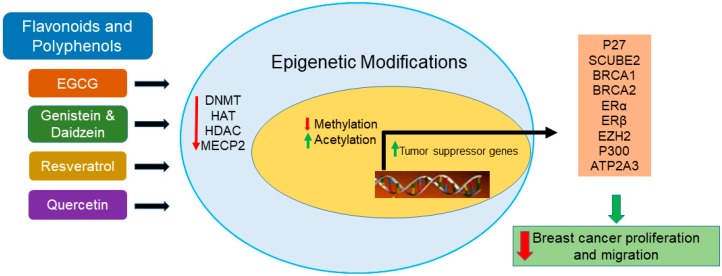
Breast cancer is a common cancer that occurs due to different epigenetic alterations and genetic mutations. Various epidemiological studies have demonstrated an inverse correlation between breast cancer incidence and flavonoid intake. The anti-cancer action of flavonoids, a class of polyphenolic compounds that are present in plants, as secondary metabolites has been a major topic of research for many years. Our review analysis demonstrates that flavonoids exhibit anti-cancer activity against breast cancer occurring in different ethnic populations. Breast cancer subtype and menopausal status are the key factors in inducing the flavonoid's anti-cancer action in breast cancer. The dose is another key factor, with research showing that approximately 10 mg/day of isoflavones is required to inhibit breast cancer occurrence. In addition, flavonoids also influence the epigenetic machinery in breast cancer, with research demonstrating that epigallocatechin, genistein, and resveratrol all inhibited DNA methyltransferase and altered chromatin modification in breast cancer. These flavonoids can induce the expression of different tumor suppressor genes that may contribute to decreasing breast cancer progression and metastasis. Additional studies are required to confirm the contribution of epigenetic modifications by flavonoids to breast cancer prevention.
Keywords: Epigenetics; breast cancer; chromatin modification; flavonoids; methylation.
Conflict of interest statement
The authors declare no conflict of interest.
Figures
References
Publication types
MeSH terms
Substances
LinkOut - more resources
Full Text Sources
Medical
