Review
. 2020 Mar 13;12(3):264.
doi: 10.3390/pharmaceutics12030264.

Liposomes for Enhanced Bioavailability of Water-Insoluble Drugs: In Vivo Evidence and Recent Approaches

Affiliations
Review

Liposomes for Enhanced Bioavailability of Water-Insoluble Drugs: In Vivo Evidence and Recent Approaches

Mi-Kyung Lee. Pharmaceutics. .

Abstract

It has been known that a considerable number of drugs in clinical use or under development are water-insoluble drugs with poor bioavailability (BA). The liposomal delivery system has drawn attention as one of the noteworthy approaches to increase dissolution and subsequently absorption in the gastrointestinal (GI) tract because of its biocompatibility and ability to encapsulate hydrophobic molecules in the lipid domain. However, there have been several drawbacks, such as structural instability in the GI tract and poor permeability across intestinal epithelia because of its relatively large size. In addition, there have been no liposomal formulations approved for oral use to date, despite the success of parenteral liposomes. Nevertheless, liposomal oral delivery has resurged with the rapid increase of published studies in the last decade. However, it is discouraging that most of this research has been in vitro studies only and there have not been many water-insoluble drugs with in vivo data. The present review focused on the in vivo evidence for the improved BA of water-insoluble drugs using liposomes to resolve doubts raised concerning liposomal oral delivery and attempted to provide insight by highlighting the approaches used for in vivo achievements.

Keywords: absorption; bioavailability; liposomes; oral; water-insoluble drugs.


Conflict of interest statement

The author declares no conflict of interest.

Figures
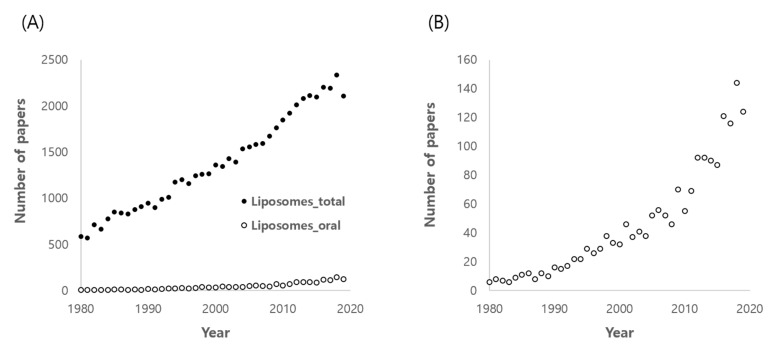
Figure 1
Figure 1
Number of papers published from the years 1980 to 2000. The numbers were obtained from a Pubmed search using keywords of liposomes (Liposomes_total) or liposomes and oral (Liposomes_oral). (A) represents both results, ‘Liposome_total’ and ‘Liposomes_oral’, for comparison. (B) represents ‘Liposomes_oral’ only to show the increasing trend.
Figure 2
Figure 2
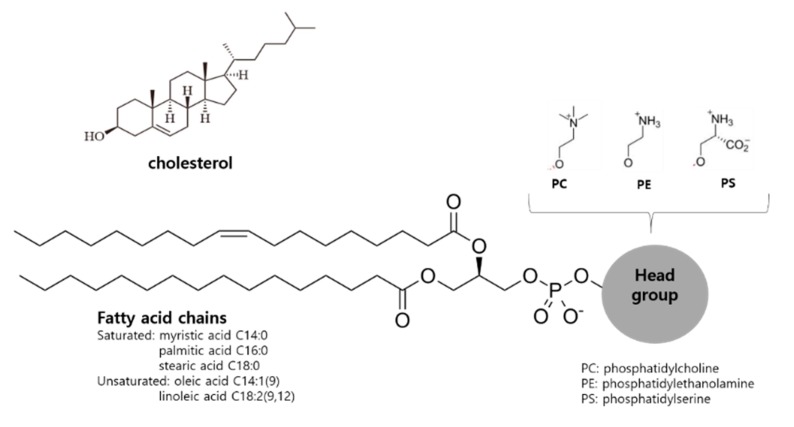
Structure of phospholipids and cholesterol.
Figure 3
Figure 3
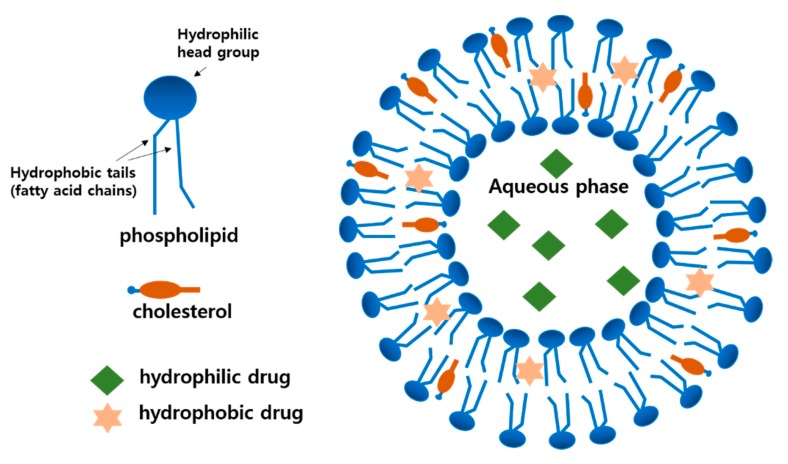
Structure of conventional liposome encapsulating hydrophilic and hydrophobic drugs.
Figure 4
Figure 4
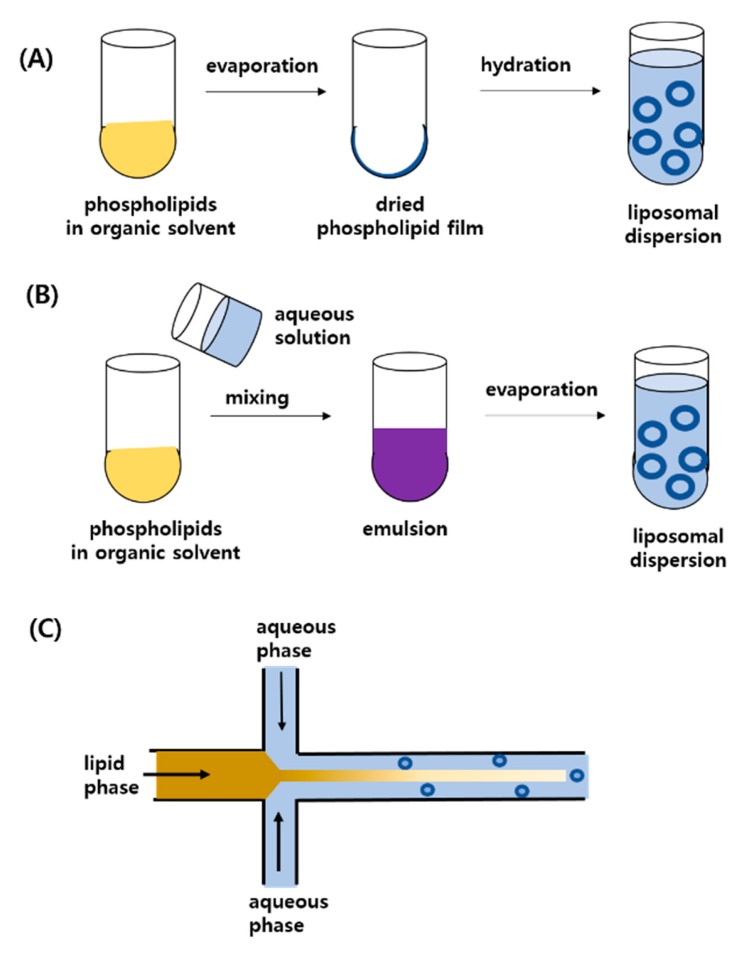
Representative techniques for the preparation of liposomes: film hydration method (A), reverse phase evaporation method (B) and microfluidic method (C).
Figure 5
Figure 5
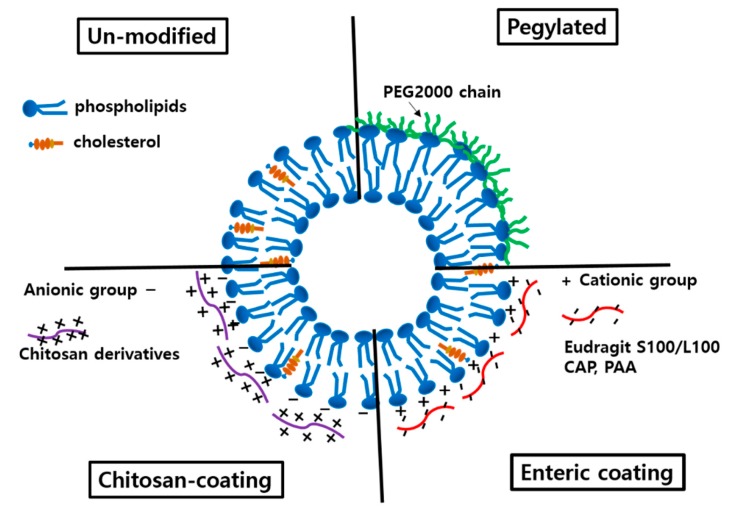
Surface modification of liposomes for in vivo BA enhancement.
Figure 6
Figure 6
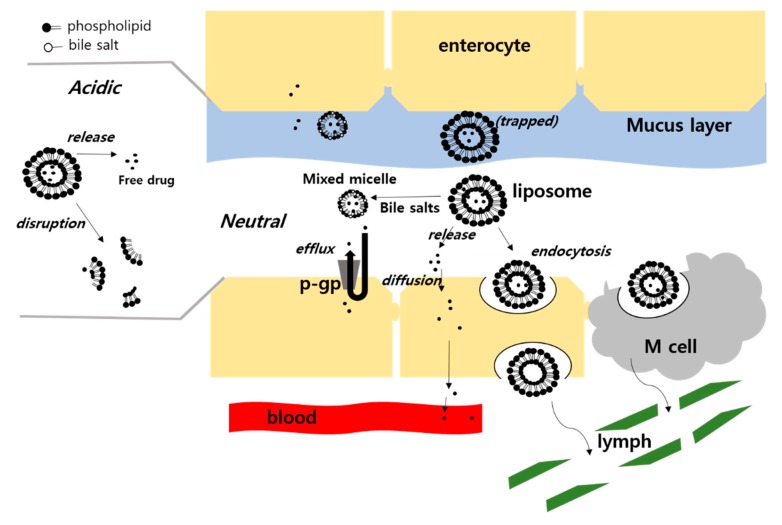
Proposed fate and absorption mechanisms of water-insoluble drugs delivered by liposomes in the GI tract.

References

    1. Ghadi R., Dand N. BCS Class IV Drugs: Highly Notorious Candidates for Formulation Development. J. Control. Release. 2017;248:71–95. doi: 10.1016/j.jconrel.2017.01.014. - DOI - PubMed
    1. Kalepu S., Nekkanti V. Insoluble Drug Delivery Strategies: Review of Recent Advances and Business Prospects. Acta Pharm. Sin. B. 2015;5:442–453. doi: 10.1016/j.apsb.2015.07.003. - DOI - PMC - PubMed
    1. Choi Y.H., Han H.K. Nanomedicines: Current Status and Future Perspectives in Aspect of Drug Delivery and Pharmacokinetics. J. Pharm. Investig. 2018;48:43–60. doi: 10.1007/s40005-017-0370-4. - DOI - PMC - PubMed
    1. Singh M.S., Lamprecht A. Cargoing P-Gp Inhibitors via Nanoparticle Sensitizes Tumor Cells against Doxorubicin. Int. J. Pharm. 2015;478:745–752. doi: 10.1016/j.ijpharm.2014.11.064. - DOI - PubMed
    1. Guo S., Huang L. Nanoparticles Containing Insoluble Drug for Cancer Therapy. Biotechnol. Adv. 2014;32:778–788. doi: 10.1016/j.biotechadv.2013.10.002. - DOI - PMC - PubMed

Grants and funding

LinkOut - more resources