


Domestic violence among married women of reproductive age in Zimbabwe: a cross sectional study
- PMID: 32183756
- PMCID: PMC7079366
- DOI: 10.1186/s12889-020-8447-9
Domestic violence among married women of reproductive age in Zimbabwe: a cross sectional study
Abstract
Background: Domestic violence does not only violate women's fundamental human rights but it also undermines them from achieving their fullest potential around the world. This study was conducted to assess trends and factors associated with domestic violence among married women of reproductive age in Zimbabwe.
Method: This was a cross-sectional study which used secondary data obtained from 2005/06, 2010/11 and 2015 Zimbabwe Demographic and Health Surveys (ZDHS). Respondents ranged from married or living with a partner (15-49 years). Multiple logistic regression analysis was used to examine factors associated with domestic violence.
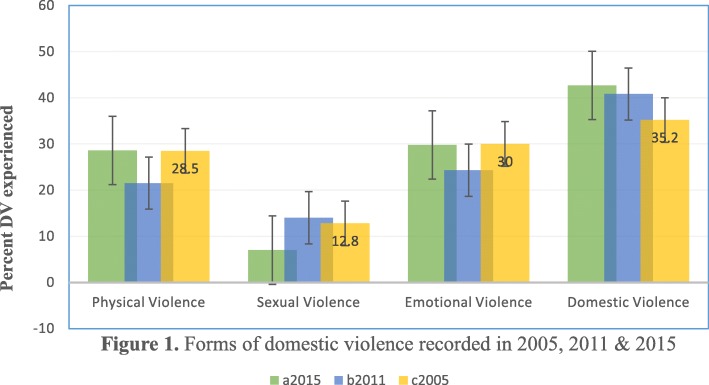
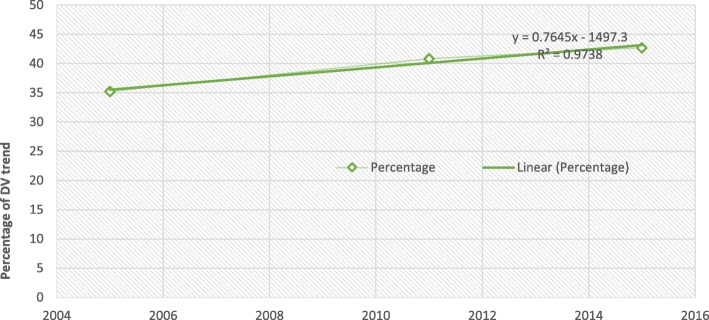
Results: Out of 4472 women who were currently married, 1907 (42.7%) had ever experienced one form of domestic violence (physical, emotional and sexual violence). Women aged 40-49 was deemed a protective factor against domestic violence. Risk of domestic violence was higher among working women than unemployed women [AOR = 1.35; p ≤ 0.047]. Women who drink alcohol significantly risk experiencing domestic violence compared to their non-drinking counterpart; also women whose husbands drink alcohol were at higher risk of experiencing domestic violence [AOR = 1.35; p ≤ 0.001]. Domestic violence was higher among women whose husbands have ever experienced their fathers beating their mothers and significant for women whose husbands have more than one wife (polygamy) [AOR = 1.35; p ≤ 0.001]. High parity (5 or more children) was also a risk factor for domestic violence among the studied population [AOR = 1.35; p ≤ 0.038].
Conclusion: Domestic violence was found to be strongly associated with women whose husbands drink alcohol, products of abusive parents/father beating their mother and/or polygamous marriage (had more than one wife). Domestic violence still remains a challenge and a more biting policy efforts are needed to eradicate this public health canker in Zimbabwe.
Keywords: Africa; Domestic violence; Public health trends; Risk factors; Zimbabwe.
Conflict of interest statement
The authors declare that they have no competing interests.
Figures
References
-
- United Nations . Women’s Rights are Human Rights. 2014.
-
- García-Moreno C, et al. Global and regional estimates of violence against women: prevalence and health effects of intimate partner violence and non-partner sexual violence. Geneva: World Health Organization; 2013.
-
- Zimbabwe Domestic Violence Act; the Domestic Violence Act [Chapter 5:16], 2007. Available from: http://evaw-global-database.unwomen.org/-/media/files/un%20women/vaw/ful....
-
- United Nations . Violence against women - Key findings. 2015.
MeSH terms
Grants and funding
LinkOut - more resources
Full Text Sources
