


Rationale and design of a randomised controlled trial investigating the effect of multidisciplinary nutritional rehabilitation for patients treated for head and neck cancer (the NUTRI-HAB trial)
- PMID: 32183835
- PMCID: PMC7079410
- DOI: 10.1186/s12937-020-00539-7
Rationale and design of a randomised controlled trial investigating the effect of multidisciplinary nutritional rehabilitation for patients treated for head and neck cancer (the NUTRI-HAB trial)
Abstract
Background: Eating problems frequently affect quality of life and physical, psychological and social function in patients treated for head and neck cancer (HNC). Residential rehabilitation programmes may ameliorate these adverse effects but are not indicated for all individuals. Systematic assessment of rehabilitation needs may optimise the use of resources while ensuring referral to rehabilitation for those in need. Yet, evidence lacks on which nutrition screening and assessment tools to use. The trial objectives are: 1) To test the effect of a multidisciplinary residential nutritional rehabilitation programme compared to standard care on the primary outcome body weight and secondary outcomes health-related quality of life, physical function and symptoms of anxiety and depression in patients curatively treated for HNC and 2) To test for correlations between participants' development in outcome scores during their participation in the programme and their baseline scores in Nutritional Risk Screening 2002 (NRS 2002), the Scored Patient-Generated Subjective Global Assessment Short Form (PG-SGA SF), and M. D. Anderson Dysphagia Inventory (MDADI) and to assess sensitivity, specificity and predictive values of the three tools in relation to a clinically relevant improvement in outcome scores.
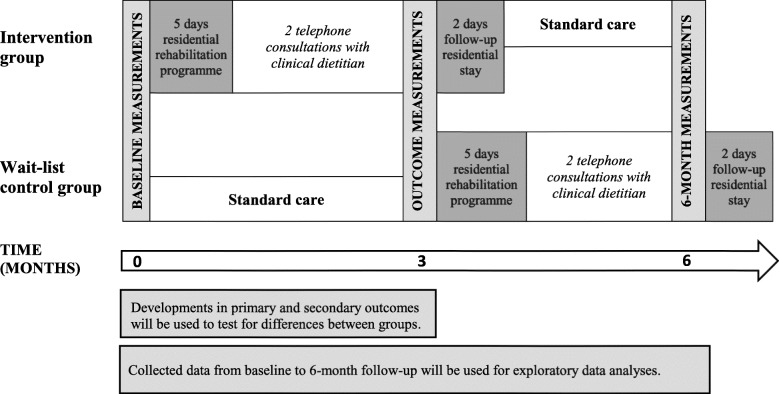
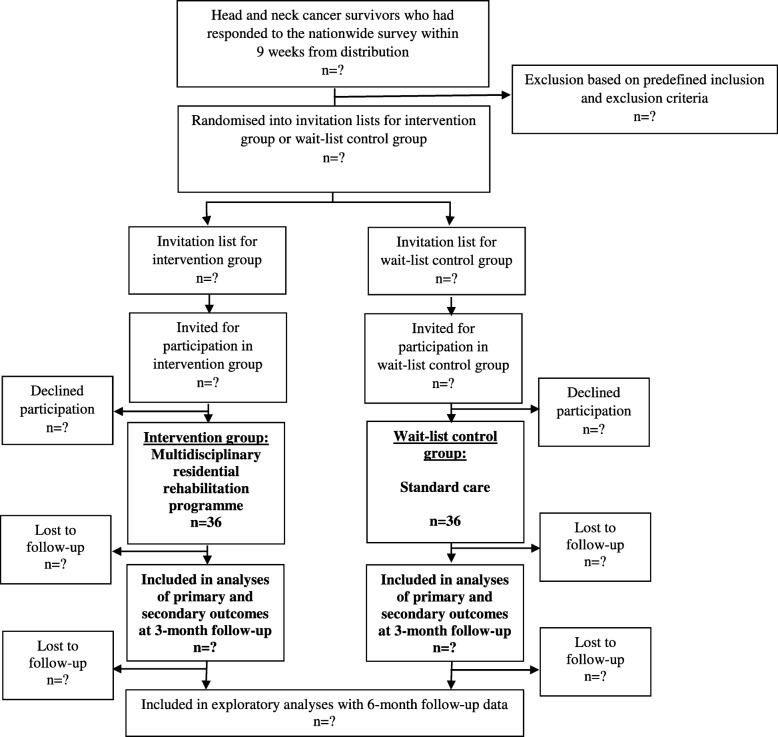
Methods: In a randomised controlled trial, 72 patients treated for HNC recruited through a nationwide survey will be randomised to a multidisciplinary residential nutritional rehabilitation programme or to a wait-list control group. Data are collected at baseline, three and six months. Primary outcome is change in body weight, and secondary outcomes include changes in quality of life, physical function and symptoms of anxiety and depression. Potential correlations between intervention effect and baseline scores in NRS 2002, PG-SGA-SF and MDADI will be tested, and sensitivity, specificity and predictive values of the three tools in relation to a clinically relevant improvement in outcome scores will be assessed.
Discussion: This is the first randomised controlled trial to test the effect of a multidisciplinary residential nutritional rehabilitation programme in patients treated for HNC. Recruitment through a nationwide survey gives a unique possibility to describe the trial population and to identify potential selection bias. As the trial will explore the potential of different nutrition screening and assessment tools in the assessment of rehabilitation needs in patients treated for HNC, the trial will create knowledge about how selection and prioritisation of nutritional rehabilitation aimed at patients treated for HNC should be offered. The results may contribute to a better organisation and use of existing resources in benefit of patients treated for HNC.
Trial registration: The trial is registered by The Danish Data Protection Agency (registration 2012-58-0018, approval number 18/14847) and the Regional Committees on Health Research Ethics for Southern Denmark (journal number 20182000-165). ClinicalTrials.gov Identifier: NCT03909256. Registered April 9, 2019.
Keywords: Assessment of rehabilitation needs; Eating problems; Head and neck cancer; Nutrition screening; Nutritional assessment; Quality of life; Rehabilitation; Survivorship.
Conflict of interest statement
The authors declare that they have no competing interests.
Figures
References
Publication types
MeSH terms
Associated data
LinkOut - more resources
Full Text Sources
Medical
Miscellaneous
