


Protocol for a randomized control trial of the caregiver support intervention with Syrian refugees in Lebanon
- PMID: 32183862
- PMCID: PMC7079443
- DOI: 10.1186/s13063-020-4175-9
Protocol for a randomized control trial of the caregiver support intervention with Syrian refugees in Lebanon
Abstract
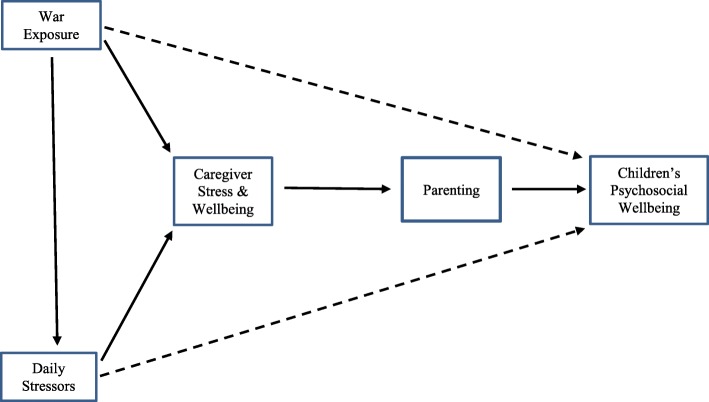
Background: There is evidence that chronic stress negatively impacts parenting among refugees and other war-affected communities. Persistent parental stress and distress may lead to unresponsive, anxious, or overly harsh parenting and a corresponding increase in emotional and behavior problems among children. Most parenting interventions emphasize the acquisition of knowledge and skills; however, this overlooks the deleterious effects of chronic stress on parenting. The Caregiver Support Intervention (CSI) aims to strengthen quality of parenting skills by lowering stress and improving psychosocial wellbeing among refugee caregivers of children aged 3-12 years, while also increasing knowledge and skills related to positive parenting. The CSI is a nine-session psychosocial group intervention delivered by non-specialist providers. It is intended for all adult primary caregivers of children in high-adversity communities, rather than specifically targeting caregivers already showing signs of elevated distress.
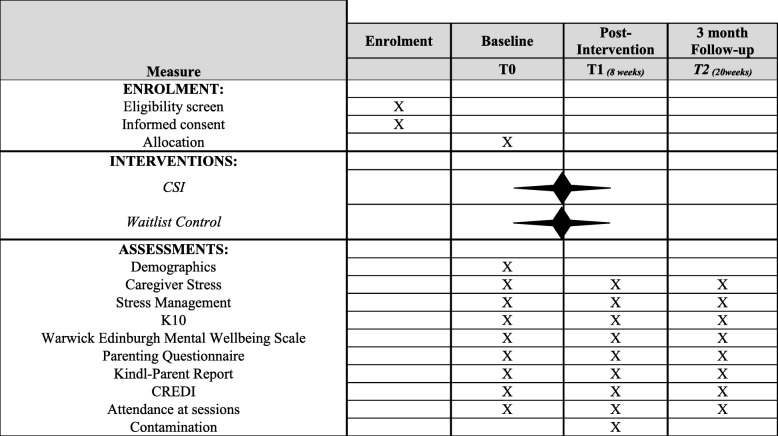
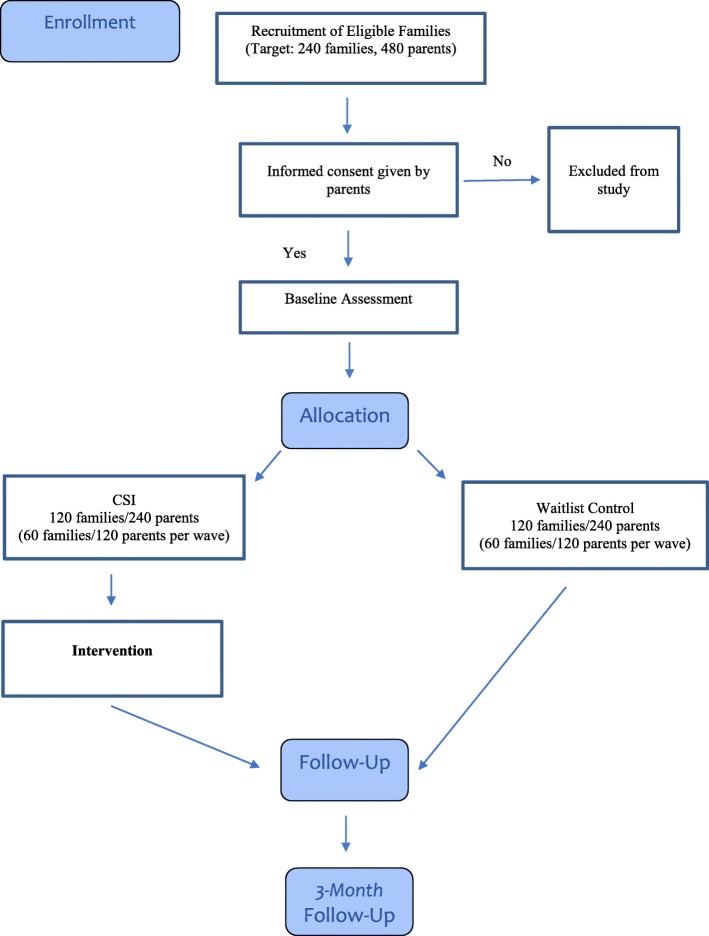
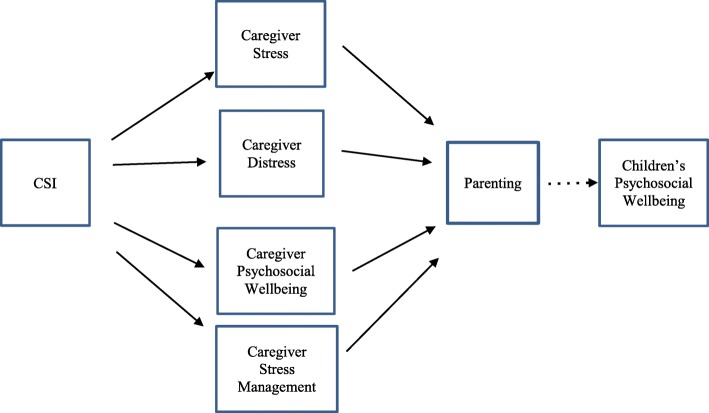
Methods/design: The primary objective of this study is to assess the effectiveness of the CSI through a parallel group randomized controlled study with Syrian refugee families in North Lebanon. Participants will be primary caregivers of children aged 3-12 years, with one index child per family. Families will be randomized to the CSI or a waitlist control group. A total of 240 families (480 caregivers) will be recruited into the study. Randomization will be at the family level, and CSI groups will be held separately for women and men. The study will be implemented in two waves. Outcomes for both arms will be assessed at baseline, post-intervention, and at a 3-month follow-up. The primary outcome is quality of parenting skills. Secondary outcomes include parental warmth and sensitivity, harsh parenting, parenting knowledge, and child psychosocial wellbeing. Putative mediators of the CSI on parenting are caregiver stress, distress, psychosocial wellbeing, and stress management.
Discussion: This trial may establish the CSI as an effective intervention for strengthening parenting in families living in settings of high adversity, particularly refugee communities.
Trial registration: International Society for the Registration of Clinical Trials, ISRCTN22321773. Registered on 5 August 2019.
Keywords: Children; Distress; Mental health; Mindfulness; Parenting; Psychosocial; Refugees; Stress; Syria; War.
Conflict of interest statement
The authors declare that they have no competing interests.
Figures
References
-
- Giordano F, Boerchi D, Hurtubia V, Maragel M, Koteit W, Yazbek L, et al. Risk and protection in mental health among syrian children displaced in lebanon. Second World Congr Resilience FROM Pers To Soc. 2014;(November 2016):703–12.
-
- Bartels S. Running out of time: Survival of Syrian refugee children in Lebanon. [Internet]. Boston; 2014. Available from: https://cdn2.sph.harvard.edu/wp-content/uploads/sites/114/2017/12/FXB-Ce....
-
- Davis C, Wanninger A. Mental health and psychosocial support considerations for Syrian refugees in Turkey: Sources of distress, coping mechanisms, & access to support. 2017;(January):1–19. Available from: https://internationalmedicalcorps.org/document.doc?id=804.
-
- James L, Sovcik A, Garoff F, Abbasi R. The mental health of Syrian refugee children and adolescents. Forced Migr Rev. 2014;47. https://www.fmreview.org/syria/james-sovcik-garoff-abbasi.
-
- Save the Children . Invisible Wounds: The impact of six years of war on the mental health of Syria’s children. 2017.
Publication types
MeSH terms
Grants and funding
LinkOut - more resources
Full Text Sources
Medical
