


Interaction of SHP-2 SH2 domains with PD-1 ITSM induces PD-1 dimerization and SHP-2 activation
- PMID: 32184441
- PMCID: PMC7078208
- DOI: 10.1038/s42003-020-0845-0
Interaction of SHP-2 SH2 domains with PD-1 ITSM induces PD-1 dimerization and SHP-2 activation
Abstract
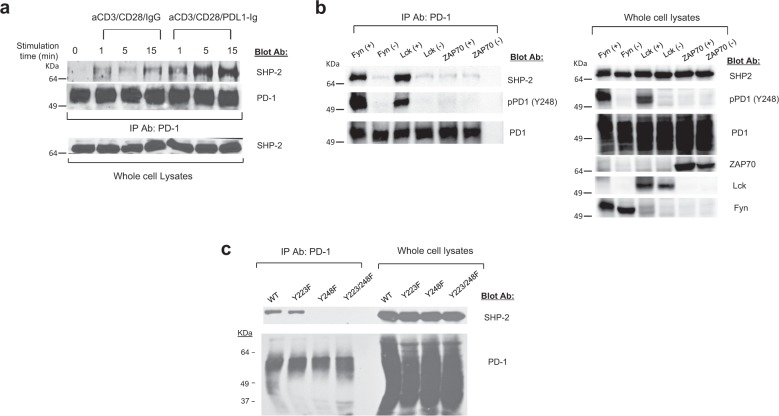
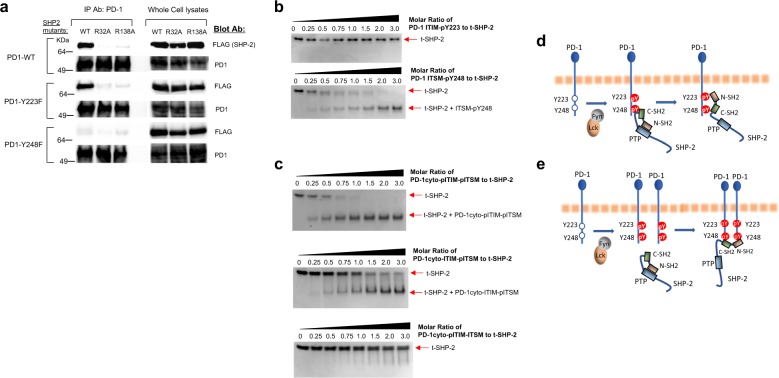
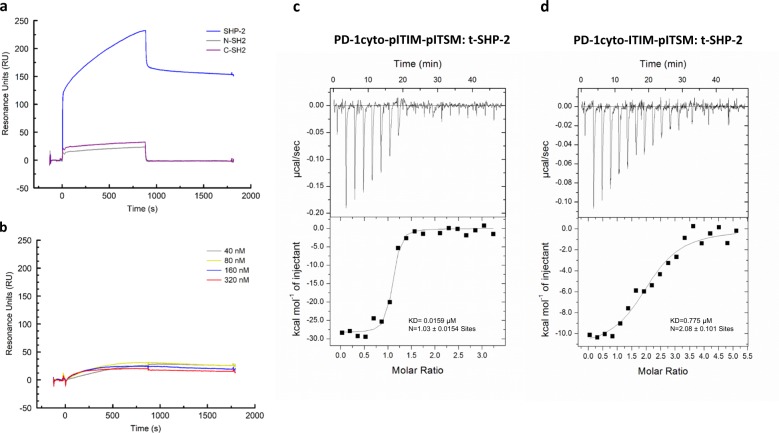
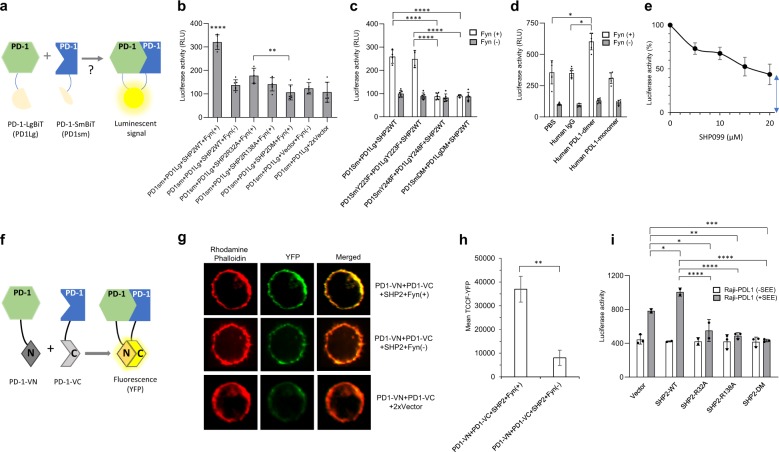
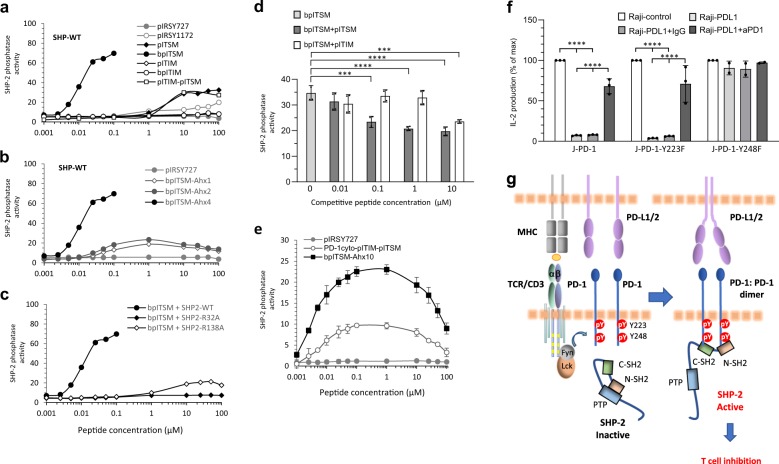
Programmed cell death-1 (PD-1) inhibits T cell responses. This function relies on interaction with SHP-2. PD-1 has one immunoreceptor tyrosine-based inhibitory motif (ITIM) at Y223 and one immunoreceptor tyrosine-based switch motif (ITSM) at Y248. Only ITSM-Y248 is indispensable for PD-1-mediated inhibitory function but how SHP-2 enzymatic activation is mechanistically regulated by one PD-1 phosphotyrosine remains a puzzle. We found that after PD-1 phosphorylation, SHP-2 can bridge phosphorylated ITSM-Y248 residues on two PD-1 molecules via its amino terminal (N)-SH2 and carboxyterminal (C)-SH2 domains forming a PD-1: PD-1 dimer in live cells. The biophysical ability of SHP-2 to interact with two ITSM-pY248 residues was documented by isothermal titration calorimetry. SHP-2 interaction with two ITSM-pY248 phosphopeptides induced robust enzymatic activation. Our results unravel a mechanism of PD-1: SHP-2 interaction that depends only on ITSM-Y248 and explain how a single docking site within the PD-1 cytoplasmic tail can activate SHP-2 and PD-1-mediated inhibitory function.
Conflict of interest statement
The authors declare no competing non-financial interests, but the following competing financial interests: V.A.B. and G.J.F. have patents on the PD-1 pathway licensed by Bristol-Myers Squibb, Roche, Merck, EMD-Serono, Boehringer Ingelheim, AstraZeneca, Novartis and Dako.
Figures
References
Publication types
MeSH terms
Substances
Grants and funding
LinkOut - more resources
Full Text Sources
Other Literature Sources
Molecular Biology Databases
Miscellaneous
