Observational Study
. 2020 Mar 3:15:487-499.
doi: 10.2147/COPD.S230952. eCollection 2020.

Characteristics of Chronic Obstructive Pulmonary Disease Patients with Pulmonary Hypertension Assessed by Echocardiography in a Three-Year Observational Cohort Study

Affiliations
Observational Study

Characteristics of Chronic Obstructive Pulmonary Disease Patients with Pulmonary Hypertension Assessed by Echocardiography in a Three-Year Observational Cohort Study

Shingo Nakayama et al. Int J Chron Obstruct Pulmon Dis. .

Abstract

Background: Pulmonary hypertension (PH) is a major comorbidity of chronic obstructive pulmonary disease (COPD). However, the association of PH detected by echocardiography and COPD-related outcome in longitudinal follow-up has not been elucidated. In this study, we aimed to investigate the relationship between clinical characteristics of COPD patients with PH detected by echocardiography and various outcome parameters such as COPD exacerbation and health status over a three-year observation period.

Methods: In this observational study, we analyzed patients with COPD who underwent chest computed tomography and echocardiography at baseline (n = 183).

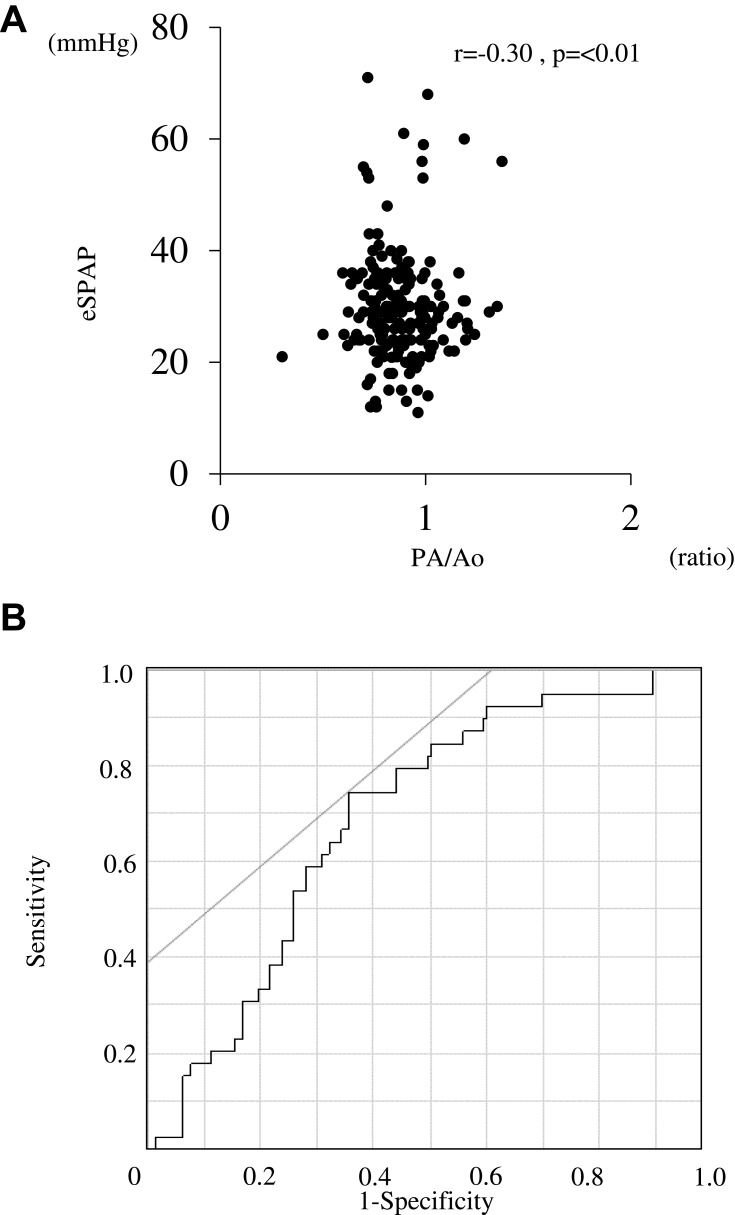
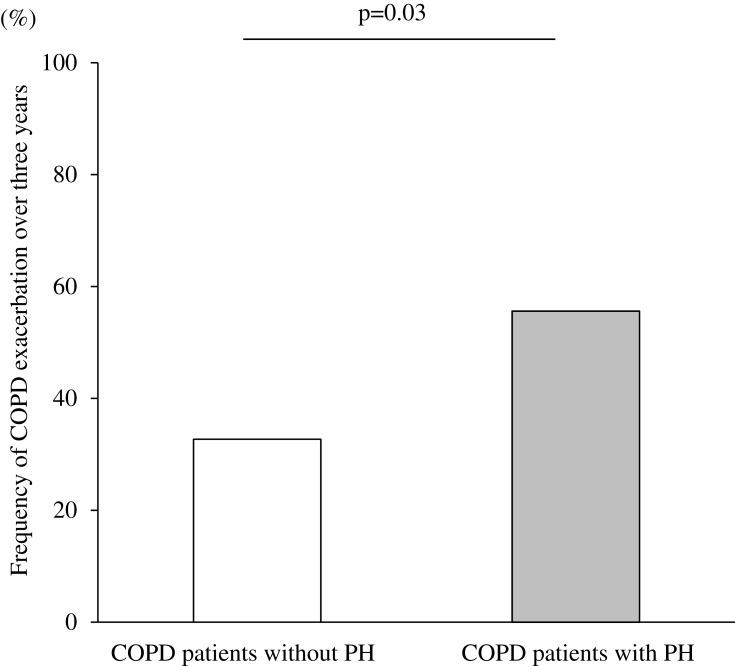
Results: The prevalence of PH was 21.9% (40 patients). The median estimated systolic pulmonary artery pressure in patients with PH was 38.8 mmHg. COPD patients with PH were older, had a lower body mass index, scored worse in the COPD Assessment Test and St. George's Respiratory Questionnaire, and exhibited a lower diffusing capacity of the lung for carbon monoxide in comparison to patients without PH. In computed tomography images, the percentages of low-attenuation areas (LAA%) and interstitial abnormalities were higher in COPD patients with PH than in those without PH. Higher values for LAA% (LAA ≥ 30%) and interstitial abnormalities independently increased the risk of PH. The ratio of main pulmonary diameter to aortic artery diameter was significantly correlated with estimated systolic pulmonary artery pressure. In the follow-up analysis, the frequency of exacerbations in three years was significantly higher in patients with PH compared to patients without PH.

Conclusion: In this study, we identified the clinical characteristics of COPD patients with PH detected by echocardiography. The presence of PH assessed by echocardiography was related to future COPD exacerbations and closely related to radiographical emphysema.

Keywords: COPD; comorbidity; echocardiography; pulmonary hypertension.


Conflict of interest statement

Dr Koichiro Asano reports personal fees from Teijin Pharma Ltd, Novartis Pharma, Sanofi, Astellas Pharma, AstraZeneca, Boehringer-Ingelheim, GlaxoSmithKline, Kyorin Pharma, and MSD, outside the submitted work. The authors report no other conflicts of interest in this work.

Figures
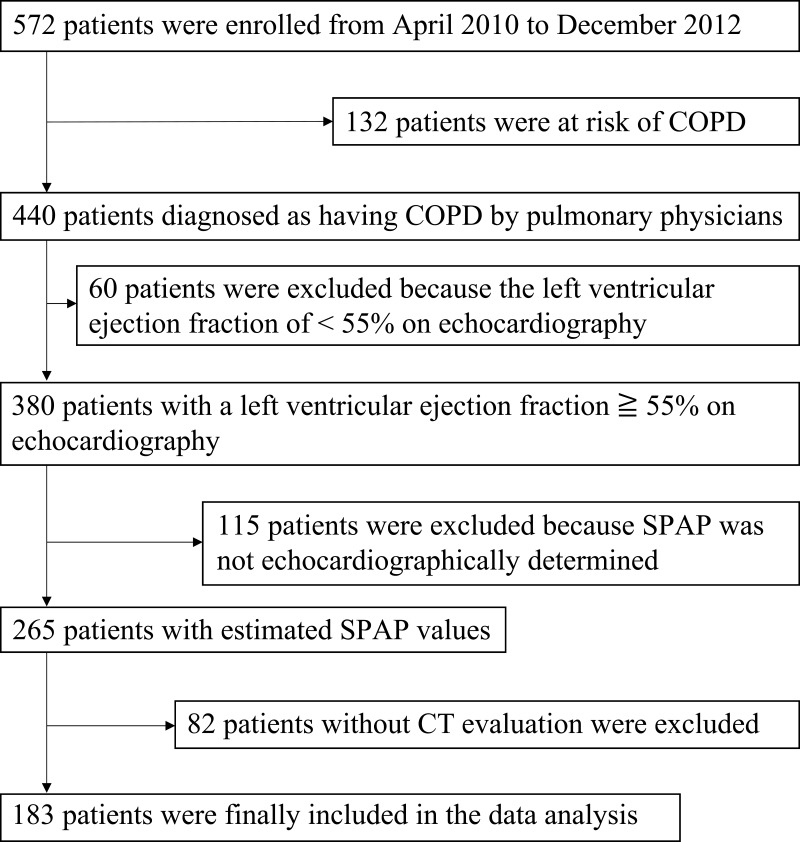
Figure 1
Figure 1
Process of patient selection in this study. Only data from COPD patients with spirometrically confirmed COPD (FEV1/FVC < 0.7), as well as CT and echocardiography measurements at baseline, were selected and analyzed. Abbreviations: COPD, chronic obstructive pulmonary disease; SPAP, systolic pulmonary artery pressure; CT, computed tomography; FEV1, forced expiratory volume in 1 second; FVC, forced vital capacity.
Figure 2
Figure 2
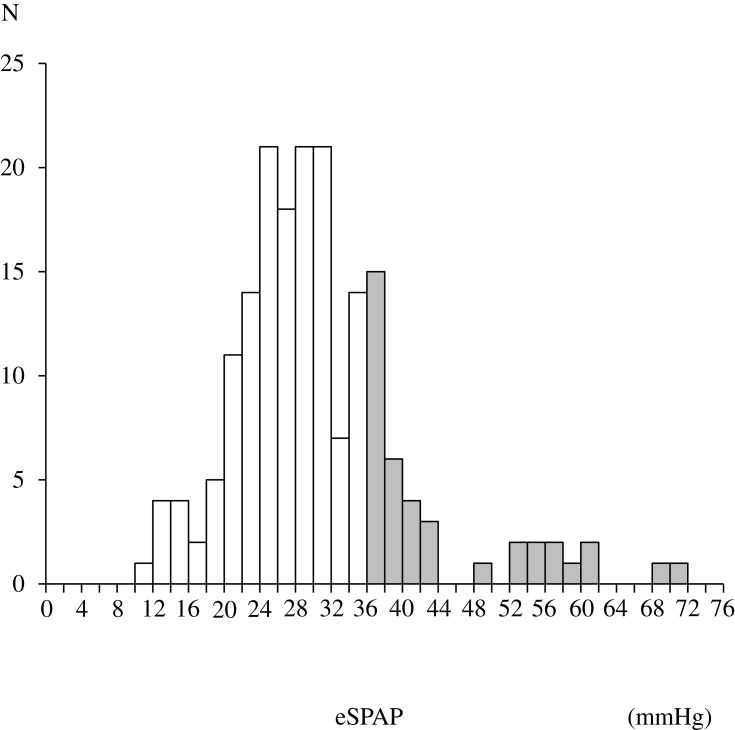
Distribution of eSPAP in the study population with PH assessed by echocardiography. Shaded bars indicate patients with PH. Abbreviations: eSPAP, estimated systolic pulmonary artery pressure; PH, pulmonary arterial hypertension.
Figure 3
Figure 3
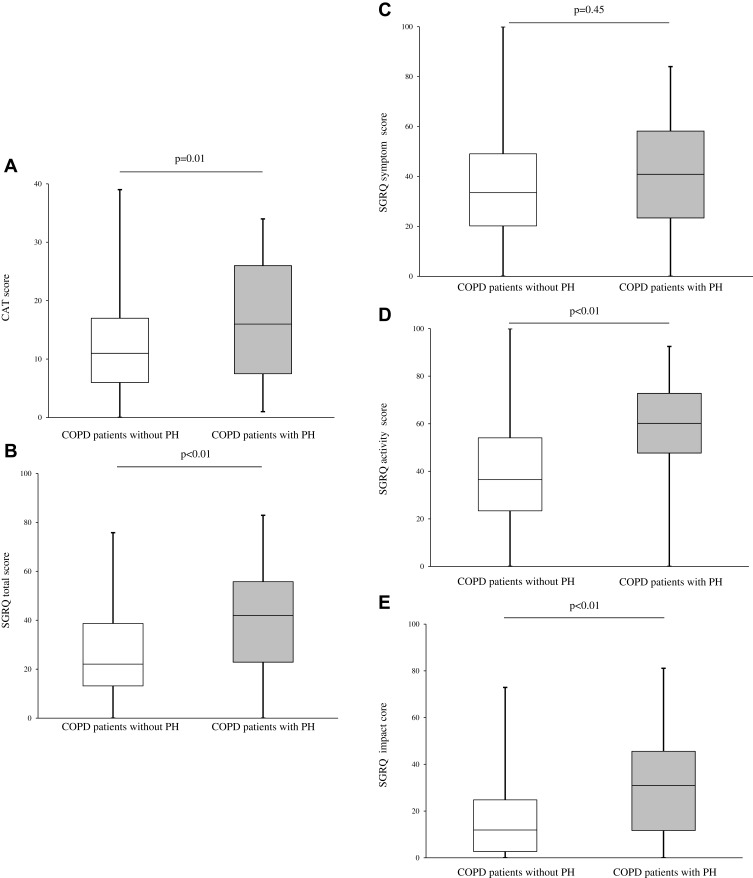
Association of PH assessed by echocardiography and health status in COPD patients. (A) Comparison of baseline CAT scores between the two groups. (B–E) Comparison of baseline SGRQ scores between the two groups. Data were compared between groups using the Mann–Whitney U-test. Abbreviations: PH, pulmonary arterial hypertension; COPD, chronic obstructive pulmonary disease; CAT, COPD assessment test; SGRQ, St. George’s respiratory questionnaire.
Figure 4
Figure 4
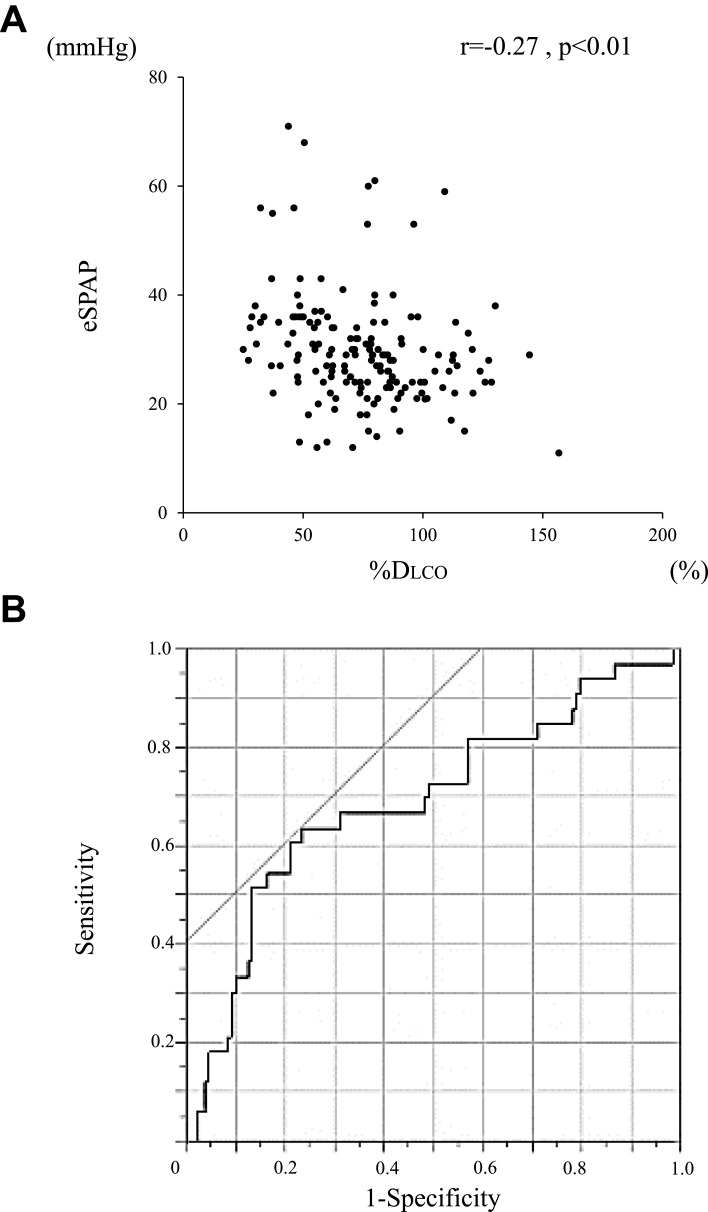
Relationship between PH assessed by echocardiography and lung diffusion capacity. (A) Correlation between eSPAP and %DLCO in COPD patients. (B) ROC curves of %DLCO for the prediction of PH assessed by echocardiography. Correlations between continuous variables were evaluated using Spearman’s rank correlation coefficient. Abbreviations: PH, pulmonary arterial hypertension; eSPAP, estimated systolic pulmonary artery pressure; DLCO, diffusing capacity of lung carbon monoxide; COPD, chronic obstructive pulmonary disease; ROC, receiver operating characteristic.
Figure 5
Figure 5
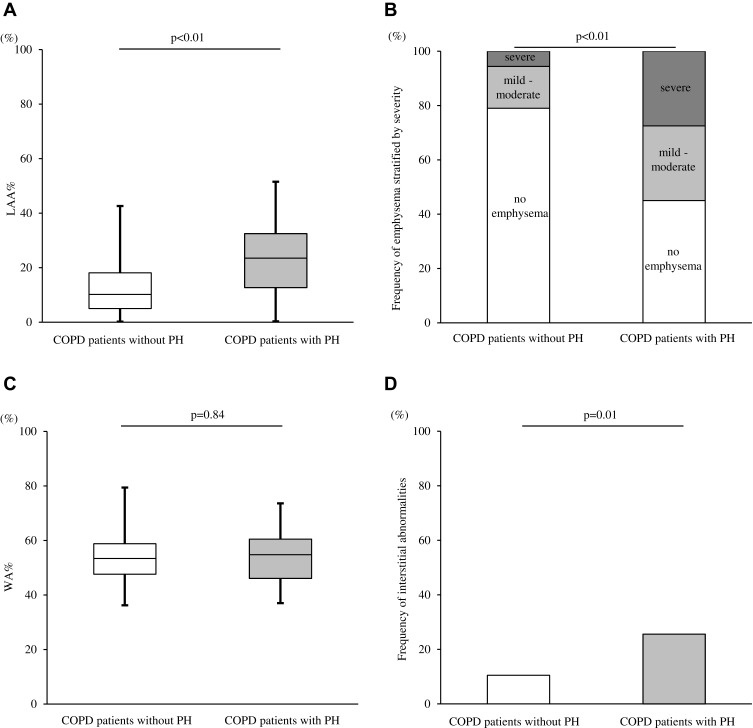
Relationship between PH assessed by echocardiography and baseline chest CT abnormalities in COPD patients. (A) Comparison of LAA% between the two groups. (B) Frequencies of emphysema severities in the two groups. (C) Comparison of WA% between the two groups. (D) Frequencies of interstitial abnormalities in the two groups. Data were compared between groups using the Mann–Whitney U-test and χ2 test. Abbreviations: PH, pulmonary arterial hypertension; CT, computed tomography; COPD, chronic obstructive pulmonary disease; LAA%, ratio of the low-attenuation area to the total lung volume; WA%, percentage of airway wall area.
Figure 6
Figure 6
Relationship between PH assessed by echocardiography and ratio of pulmonary artery diameter to aortic artery diameter. (A) Correlation between eSPAP and PA/Ao in COPD patients. (B) ROC curves of PA/Ao for the prediction of PH assessed by echocardiography. Correlations between continuous variables were evaluated using Spearman’s rank correlation coefficient. Abbreviations: PH, pulmonary arterial hypertension; eSPAP, estimated systolic pulmonary artery pressure; PA/Ao, ratio of pulmonary artery diameter to aortic artery diameter; COPD, chronic obstructive pulmonary disease; ROC, receiver operating characteristic.
Figure 7
Figure 7
Frequency of COPD exacerbations over three years according to the presence or absence of PH assessed by echocardiography. Data were compared between groups using χ2 test. Abbreviations: COPD, chronic obstructive pulmonary disease; PH, pulmonary arterial hypertension.

References

    1. Global Initiative for Chronic Obstructive Lung Disease (GOLD). Global strategy for the diagnosis, management and prevention of COPD. 2019. Available from: https://goldcopd.org/wp-content/uploads/2018/11/GOLD-2019-v1.7-FINAL-14N.... Accessed March25, 2019.

    1. Decramer M, Janssens W. Chronic obstructive pulmonary disease and comorbidities. Lancet Respir Med. 2013;1:73–83. doi: 10.1016/S2213-2600(12)70060-7 - DOI - PubMed
    1. Vanfleteren L, Spruit MA, Wouters EFM, Franssen FME. Management of chronic obstructive pulmonary disease beyond the lungs. Lancet Respir Med. 2016;4:911–924. doi: 10.1016/S2213-2600(16)00097-7 - DOI - PubMed
    1. Chubachi S, Sato M, Kameyama N, et al; Keio COPD Combordity Research (K-CCR) group. Identification of five clusters of comorbidities in a longitudinal Japanese chronic obstructive pulmonary disease cohort. Respir Med. 2016;117:272–279. doi: 10.1016/j.rmed.2016.07.002 - DOI - PubMed
    1. Irie H, Chubachi S, Sato M, et al. Impact of cataract on health-related quality of life in a longitudinal Japanese chronic obstructive pulmonary cohort. Chron Respir Dis. 2018;15:329–338. doi: 10.1177/1479972317745735 - DOI - PMC - PubMed

Publication types

MeSH terms