


Autophagy: An Intracellular Degradation Pathway Regulating Plant Survival and Stress Response
- PMID: 32184795
- PMCID: PMC7058704
- DOI: 10.3389/fpls.2020.00164
Autophagy: An Intracellular Degradation Pathway Regulating Plant Survival and Stress Response
Abstract
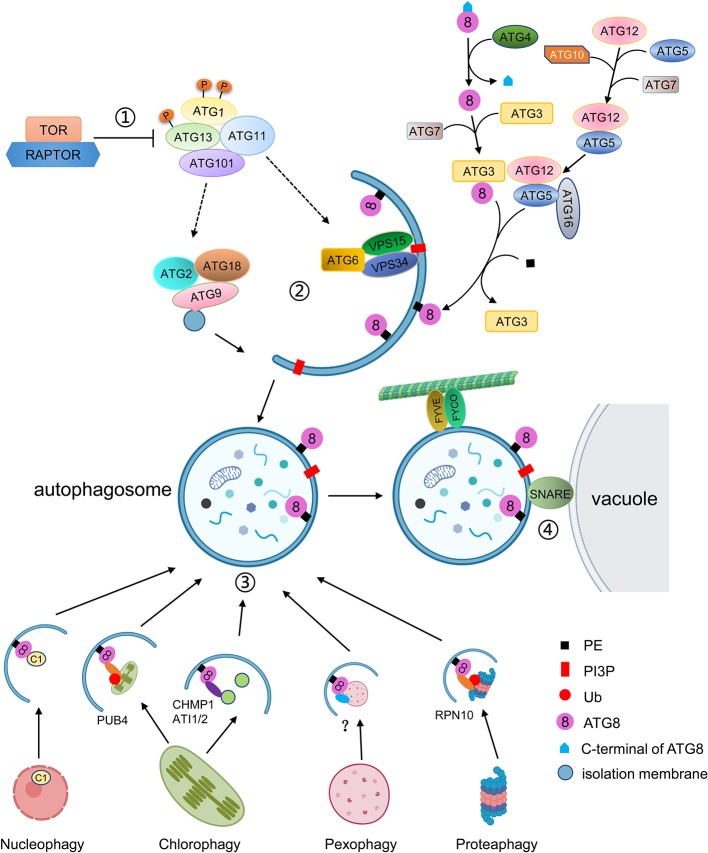
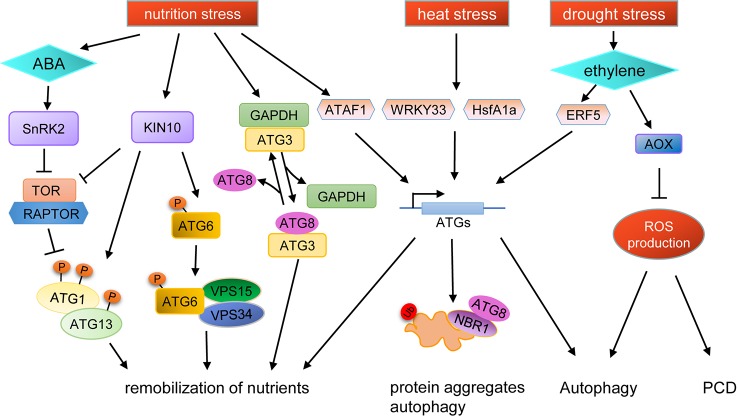
Autophagy is an intracellular process that facilitates the bulk degradation of cytoplasmic materials by the vacuole or lysosome in eukaryotes. This conserved process is achieved through the coordination of different autophagy-related genes (ATGs). Autophagy is essential for recycling cytoplasmic material and eliminating damaged or dysfunctional cell constituents, such as proteins, aggregates or even entire organelles. Plant autophagy is necessary for maintaining cellular homeostasis under normal conditions and is upregulated during abiotic and biotic stress to prolong cell life. In this review, we present recent advances on our understanding of the molecular mechanisms of autophagy in plants and how autophagy contributes to plant development and plants' adaptation to the environment.
Keywords: autophagy; plant; receptor; selective autophagy; stress.
Copyright © 2020 Su, Li, Yang, Shao, Zhao, Ma and Wang.
Figures
References
-
- Avin-Wittenberg T., Bajdzienko K., Wittenberg G., Alseekh S., Tohge T., Bock R., et al. (2015). Global analysis of the role of autophagy in cellular metabolism and energy homeostasis in Arabidopsis seedlings under carbon starvation. Plant Cel. 27, 306–322. 10.1105/tpc.114.134205 - DOI - PMC - PubMed
Publication types
LinkOut - more resources
Full Text Sources
Other Literature Sources
