


Housing Demand in Urban Areas and Sanitary Requirements of Dwellings in Italy
- PMID: 32184835
- PMCID: PMC7063207
- DOI: 10.1155/2020/7642658
Housing Demand in Urban Areas and Sanitary Requirements of Dwellings in Italy
Abstract
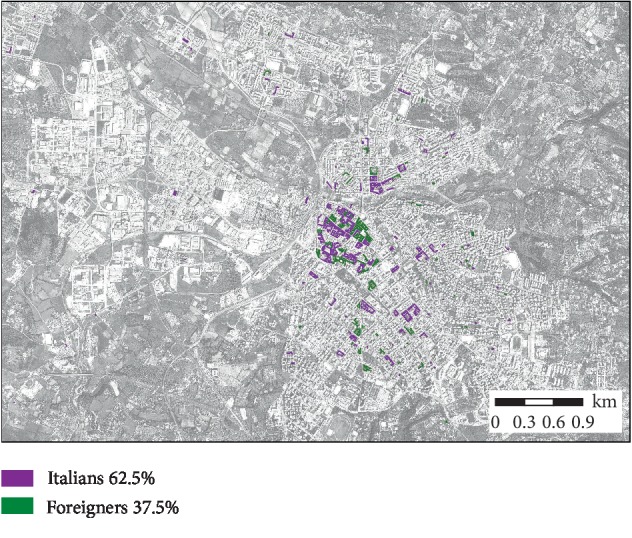
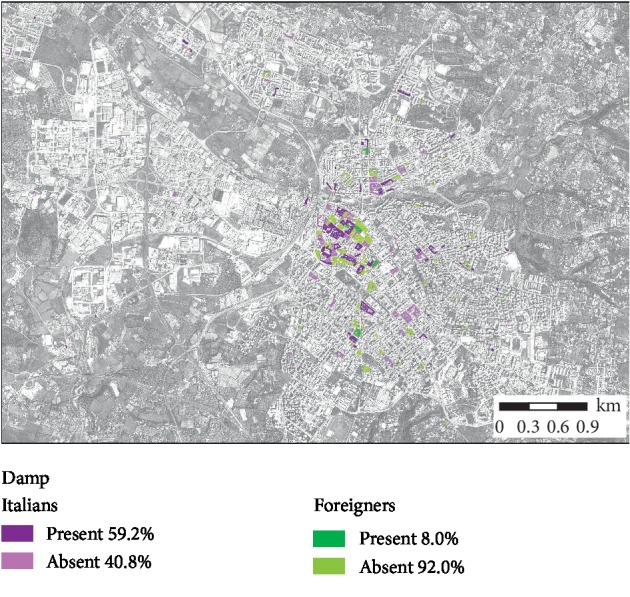
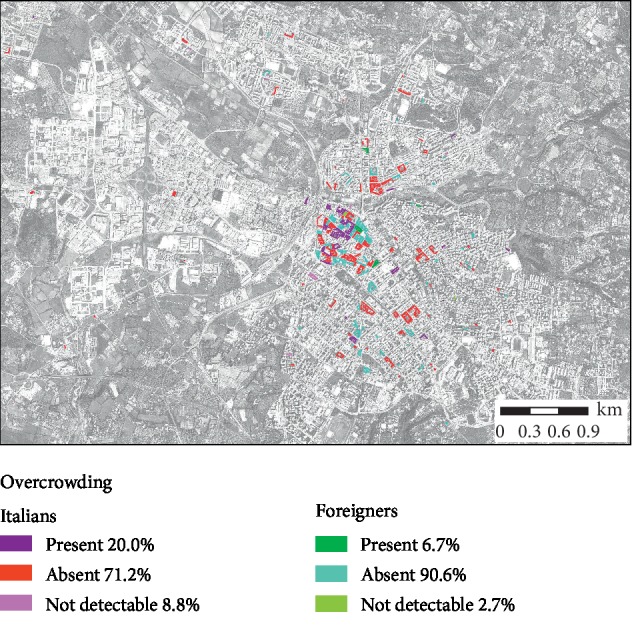
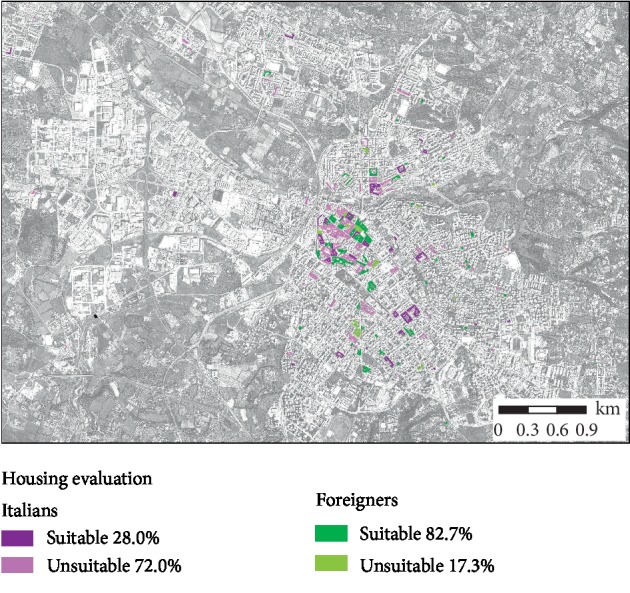
The phenomenon of urbanisation is becoming increasingly prevalent on a global level, and the health issues regarding the urban environment are of primary importance in public health. Accordingly, the present manuscript describes an analysis of the housing conditions of Italian urban areas, referring to the city of Sassari (Sardinia), Italy, focused on the dwelling structural and sanitary conditions issued by the Italian regulations. Data relating to the housing conditions of the population were acquired by the Local Hygiene and Public Health Service (SISP), in a period between 2012 and 2016. Qualitative variables were summarised with absolute and relative (percentages) frequencies, whereas quantitative variables with means and standard deviations depending on their parametric distribution. Statistical comparisons for qualitative and quantitative variables were performed with the χ 2 test or Student's t-test, respectively. A p value less than 0.05 was considered statistically significant. Finally, the dwellings and the collected variables were georeferenced on a city map. During the 2012-2016 observation period, 363 certification requests were received from 193 (53.2%) foreign-born citizens and 170 (46.8%) Italians at the SISP offices. The main reasons relate to the request for a residency permit (46.6%) and to obtain a subsidy from the local government (32.8%). Overall, 15.4% of dwellings were found to be improper, while 35.3% and 22.0% were found to be unhygienic and uninhabitable, respectively. The foreigners' homes were found to be suitable in 82.7% of cases; the housing of Italian citizens, on the contrary, was found to be suitable in 28% of the observations. The present study offers a cross section of the housing conditions of Italian urban areas, referring to the city of Sassari. To the authors' best knowledge, this observation is the first one carried out in Sardinia and one of the first observations in Italy. It has emerged that "hygienically unsuitable" homes are those that, in most cases, are located in the city centre. Moreover, the Italian population is hit by a significant housing problem, due to overcrowding, uninhabitability, and unhygienic conditions. Overall, our findings suggest that it is necessary to develop a multidisciplinary approach to guarantee public health, with safe dwellings homes and the surrounding urban context alongside the development of social relations. Nevertheless, there is still little evidence available today on the population housing conditions, especially regarding the private indoor environment, and further research is needed to bridge this knowledge gap.
Copyright © 2020 Marco Dettori et al.
Conflict of interest statement
The authors declare no conflicts of interest.
Figures
References
-
- World Health Organization. Urban Health. Geneva, Switzerland: World Health Organization; 2019. https://www.who.int/topics/urban_health/en/
-
- United Nations General Assembly. Transforming Our World: The 2030 Agenda for Sustainable Development. San Francisco, CA, USA: United Nations; 2015. https://www.un.org/ga/search/view_doc.asp?symbol=A/RES/70/1&Lang=E.
-
- World Health Organization. Why Urban Health Matters? World Health Day 2010. Geneva, Switzerland: World Health Organization; 2010. http://www.who.int/world-health-day/2010/media/whd2010background.pdf.
-
- Dahlgren G., Whitehead M. European Strategies for Tackling Social Inequities in Health: Leveling Up, Part 2. Copenhagen, Denmark: WHO Regional Office for Europe; 2007. http://www.euro.who.int/__data/assets/pdf_file/0018/103824/E89384.pdf?ua=1.
-
- World Health Organization. Housing and Health Guidelines. Geneva, Switzerland: World Health Organization; 2018. https://apps.who.int/iris/bitstream/handle/10665/276001/9789241550376-en....
Publication types
MeSH terms
LinkOut - more resources
Full Text Sources
Miscellaneous
