


The Roles of AMPK in Revascularization
- PMID: 32185076
- PMCID: PMC7063202
- DOI: 10.1155/2020/4028635
The Roles of AMPK in Revascularization
Abstract
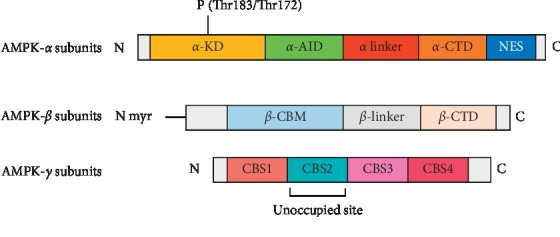
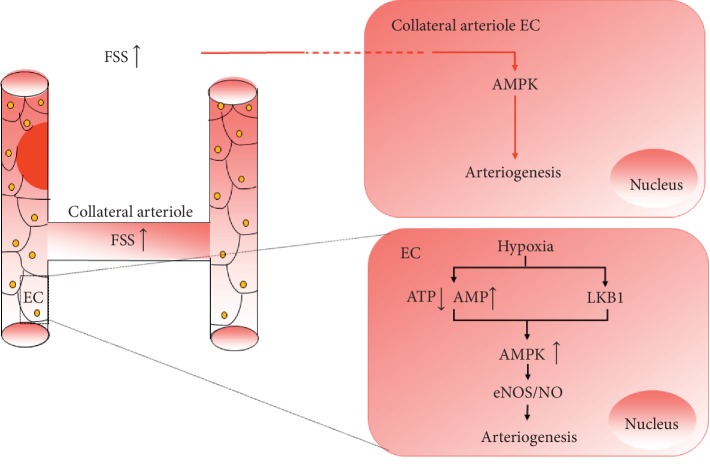
Coronary heart disease (CHD) is the most common and serious illness in the world and has been researched for many years. However, there are still no real effective ways to prevent and save patients with this disease. When patients present with myocardial infarction, the most important step is to recover ischemic prefusion, which usually is accomplished by coronary artery bypass surgery, coronary artery intervention (PCI), or coronary artery bypass grafting (CABG). These are invasive procedures, and patients with extensive lesions cannot tolerate surgery. It is, therefore, extremely urgent to search for a noninvasive way to save ischemic myocardium. After suffering from ischemia, cardiac or skeletal muscle can partly recover blood flow through angiogenesis (de novo capillary) induced by hypoxia, arteriogenesis, or collateral growth (opening and remodeling of arterioles) triggered by dramatical increase of fluid shear stress (FSS). Evidence has shown that both of them are regulated by various crossed pathways, such as hypoxia-related pathways, cellular metabolism remodeling, inflammatory cells invasion and infiltration, or hemodynamical changes within the vascular wall, but still they do not find effective target for regulating revascularization at present. 5'-Adenosine monophosphate-activated protein kinase (AMPK), as a kinase, is not only an energy modulator but also a sensor of cellular oxygen-reduction substances, and many researches have suggested that AMPK plays an essential role in revascularization but the mechanism is not completely understood. Usually, AMPK can be activated by ADP or AMP, upstream kinases or other cytokines, and pharmacological agents, and then it phosphorylates key molecules that are involved in energy metabolism, autophagy, anti-inflammation, oxidative stress, and aging process to keep cellular homeostasis and finally keeps cell normal activity and function. This review makes a summary on the subunits, activation and downstream targets of AMPK, the mechanism of revascularization, the effects of AMPK in endothelial cells, angiogenesis, and arteriogenesis along with some prospects.
Copyright © 2020 Ming-Hong Chen and Qiong-Mei Fu.
Conflict of interest statement
The authors declare that there are no conflicts of interest.
Figures
References
Publication types
LinkOut - more resources
Full Text Sources
Miscellaneous