


The Physiopathology of T- Cell Acute Lymphoblastic Leukemia: Focus on Molecular Aspects
- PMID: 32185137
- PMCID: PMC7059203
- DOI: 10.3389/fonc.2020.00273
The Physiopathology of T- Cell Acute Lymphoblastic Leukemia: Focus on Molecular Aspects
Abstract
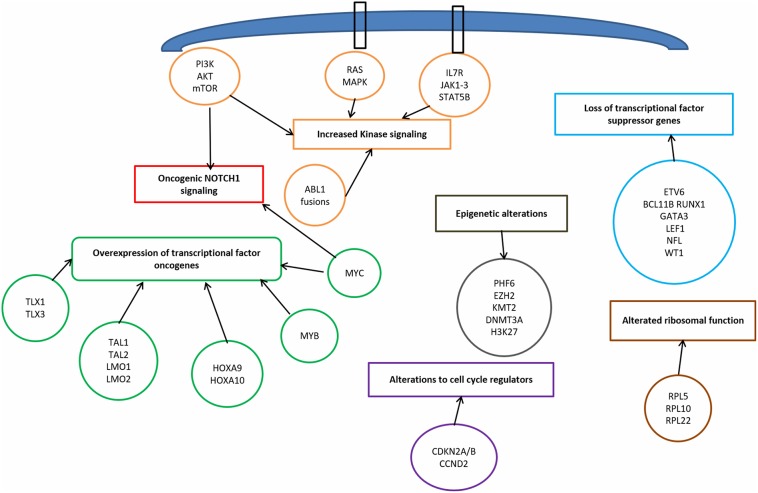
T-cell acute lymphoblastic leukemia/lymphoma is an aggressive hematological neoplasm whose classification is still based on immunophenotypic findings. Frontline treatment encompass high intensity combination chemotherapy with good overall survival; however, relapsing/refractory patients have very limited options. In the last years, the understanding of molecular physiopathology of this disease, lead to the identification of a subset of patients with peculiar genetic profile, namely "early T-cell precursors" lymphoblastic leukemia, characterized by dismal outcome and indication to frontline allogeneic bone marrow transplant. In general, the most common mutations occur in the NOTCH1/FBXW7 pathway (60% of adult patients), with a positive prognostic impact. Other pathogenic steps encompass transcriptional deregulation of oncogenes/oncosuppressors, cell cycle deregulation, kinase signaling (including IL7R-JAK-STAT pathway, PI3K/AKT/mTOR pathway, RAS/MAPK signaling pathway, ABL1 signaling pathway), epigenetic deregulation, ribosomal dysfunction, and altered expression of oncogenic miRNAs or long non-coding RNA. The insight in the genomic landscape of the disease paves the way to the use of novel targeted drugs that might improve the outcome, particularly in relapse/refractory patients. In this review, we analyse available literature on T-ALL pathogenesis, focusing on molecular aspects of clinical, prognostic, and therapeutic significance.
Keywords: T-cell acute lymphoblastic leukemia; early T cell precursors acute lymphoblastic leukemia; genome; molecular; target therapies.
Copyright © 2020 Fattizzo, Rosa, Giannotta, Baldini and Fracchiolla.
Figures
References
Publication types
LinkOut - more resources
Full Text Sources
Miscellaneous
