Review
. 2020 Apr;147(2):281-295.
doi: 10.1007/s11060-020-03450-7. Epub 2020 Mar 17.

T-Cell based therapies for overcoming neuroanatomical and immunosuppressive challenges within the glioma microenvironment

Affiliations
Review

T-Cell based therapies for overcoming neuroanatomical and immunosuppressive challenges within the glioma microenvironment

Darwin Kwok et al. J Neurooncol. 2020 Apr.

Abstract

Glioblastoma remains as the most common and aggressive primary adult brain tumor to date. Within the last decade, cancer immunotherapy surfaced as a broadly successful therapeutic approach for a variety of cancers. However, due to the neuroanatomical and immunosuppressive nature of malignant gliomas, conventional chemotherapy and radiotherapy treatments garner limited efficacy in patients with these tumors. The intricate structure of the blood brain barrier restricts immune accessibility into the tumor microenvironment, and malignant gliomas can activate various adaptive responses to subvert anticancer immune responses and reinstate an immunosuppressive milieu. Yet, evidence of lymphocyte infiltration within the brain and recent advancements made in cell engineering technologies implicate the vast potential in the future of neuro-oncological immunotherapy. Previous immunotherapy platforms have paved way to improved modalities, which includes but is not limited to personalized vaccines and chimeric antigen receptor T-cell therapy. This review will cover the various neuroanatomical and immunosuppressive features of central nervous system tumors and highlight the innovations made in T-cell based therapies to overcome the challenges presented by the glioblastoma microenvironment.

Keywords: CAR; Glioblastoma; Immunosuppression; Immunotherapy; T-cell; Vaccine.


Figures
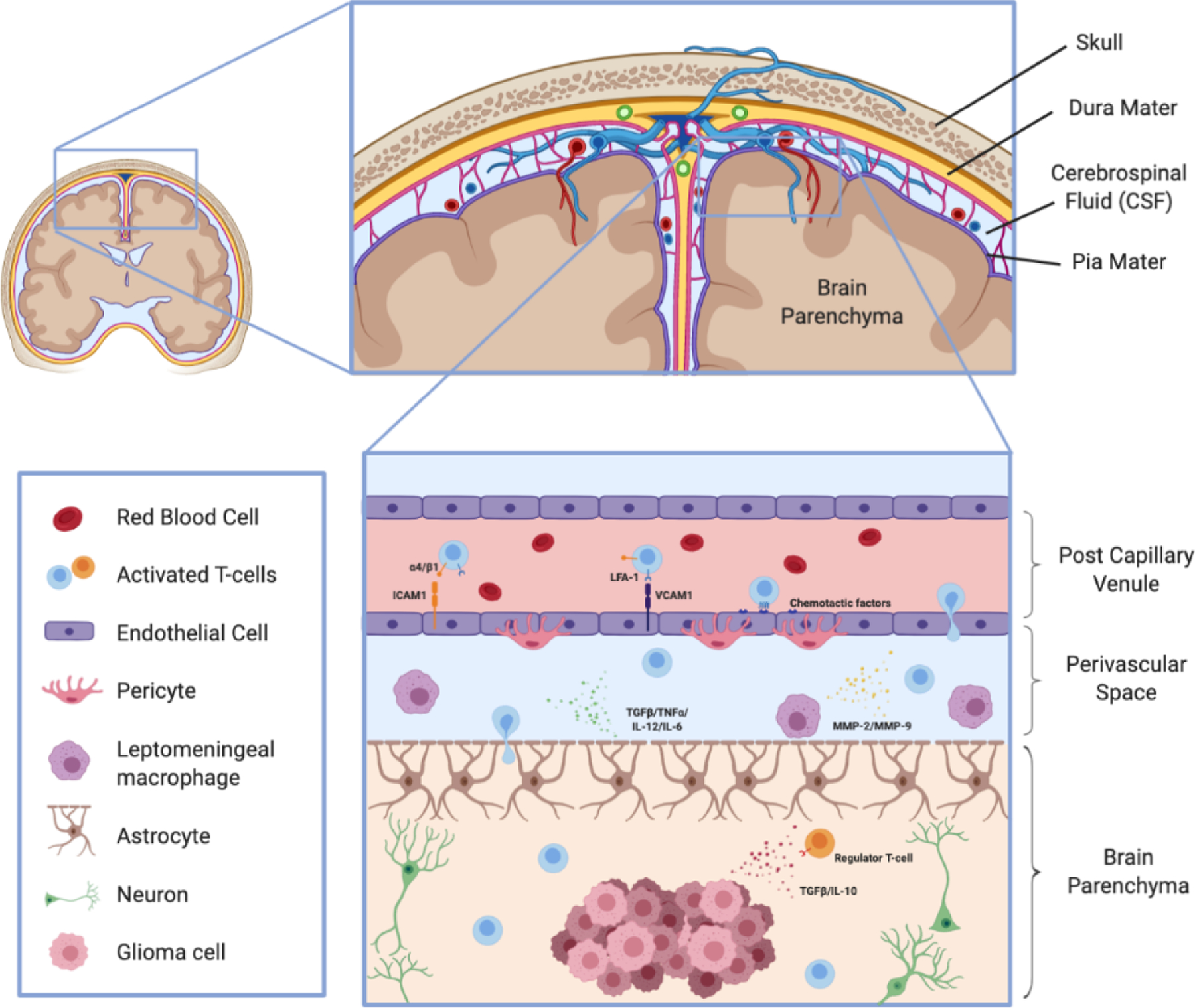
Figure 1:
Figure 1:. Neuroanatomical challenges for T-cell infiltration into the brain parenchyma:
Activated T-cells can be recruited into the brain parenchyma through post-capillary venules. LFA-1 and α4/β1-integrins expressed on the surface of activated T-cells bind to ICAM1 and VCAM1, respectively, on endothelial cells to allow the T-cells to reduce their velocity and undergo diapedis through the endothelial lining. Secretion of MMP-2 and MMP-9 by leptomeningeal macrophages and other astrocytic secreting factors permit T-cell infiltration through the glia limitans. Upon entering the brain parenchyma and reaching the tumor microenvironment, T-cells must overcome various mechanisms of tumor-mediated immunosuppression to elicit a robust and persistent immune response.
Figure 2:
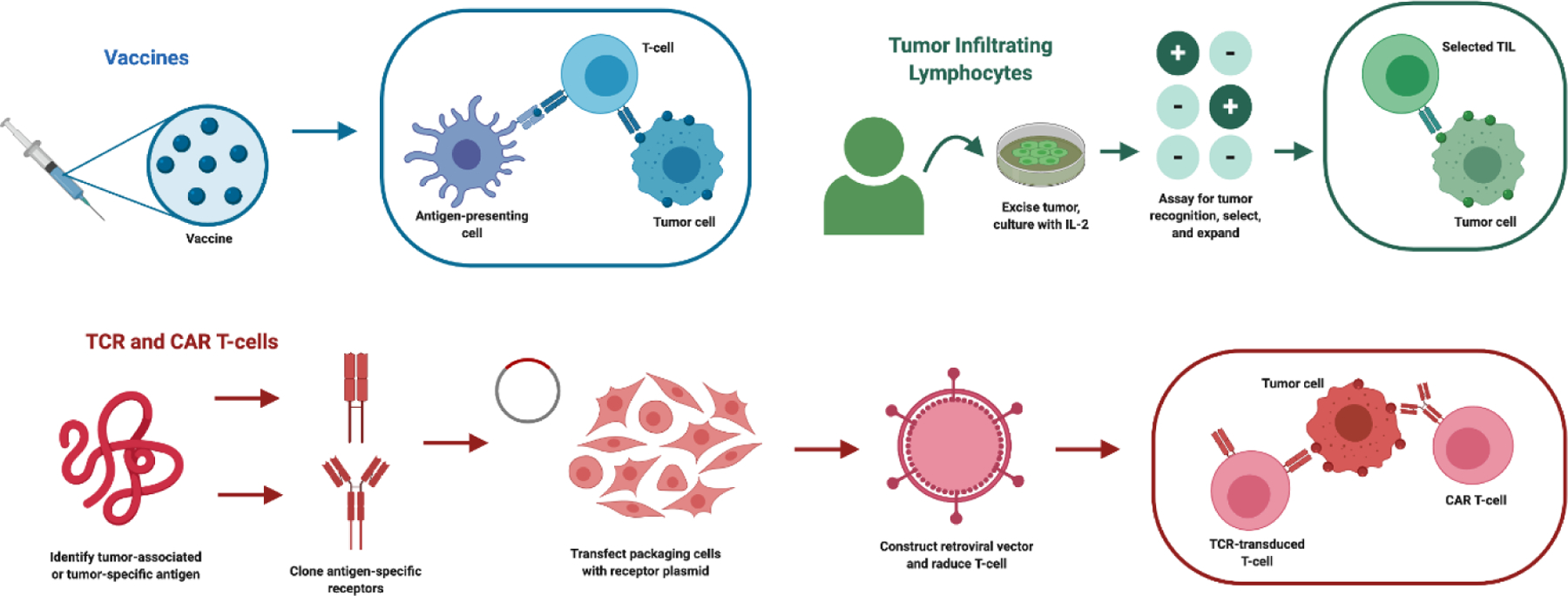
Figure 2:. T-cell based immunotherapy modalities:
Ongoing T-cell based cancer immunotherapy studies encompass both vaccine therapy and adoptive cell transfer (ACT). Vaccines (upper-left) focus on eliciting a cytotoxic immune response by introducing tumor-associated or tumor-specific antigens for APC presentation. Tumor-infiltrating lymphocyte (TIL) therapy (upper-right) selects for and expands tumor-specific lymphocytes ex vivo for reinfusion into the patient. TCR and chimeric-antigen receptor (CAR) T-cell therapy (bottom) incorporates the design and incorporation of an antigen-specific receptor into a T-cell.

References

    1. Wolchok JD, Chiarion-Sileni V, Gonzalez R, et al. (2017) Overall Survival with Combined Nivolumab and Ipilimumab in Advanced Melanoma. N Engl J Med 377:1345–1356. 10.1056/NEJMoa1709684 - DOI - PMC - PubMed
    1. Motzer RJ, Tannir NM, McDermott DF, et al. (2018) Nivolumab plus Ipilimumab versus Sunitinib in Advanced Renal-Cell Carcinoma. N Engl J Med 378:1277–1290. 10.1056/NEJMoa1712126 - DOI - PMC - PubMed
    1. Maude SL, Frey N, Shaw PA, et al. (2014) Chimeric Antigen Receptor T Cells for Sustained Remissions in Leukemia. N Engl J Med 371:1507–1517. 10.1056/NEJMoa1407222 - DOI - PMC - PubMed
    1. Maude SL, Laetsch TW, Buechner J, et al. (2018) Tisagenlecleucel in Children and Young Adults with B-Cell Lymphoblastic Leukemia. N Engl J Med 378:439–448. 10.1056/NEJMoa1709866 - DOI - PMC - PubMed
    1. Medawar PB IMUINITY TO HOMOLOGOUS GRAFTED SKIN. III. THE FATE OF SKIN HOMOGRAFTS TRANSPLNTED TO THE BRAIN, TO SUBECUTANEOUS TISSUE, AN] TO THE ANTERIOR CHAMBER OF THE EYE. 14 - PMC - PubMed