


An internet-based mind/body intervention to mitigate distress in women experiencing infertility: A randomized pilot trial
- PMID: 32187236
- PMCID: PMC7080396
- DOI: 10.1371/journal.pone.0229379
An internet-based mind/body intervention to mitigate distress in women experiencing infertility: A randomized pilot trial
Abstract
Objective: To determine if an internet-based mind/body program would lead to participants experiencing infertility (1) being willing to be recruited and randomized and (2) accepting and being ready to engage in a fertility-specific intervention. Secondary exploratory goals were to examine reduced distress over the course of the intervention and increased likelihood to conceive.
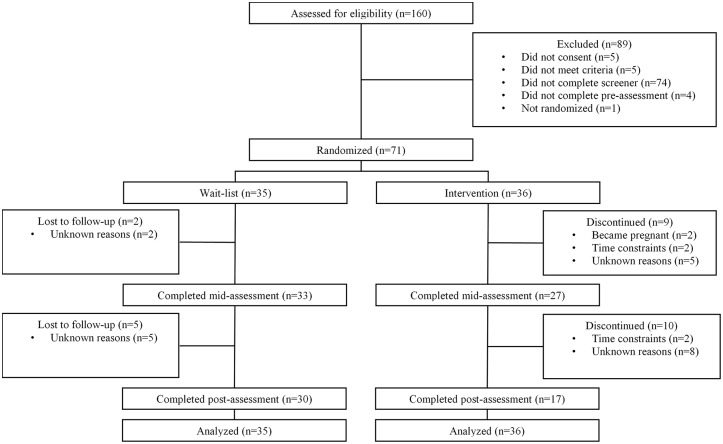
Methods: This was a pilot randomized controlled feasibility trial with a between-groups, repeated measure design. Seventy-one women self-identified as nulliparous and meeting criteria for infertility. Participants were randomized to the internet-based version of the Mind/Body Program for Fertility or wait-list control group and asked to complete pre-, mid- and post-assessments. Primary outcomes include retention rates, number of modules completed, and satisfaction with intervention. Secondary exploratory outcomes sought to provide preliminary data on the impact of the program on distress (anxiety and depression) and self-reported pregnancy rates relative to a quasi-control group.
Results: The retention, adherence, and satisfaction rates were comparable to those reported in other internet-based RCTs. Although time between pre- and post-assessment differed between groups, using intent-to-treat analyses, women in the intervention group (relative to the wait-list group) had significant reduction in distress (anxiety, p = .003; depression, p = .007; stress, p = .041 fertility-social, p = .018; fertility-sexual, p = .006), estimated as medium-to-large effect sizes (ds = 0.45 to 0.86). The odds of becoming pregnant was 4.47 times higher for the intervention group participants as compared to the wait-list group, OR 95% CI [1.56, 12.85], p = .005 and occurred earlier. The findings suggest that the research design and program specific to this population are feasible and acceptable. Replication efforts with an active control group are needed to verify distress reduction and conception promotion findings.
Conflict of interest statement
I have read the journal's policy and the authors of this manuscript have the following competing interests:Competing Interests: “We have the following interests: Names of AD’s funding sources: Speaker bureau for Abbott, Merck, Ferring, and EMD Serono. Past grant recipient from Ferring. Co-owner of FertiCalm LLC, FertiStrong LLC, and Aliz Health Apps LLC. None of these funding sources had or have any relationship with the current study or manuscript. There are no patents, products in development or marketed products to declare. This does not alter our adherence to all the PLOS ONE policies on sharing data and materials.”
References
-
- Clarke DM, Currie KC. Depression, anxiety and their relationship with chronic diseases: A review of the epidemiology, risk and treatment evidence. Med J Aust. 2009;190(7):S54. - PubMed
-
- Gourounti K, Anagnostopoulos F, Vaslamatzis G. Psychosocial predictors of infertility related stress: a review. Curr Womens Health Rev. 2010;6(4):318–31.
-
- Domar AD. Psychological stress and infertility. UpToDate. 2017.
