Precision non-implantable neuromodulation therapies: a perspective for the depressed brain
- PMID: 32187319
- PMCID: PMC7430385
- DOI: 10.1590/1516-4446-2019-0741
Precision non-implantable neuromodulation therapies: a perspective for the depressed brain
Abstract
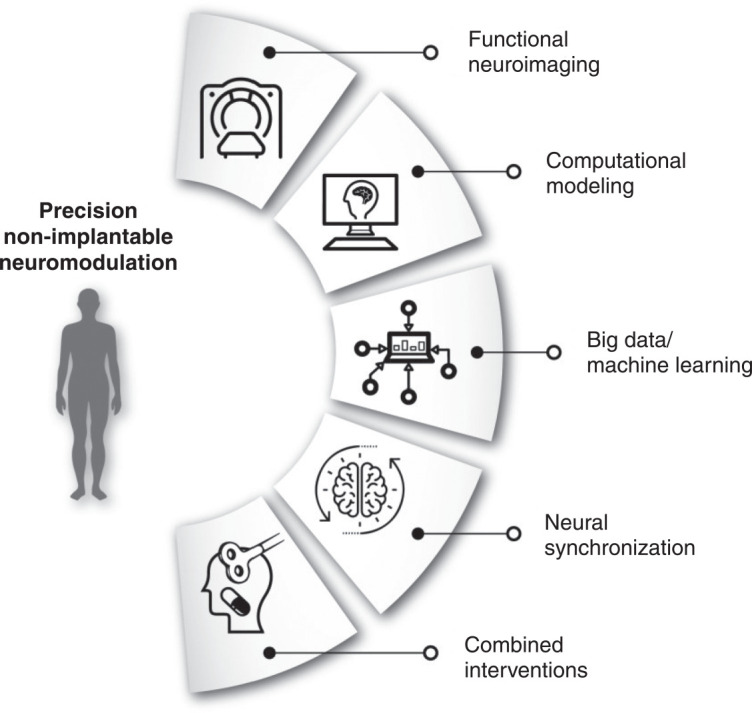
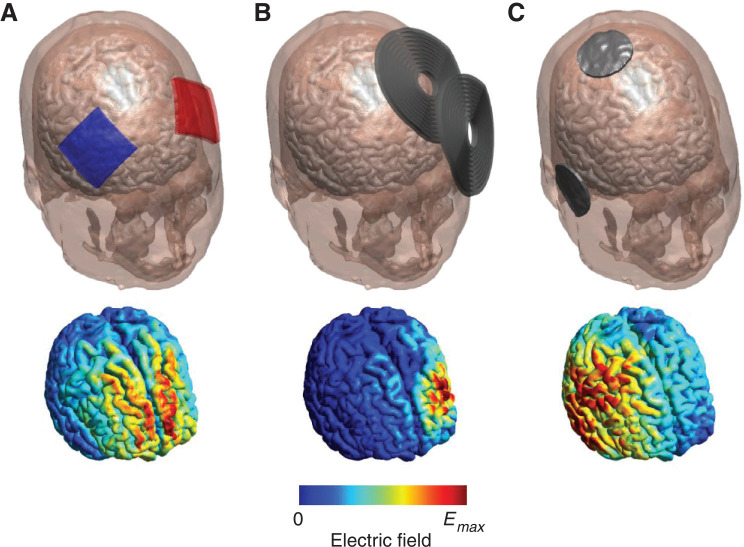
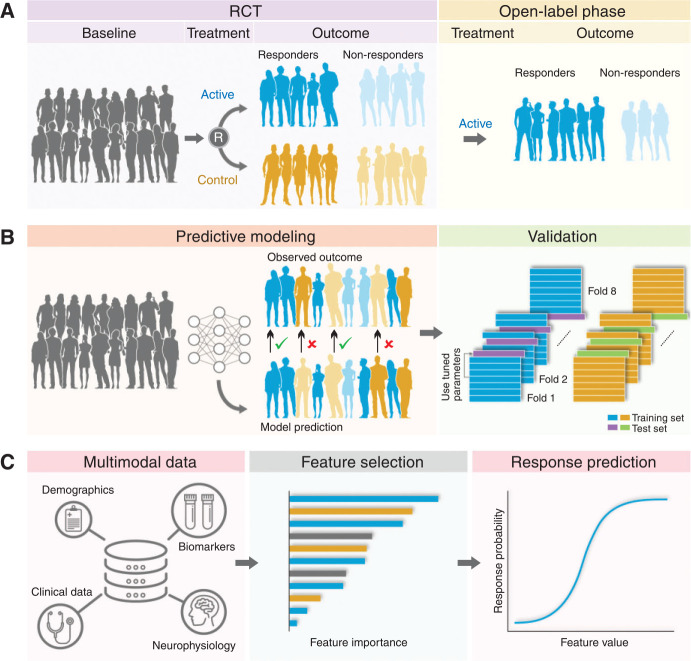
Current first-line treatments for major depressive disorder (MDD) include pharmacotherapy and cognitive-behavioral therapy. However, one-third of depressed patients do not achieve remission after multiple medication trials, and psychotherapy can be costly and time-consuming. Although non-implantable neuromodulation (NIN) techniques such as transcranial magnetic stimulation, transcranial direct current stimulation, electroconvulsive therapy, and magnetic seizure therapy are gaining momentum for treating MDD, the efficacy of non-convulsive techniques is still modest, whereas use of convulsive modalities is limited by their cognitive side effects. In this context, we propose that NIN techniques could benefit from a precision-oriented approach. In this review, we discuss the challenges and opportunities in implementing such a framework, focusing on enhancing NIN effects via a combination of individualized cognitive interventions, using closed-loop approaches, identifying multimodal biomarkers, using computer electric field modeling to guide targeting and quantify dosage, and using machine learning algorithms to integrate data collected at multiple biological levels and identify clinical responders. Though promising, this framework is currently limited, as previous studies have employed small samples and did not sufficiently explore pathophysiological mechanisms associated with NIN response and side effects. Moreover, cost-effectiveness analyses have not been performed. Nevertheless, further advancements in clinical trials of NIN could shift the field toward a more "precision-oriented" practice.
Conflict of interest statement
Z-DD is listed as inventor on patents/patent applications related to brain stimulation technology, assigned to Columbia University and NEVA Electromagnetics, not licensed, and with no remuneration. Although he is an employee of the U.S. government, the views expressed are his own and do not necessarily represent the views of the National Institutes of Health, the Department of Health and Human Services, or the U.S. government. The other authors report no conflicts of interest.
Figures
References
-
- Kennedy SH, Lam RW, McIntyre RS, Tourjman SV, Bhat V, Blier P, et al. Canadian Network for Mood and Anxiety Treatments (CANMAT) 2016 clinical guidelines for the management of adults with major depressive disorder: section 3. Pharmacological treatments. Can J Psychiatry. 2016;61:540–60. - PMC - PubMed
-
- Parikh SV, Quilty LC, Ravitz P, Rosenbluth M, Pavlova B, Grigoriadis S, et al. Canadian Network for Mood and Anxiety Treatments (CANMAT) 2016 clinical guidelines for the management of adults with major depressive disorder: section 2. Psychological treatments. Can J Psychiatry. 2016;61:524–39. - PMC - PubMed
-
- Rush AJ, Trivedi MH, Wisniewski SR, Nierenberg AA, Stewart JW, Warden D, et al. Acute and longer-term outcomes in depressed outpatients requiring one or several treatment steps: a STAR*D report. Am J Psychiatry. 2006;163:1905–17. - PubMed
-
- Carvalho AF, Sharma MS, Brunoni AR, Vieta E, Fava GA. The safety, tolerability and risks associated with the use of newer generation antidepressant drugs: a critical review of the literature. Psychother Psychosom. 2016;85:270–88. - PubMed
-
- Keller MB, McCullough JP, Klein DN, Arnow B, Dunner DL, Gelenberg AJ, et al. A comparison of nefazodone, the cognitive behavioral-analysis system of psychotherapy, and their combination for the treatment of chronic depression. N Engl J Med. 2000;342:1462–70. - PubMed
MeSH terms
Grants and funding
LinkOut - more resources
Full Text Sources
Medical