


Metabolic Syndrome Increases Risk of Venous Thromboembolism Recurrence after Acute Pulmonary Embolism
- PMID: 32187500
- PMCID: PMC7328175
- DOI: 10.1513/AnnalsATS.201907-518OC
Metabolic Syndrome Increases Risk of Venous Thromboembolism Recurrence after Acute Pulmonary Embolism
Abstract
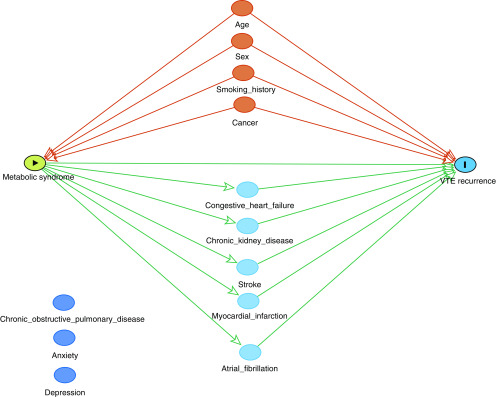
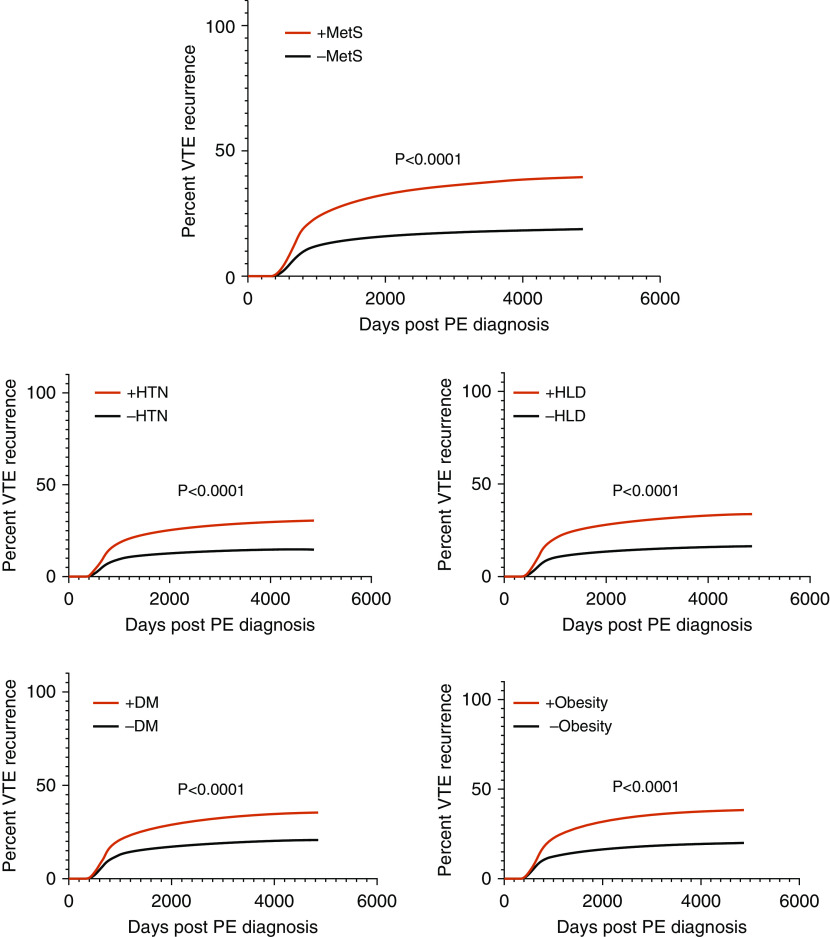
Rationale: Metabolic syndrome (MetS), the clinical clustering of hypertension, dyslipidemia, insulin resistance, and abdominal obesity, has been associated with a prothrombotic and hypofibrinolytic state, although data linking MetS with venous thromboembolism (VTE) remain limited.Objectives: The aim of this study was to measure the prevalence of MetS in patients with pulmonary embolism (PE) across a large population and to examine its impact on VTE recurrence.Methods: This was a retrospective, population-based analysis using deidentified information from a large statewide database, the Indiana Network for Patient Care. All patients with an International Classification of Diseases-defined diagnosis of PE from 2004 to 2017 were included. We measured the frequency with which patients with PE carried a comorbid diagnosis of each MetS component. Multiple logistic regression analysis was performed with VTE recurrence as the dependent variable to test the independent effect of MetS diagnosis, with a statistical model using a directed acyclic graph to account for potential confounders and mediators. Kaplan-Meier curves were constructed to compare rates of VTE recurrence over time based on the presence or absence of MetS and its individual components.Results: A total of 72,936 patients were included in this analysis. The most common MetS component was hypertension with a prevalence of 59%, followed by hyperlipidemia (41%), diabetes mellitus (24%), and obesity (22%). Of these patients, 69% had at least one comorbid component of MetS. The overall incidence of VTE recurrence was 17%, increasing stepwise with each additional MetS component and ranging from 6% in patients with zero components to 37% in those with all four. Logistic regression analysis yielded an adjusted odds ratio of 3.03 (95% CI, 2.90-3.16) for the effect of composite diagnosis requiring at least three of the four components of MetS diagnosis on VTE recurrence.Conclusions: The presence of comorbid MetS in patients with PE is associated with significantly higher rates of VTE recurrence, supporting the importance of recognizing these risk factors and initiating appropriate therapies to reduce recurrence risk.
Keywords: hyperlipidemia; metabolic syndrome; obesity; pulmonary embolism; venous thromboembolism recurrence.
Figures
References
-
- Samson SL, Garber AJ. Metabolic syndrome. Endocrinol Metab Clin North Am. 2014;43:1–23. 10.1016/j.ecl.2013.09.009. - PubMed
-
- Grundy SM, Brewer HB, Jr, Cleeman JI, Smith SC, Jr, Lenfant C American Heart Association; National Heart, Lung, and Blood Institute. Definition of metabolic syndrome: Report of the National Heart, Lung, and Blood Institute/American Heart Association conference on scientific issues related to definition. Circulation. 2004;109:433–438. - PubMed
-
- Grundy SM, Cleeman JI, Daniels SR, Donato KA, Eckel RH, Franklin BA, et al. American Heart Association; National Heart, Lung, and Blood Institute. Diagnosis and management of the metabolic syndrome: An American Heart Association/National Heart, Lung, and Blood Institute Scientific Statement. Circulation. 2005;112:2735–2752. - PubMed
Publication types
MeSH terms
Grants and funding
LinkOut - more resources
Full Text Sources
Medical
