Association between suicide reporting in the media and suicide: systematic review and meta-analysis
- PMID: 32188637
- PMCID: PMC7190013
- DOI: 10.1136/bmj.m575
Association between suicide reporting in the media and suicide: systematic review and meta-analysis
Abstract
Objective: To examine the association between reporting on suicides, especially deaths of celebrities by suicide, and subsequent suicides in the general population.
Design: Systematic review and meta-analysis.
Data sources: PubMed/Medline, PsychInfo, Scopus, Web of Science, Embase, and Google Scholar, searched up to September 2019.
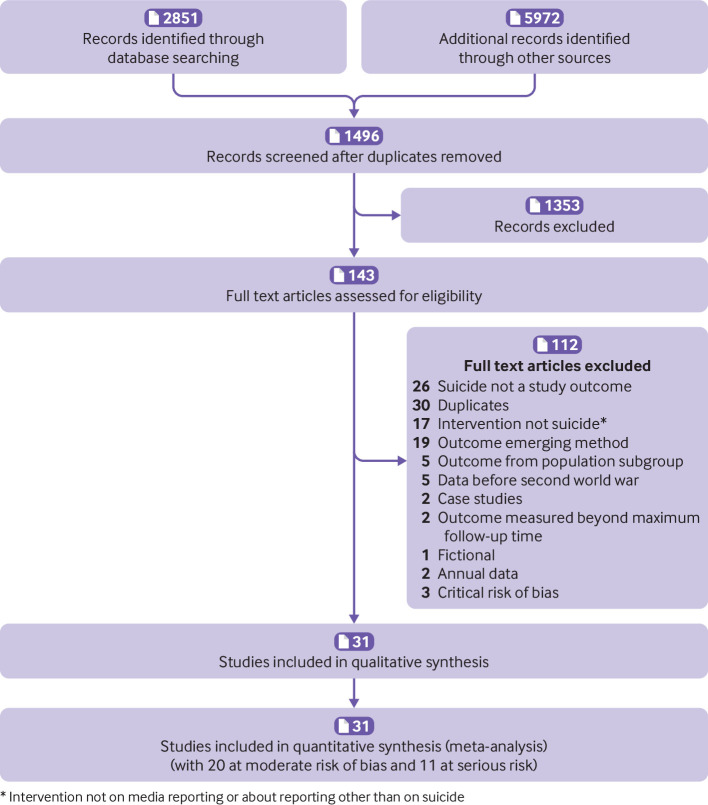
Review methods: Studies were included if they compared at least one time point before and one time point after media reports on suicide; follow-up was two months or less; the outcome was death by suicide; and the media reports were about non-fictional suicides. Data from studies adopting an interrupted time series design, or single or multiple arm before and after comparisons, were reviewed.
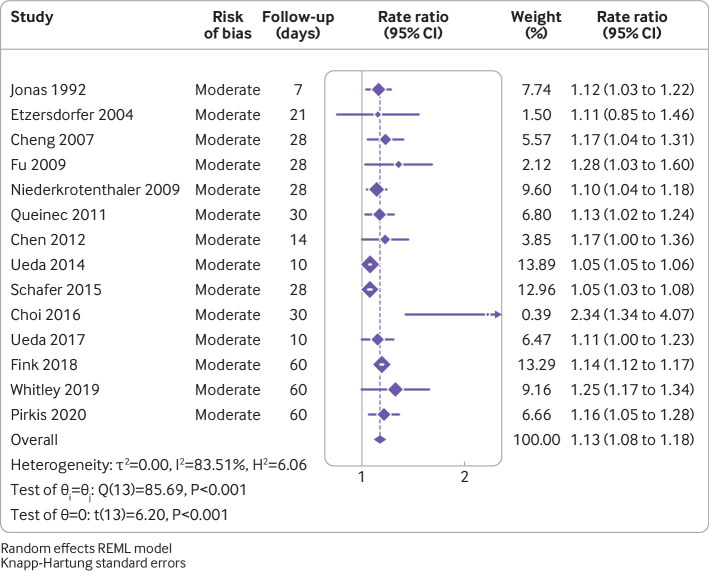
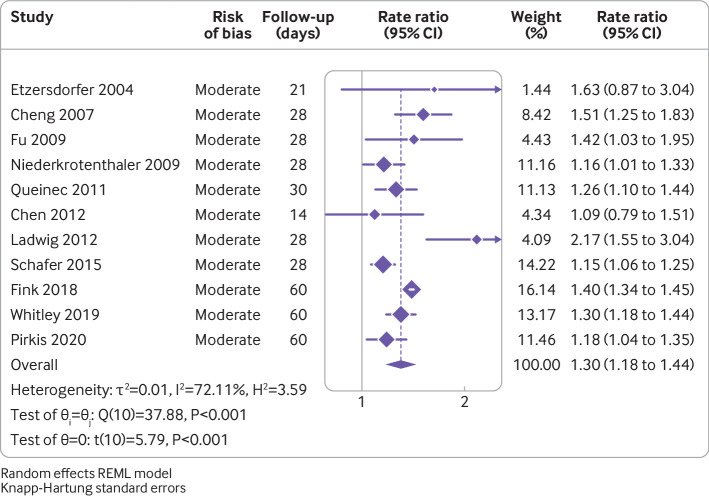
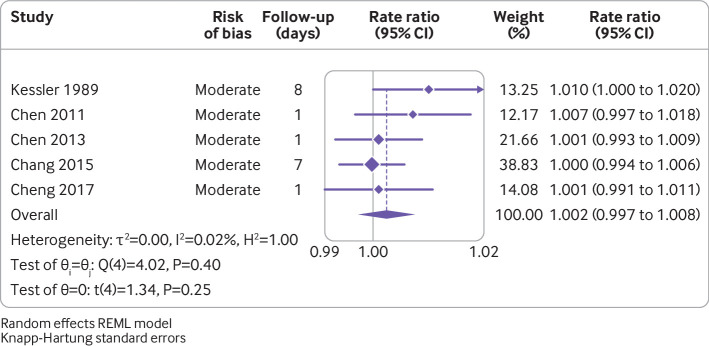
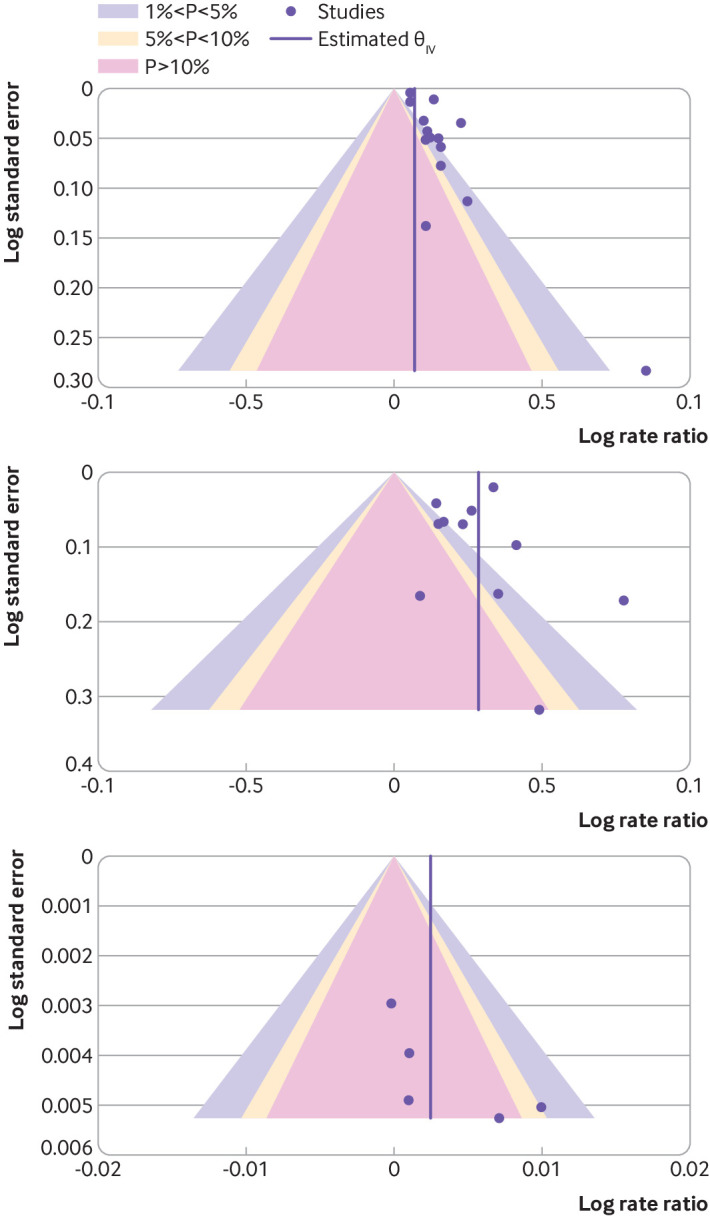
Results: 31 studies were identified and analysed, and 20 studies at moderate risk of bias were included in the main analyses. The risk of suicide increased by 13% in the period after the media reported a death of a celebrity by suicide (rate ratio 1.13, 95% confidence interval 1.08 to 1.18; 14 studies; median follow-up 28 days, range 7-60 days). When the suicide method used by the celebrity was reported, there was an associated 30% increase in deaths by the same method (rate ratio 1.30, 95% confidence interval 1.18 to 1.44; 11 studies; median follow-up 28 days, range 14-60 days). For general reporting of suicide, the rate ratio was 1.002 (0.997 to 1.008; five studies; median follow-up 1 day, range 1-8 days) for a one article increase in the number of reports on suicide. Heterogeneity was large and partially explained by celebrity and methodological factors. Enhanced funnel plots suggested some publication bias in the literature.
Conclusions: Reporting of deaths of celebrities by suicide appears to have made a meaningful impact on total suicides in the general population. The effect was larger for increases by the same method as used by the celebrity. General reporting of suicide did not appear to be associated with suicide although associations for certain types of reporting cannot be excluded. The best available intervention at the population level to deal with the harmful effects of media reports is guidelines for responsible reporting. These guidelines should be more widely implemented and promoted, especially when reporting on deaths of celebrities by suicide.
Systematic review registration: PROSPERO CRD42019086559.
© Author(s) (or their employer(s)) 2019. Re-use permitted under CC BY-NC. No commercial re-use. See rights and permissions. Published by BMJ.
Conflict of interest statement
Competing interests: All authors have completed the ICMJE uniform disclosure form at www.icmje.org/coi_disclosure.pdf and declare: no support from any organisation for the submitted work; no financial relationships with any organisations that might have an interest in the submitted work in the previous three years; no other relationships or activities that could appear to have influenced the submitted work.
Figures
Comment in
-
Suicide and the media: reporting could cost lives.BMJ. 2020 Mar 18;368:m870. doi: 10.1136/bmj.m870. BMJ. 2020. PMID: 32188595 No abstract available.
References
-
- Choi YJ, Oh H. Does media coverage of a celebrity suicide trigger copycat suicides? Evidence from Korean cases. J Media Econ 2016;29:92-105 10.1080/08997764.2016.1170020 . - DOI
Publication types
MeSH terms
LinkOut - more resources
Full Text Sources
Medical