


3D printer-based novel intensity-modulated vaginal brachytherapy applicator: feasibility study
- PMID: 32190066
- PMCID: PMC7073342
- DOI: 10.5114/jcb.2020.92407
3D printer-based novel intensity-modulated vaginal brachytherapy applicator: feasibility study
Abstract
Purpose: To design a novel high-dose-rate intracavitary applicator which may lead to enhanced dose modulation in the brachytherapy of gynecological cancers.
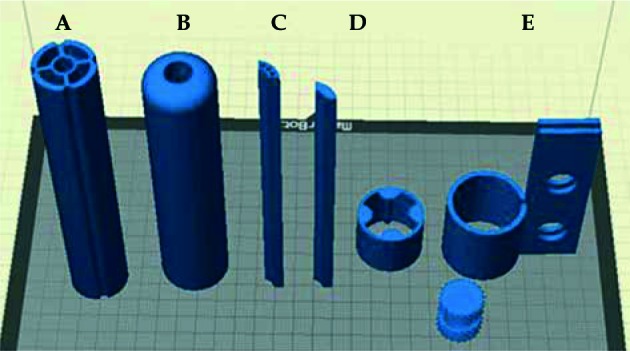
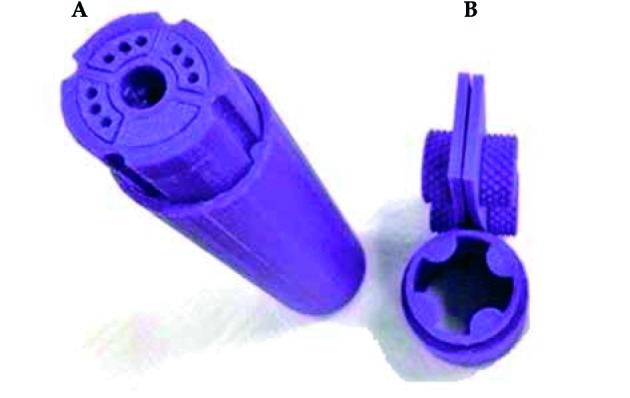
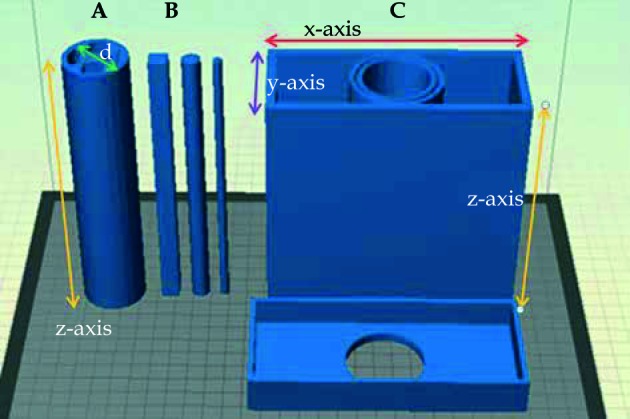
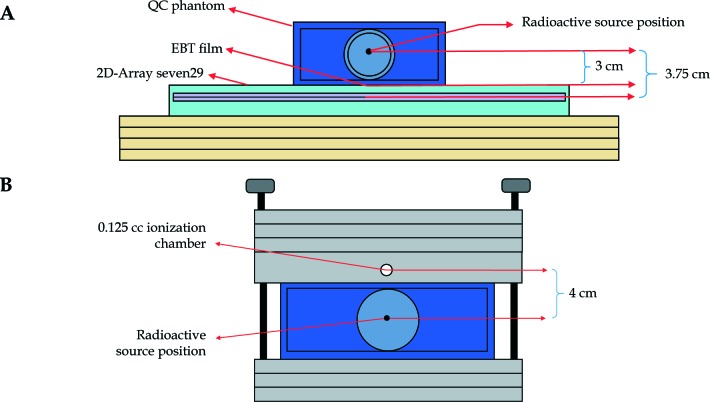
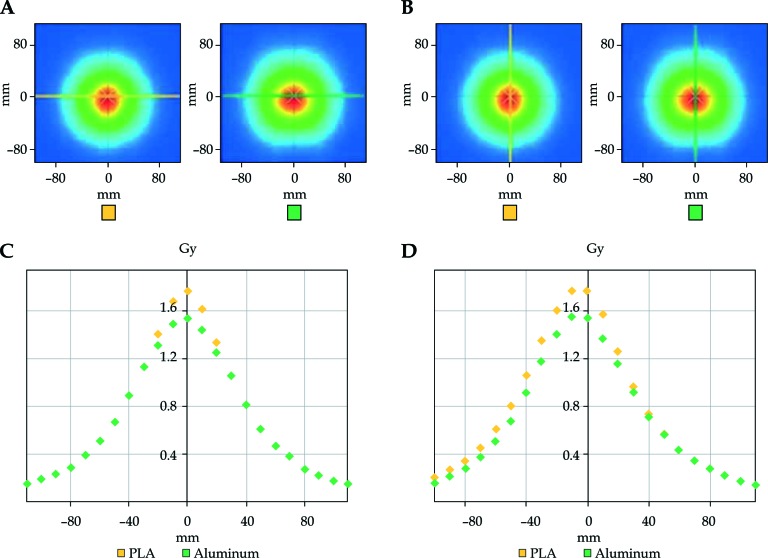
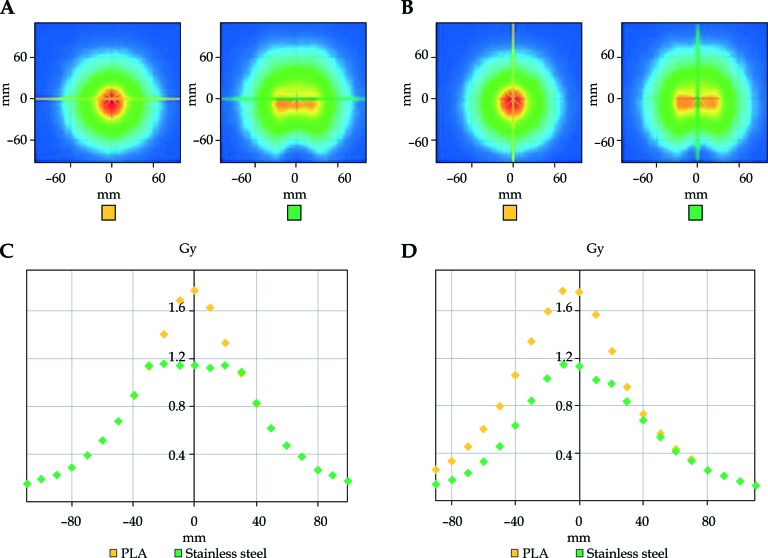
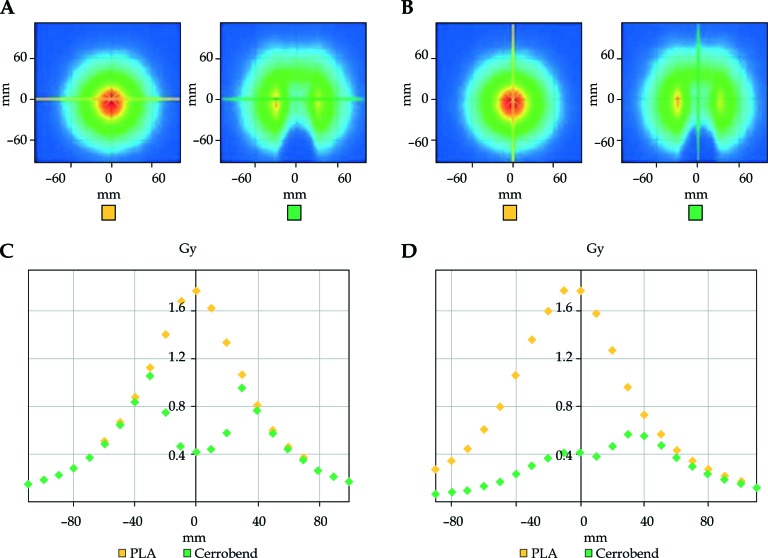
Material and methods: A novel brachytherapy applicator, auxiliary equipment and quality control phantom were modeled in SketchUp Pro 2017 modeling software and printed out from a MakerBot Replicator Z18 three-dimensional printer. As a printing material polylactic acid (PLA) filament was used and compensator materials including aluminum, stainless-steel and Cerrobend alloy were selected according to their radiation attenuation properties. To evaluate the feasibility of the novel applicator, two sets of measurements were performed in a Varian GammaMed iX Plus high-dose rate iridium-192 (192Ir) brachytherapy unit and all of the treatment plans were calculated in Varian BrachyVision treatment planning system v.8.9 with TG43-based formalism. In the first step, catheter and source-dwell positioning accuracy, reproducibility of catheter and source positions, linearity of relative dose with changing dwell times and compensator materials were tested to evaluate the mechanical stability of the designed applicator. In the second step, to validate the dosimetric accuracy of the novel applicator measured point dose and two-dimensional dose distributions in homogeneous medium were compared with calculated data in the treatment planning system using PTW VeriSoft v.5.1 software.
Results: In mechanical quality control tests source-dwell positioning accuracy and linearity of the designed applicator were measured as ≤ 0.5 mm and ≤ 1.5%, respectively. Reproducibility of the treatment planning was ≥ 97.7% for gamma evaluation criteria of 1 mm distance to agreement and 1% dose difference of local dose. In dosimetric quality control tests, maximum difference between measured and calculated point dose was found as 3.8% in homogeneous medium. In two-dimensional analysis, the number of passing points was greater than 90% for all measurements using gamma evaluation criteria of 3 mm distance to agreement and 3% dose difference of local dose.
Conclusions: The novel brachytherapy applicator met the necessary requirements in quality control tests.
Keywords: gynecological cancers; intensity-modulated brachytherapy; novel applicator.
Copyright © 2020 Termedia.
Conflict of interest statement
The authors report no conflict of interest.
Figures
References
-
- Zakem SJ, Robin TP, Smith DE et al. . Evolving trends in the management of high-intermediate risk endometrial cancer in the United States. Gynecol Oncol 2019; 152: 522-527. - PubMed
-
- Holschneider CH, Petereit DG, Chu C et al. . Brachytherapy: A critical component of primary radiation therapy for cervical cancer: For the Society of Gynecologic Oncology (SGO) and the American Brachytherapy Society (ABS). Brachytherapy 2019; 18: 123-132. - PubMed
-
- Gill BS, Lin JF, Krivak TC et al. . National Cancer Data Base analysis of radiation therapy consolidation modality for cervical cancer: the impact of new technological advancements. Int J Radiat Oncol Biol Phys 2014; 90: 1083-1090. - PubMed
LinkOut - more resources
Full Text Sources
Research Materials
Miscellaneous
