


Construction and Chemical Profile on "Activity Fingerprint" of Citri Reticulatae Pericarpium from Different Cultivars Based on HPLC-UV, LC/MS-IT-TOF, and Principal Component Analysis
- PMID: 32190084
- PMCID: PMC7072102
- DOI: 10.1155/2020/4736152
Construction and Chemical Profile on "Activity Fingerprint" of Citri Reticulatae Pericarpium from Different Cultivars Based on HPLC-UV, LC/MS-IT-TOF, and Principal Component Analysis
Abstract
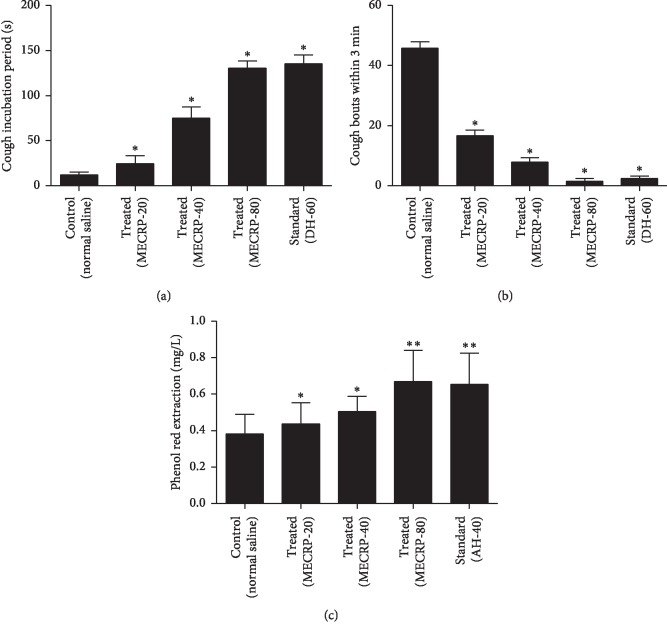
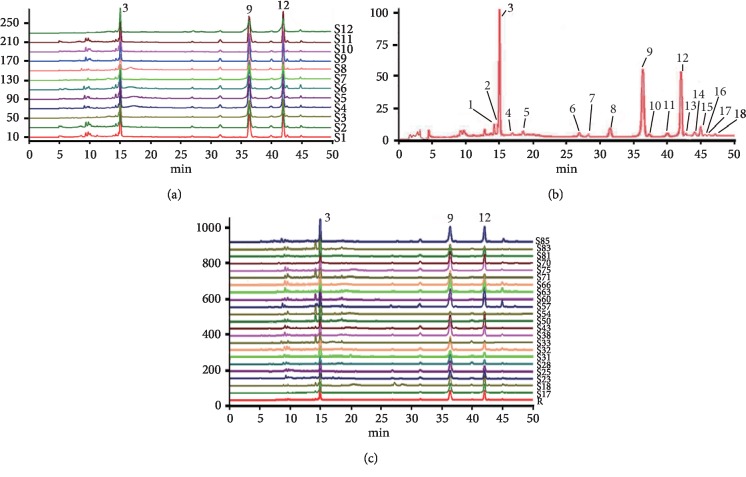
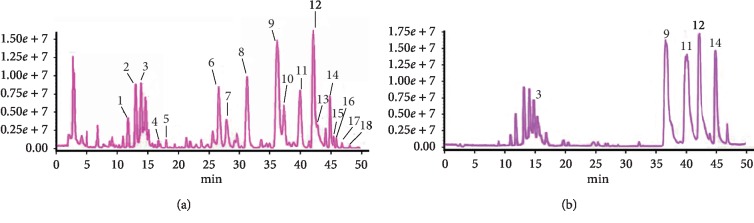
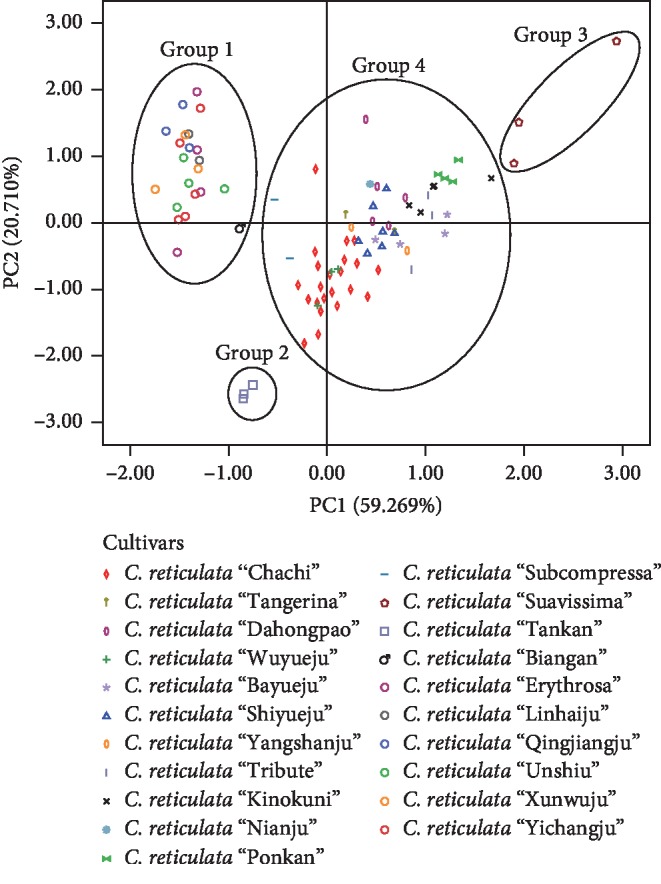
Citri Reticulatae Pericarpium (CRP), known as Chenpi (CP) in Chinese, is a medicinal food for health and fitness. In order to find out the characteristic activity chemicals distinguishing various cultivars of CRP and provide a reference for effective development of citrus resources, an "activity fingerprint" of CRP from 21 different cultivars was established based on the evaluation of antitussive and expectorant activities. There were 18 common peaks in the HPLC fingerprint, of which 3 flavonoid glycosides and 14 polymethoxyflavonoids (PMFs) were identified by LC/MS-IT-TOF. Furthermore, five characteristic chemicals were determined and similarity calculation with principal component analysis (PCA) was combined together to compare the similarity and difference among various cultivars. The results showed that some other cultivars were also similar to C. reticulata "Chachi" except for C. reticulata "Tangerina" and C. reticulata "Dahongpao" recorded in Chinese Pharmacopoeia. Most importantly, the peels of C. reticulata "Shiyueju," C. reticulata "Ponkan," C. reticulata "Tribute," and C. reticulata "Bayueju," traditionally rarely used for medicinal food, were highly similar to that of C. reticulata "Chachi" and rich in bioactive flavonoids, which can be considered the effective medicinal resources of CRP.
Copyright © 2020 Guodong Zheng et al.
Conflict of interest statement
The authors declare that they have no conflicts of interest.
Figures
References
-
- Committee of National Pharmacopoeia. The Pharmacopoeia of the People’s Republic of China. Vol. 1. Beijing, China: China Medical Science and Technology Press; 2015.
-
- Ding P.-L., He C.-M., Cheng Z.-H., Chen D.-F. Flavonoids rather than alkaloids as the diagnostic constituents to distinguish Sophorae Flavescentis Radix from Sophorae Tonkinensis Radix et Rhizoma: an HPLC fingerprint study. Chinese Journal of Natural Medicines. 2018;16(12):951–960. doi: 10.1016/s1875-5364(18)30137-7. - DOI - PubMed
-
- Yang Y., Jiang L., Zheng G. D., Lin L. W., Chen J. L., Zhou W. HPLC fingerprint of pericarpium citri reticultae from Guangdong province. Zhong Yao Cai. 2011;34(2):191–195. - PubMed
LinkOut - more resources
Full Text Sources
Research Materials
Miscellaneous
