


Spatial distribution and associated factors of health insurance coverage in Ethiopia: further analysis of Ethiopia demographic and health survey, 2016
- PMID: 32190301
- PMCID: PMC7076975
- DOI: 10.1186/s13690-020-00407-0
Spatial distribution and associated factors of health insurance coverage in Ethiopia: further analysis of Ethiopia demographic and health survey, 2016
Abstract
Background: Health insurance is one of the instruments to achieve universal health coverage. However, in Ethiopia, the coverage of health insurance is very low and varies from place to place as well. Therefore, exploring the spatial distribution of health insurance is important to prioritize and design targeted intervention programs in the country.
Methods: A total of 16,583 reproductive age group women (15-49 years) were included in this study. The Bernoulli model was used by applying Kulldorff methods using the SaTScan software to analyse the purely spatial clusters of health insurance coverage. ArcGIS version 10.3 was used to visualize the distribution of health insurance coverage across the country. Mixed-effect logistic regression analysis was also used to identify predictors of health insurance coverage.
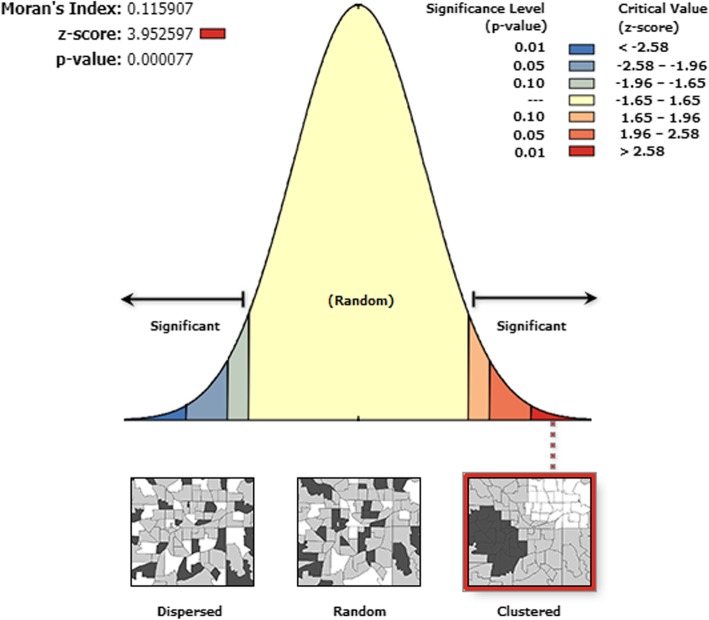
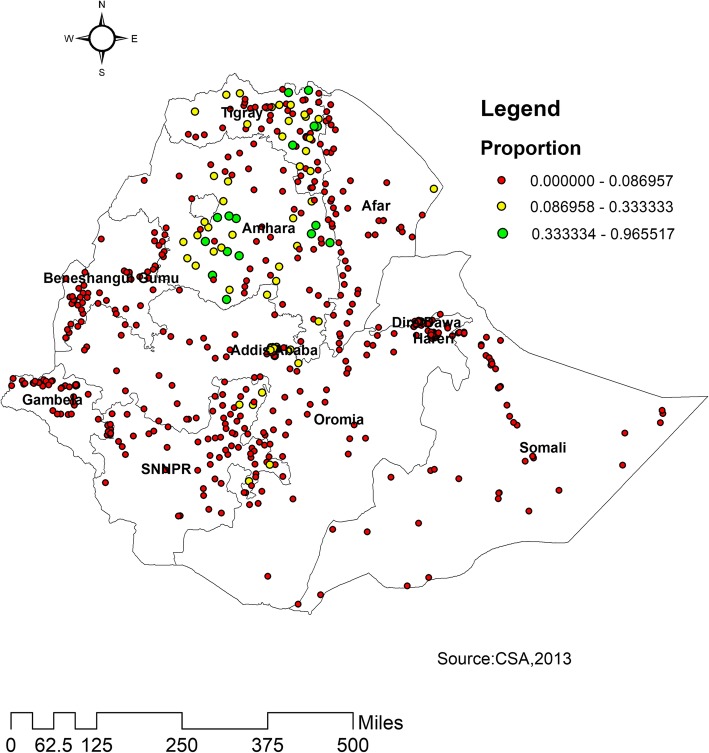
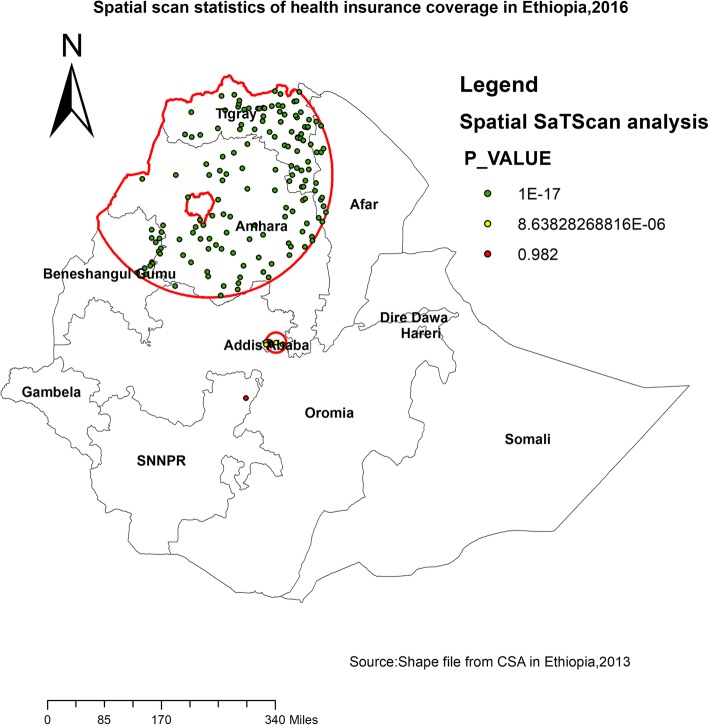
Results: Health insurance coverage among women aged 15-49 years had spatial variations across the country (Moran's I: 0.115, p < 0.001). Health insurance coverage in Amhara (p < 0.001) and Tigray (p < 0.001) National Regional States clustered spatially. Reading newspapers at least once a week (Adjusted Odds Ratio (AOR) = 1.78, 95% CI: (1.18-2.68))), 40-44 years of age (AOR = 2.14, 95% CI: (1.37-3.35)), clerical working mothers (AOR = 4.33, 95% CI: (2.50-7.49)), mothers' with secondary school education (AOR = 1.77; 95% CI: (1.21-2.58)), mothers' with higher school education (AOR = 2.62; 95% CI: (1.63-4.23)), having more than 5 family members (AOR = 1.25; 95% CI: (1.01-1.55)) and richest wealth quantile (AOR = 3.43, 95% CI: (1.96-6.01)) were predictors of health insurance coverage among reproductive age group women in Ethiopia.
Conclusion: Health insurance coverage was very low in Ethiopia and had spatial variations across the country. The hot spot areas with low health insurance coverage need more coherent and harmonized action such as strengthening financial protection through national health packages, sharing experience from regions which have better health insurance coverage and using mass media to increase awareness and confidence of potentials in the systems, which may encourage them to enrol.
Keywords: Ethiopia; Health insurance coverage; Spatial distribution; Universal health coverage.
© The Author(s) 2020.
Conflict of interest statement
Competing interestsThe authors declare that they have no competing interests.
Figures
References
-
- Evans DB, Hsu J, Boerma T. Universal health coverage and universal access: SciELO Public Health; 2013. Avaliable at https://www.who.int/bulletin/volumes/91/8/13-125450.pdf.
-
- World Health Organization. Health financing system. 2011 [cited 2019 July 10]. Available from: https://www.who.int/healthsystems/topics/financing.
-
- World Bank. UNIVERSAL HEALTH COVERAGE. 2018 [cited 2019 July 12]. Available from: https://www.worldbank.org/topic/universalhealth/coverage.
LinkOut - more resources
Full Text Sources
