


Healthy low nitrogen footprint diets
- PMID: 32190540
- PMCID: PMC7063699
- DOI: 10.1016/j.gfs.2019.100342
Healthy low nitrogen footprint diets
Abstract
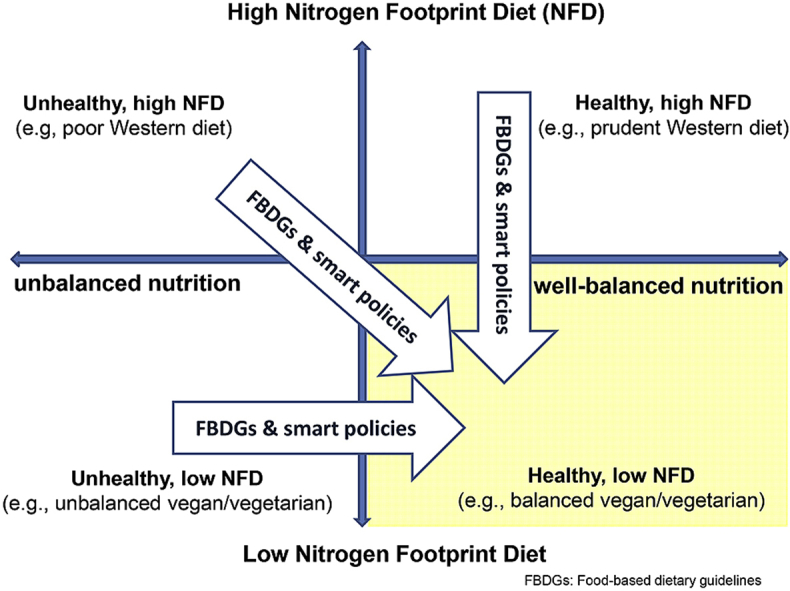
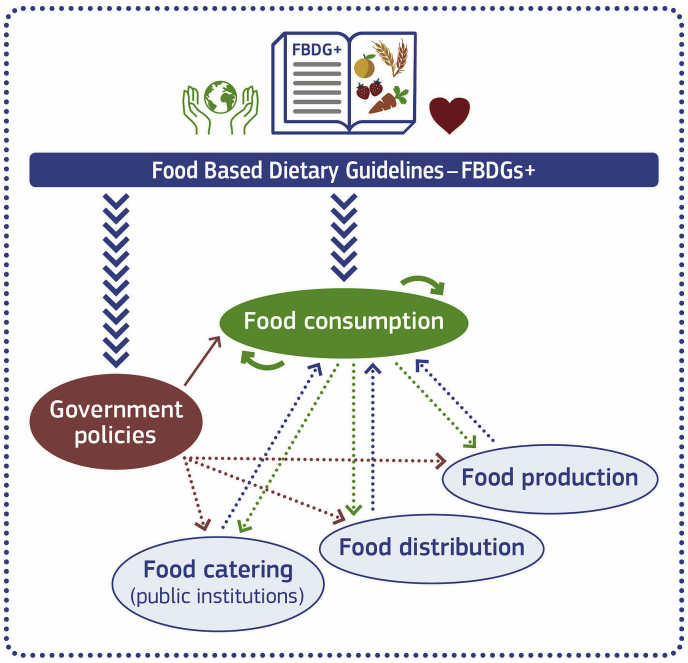
Shifting towards more plant-based diets can reduce the environmental burden of the food system including its impact on the nitrogen cycle. However, such changes need to be compatible with healthy nutrition. To discuss the health aspects of plant-based dietary patterns, this literature review analyses vegetarian and vegan diets and concludes that well-planned, balanced vegetarian diets are nutritious and healthy. Food-based dietary guidelines (FBDGs) that include environmental aspects and practical advice to individuals and society are needed as crucial instruments to further promote public health within the planetary boundaries. FBDGs need to be better exploited to serve as a basis to policies that promote diets supporting the UN sustainable development goals.
Keywords: Food systems; Food-based dietary guidelines; Health; Nitrogen footprint; Vegetarian diet.
© 2019 The Authors.
Conflict of interest statement
None.
Figures
References
-
- Agnoli C., Baroni L., Bertini I., Ciappellano S., Fabbri A., Papa M., Pellegrini N., Sbarbati R., Scarino M.L., Siani V., Sieri S. Position paper on vegetarian diets from the working group of the Italian Society of Human Nutrition. Nutr. Metab. Cardiovasc. Dis. 2017;27(12):1037–1052. - PubMed
-
- American Dietetic Association and Dietitians of Canada Position of the American dietetic association and Dietitians of Canada: vegetarian diets. J. Acad. Nutr. Diet. 2003;103(6):748. - PubMed
-
- Barnard N.D., Levin S.M., Yokoyama Y. A systematic review and meta-analysis of changes in body weight in clinical trials of vegetarian diets. J. Acad. Nutr. Diet. 2015;115(6):954–969. - PubMed
Publication types
LinkOut - more resources
Full Text Sources