


A retrospective survival analysis of Glioblastoma patients treated with selective serotonin reuptake inhibitors
- PMID: 32190845
- PMCID: PMC7079579
- DOI: 10.1016/j.bbih.2019.100025
A retrospective survival analysis of Glioblastoma patients treated with selective serotonin reuptake inhibitors
Abstract
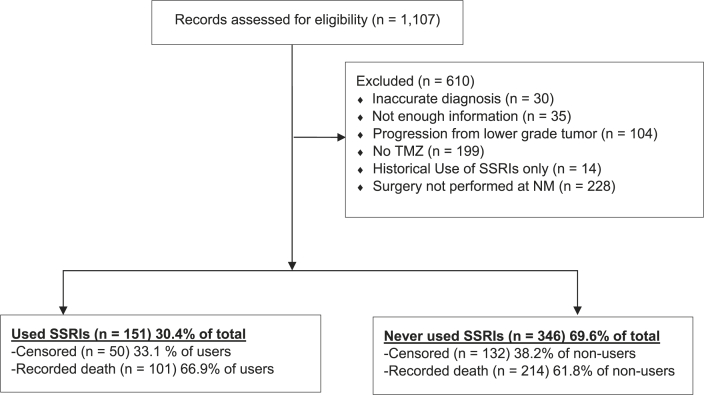
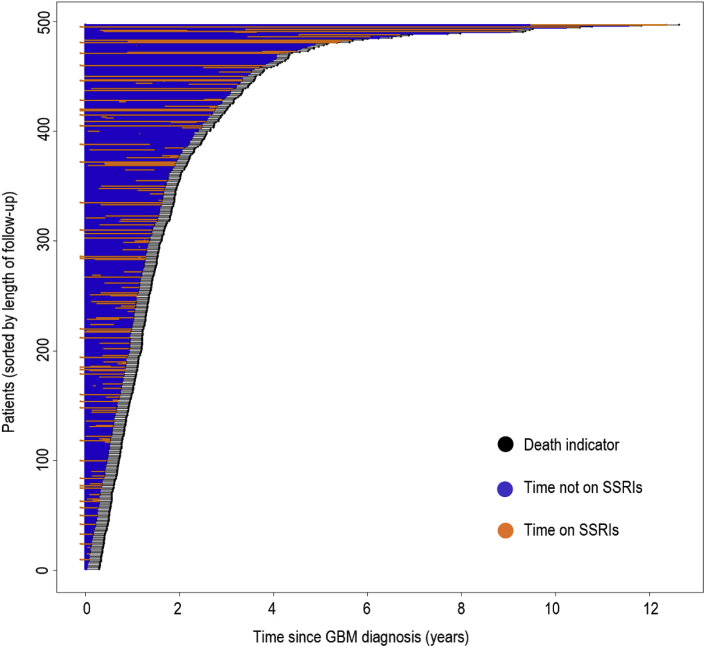
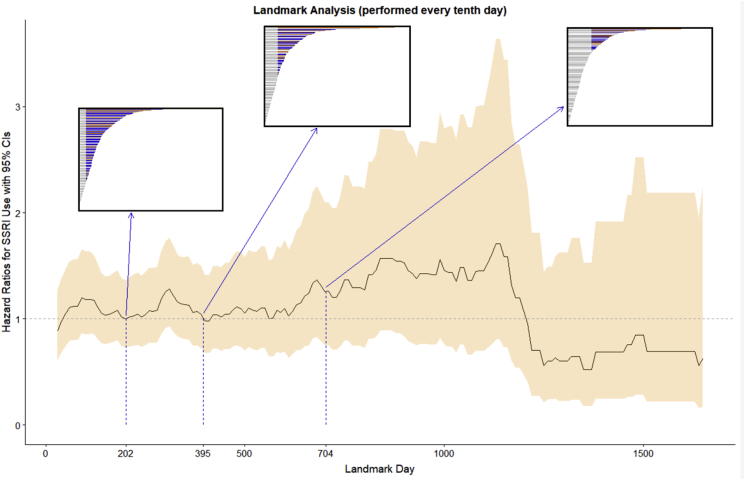
Glioblastoma (GBM) is the most common and aggressive form of malignant glioma in adults with a median overall survival (OS) time of 16-18 months and a median age of diagnosis at 64 years old. Recent work has suggested that depression and psychosocial distress are associated with worse outcomes in patients with GBM. We therefore hypothesized that the targeted neutralization of psychosocial distress with selective serotonin reuptake inhibitor (SSRI) antidepressant treatment would be associated with a longer OS among patients with GBM. To address this hypothesis, we retrospectively studied the association between adjuvant SSRI usage and OS in GBM patients treated by Northwestern Medicine-affiliated providers. The medical records of 497 GBM patients were analyzed after extraction from the Northwestern Medicine Enterprise Data Warehouse. Data were retrospectively studied using a multivariable Cox model with SSRI use defined as a time-dependent variable for estimating the association with OS. Of the 497 patients, 315 individuals died, while 182 were censored due to the loss of follow-up or were alive at the end of our study. Of the 497 patients, 151 had a recorded use of SSRI treatment during the disease course. Unexpectedly, SSRI usage was not associated with an OS effect in both naïve (HR = 0.81, 95% CI = 0.64-1.03) and adjusted time-dependent (HR = 1.26, 95% CI = 0.97-1.63) Cox models. Ultimately, we failed to find an association between SSRI treatment and an improved OS of patients with GBM. Additional work is necessary for understanding the potential therapeutic effects of SSRIs when combined with other treatment approaches, and immunotherapies in particular, for subjects with GBM.
Keywords: Antidepressant; Biobehavioral; Depression; Glioma; Immunosuppression; Psychosocial.
Conflict of interest statement
Declaration of competing interest The authors declare that they have no conflicts of interest with the associated work entitled, ‘A Retrospective Survival Analysis of Glioblastoma Patients Treated With Selective Serotonin Reuptake Inhibitors’.
Figures
References
-
- Bloch O. ATIM-14. Alliance A071101: a phase II randomized trial comparing the efficacy of heat shock protein peptide COMPLEX-96 (HSPPC-96) vaccine given with bevacizumab versus bevacizumab alone in the treatment of surgically resectable recurrent glioblastoma. Neuro Oncol. 2017;19(Suppl. l_6) vi29-vi29.
-
- Caudill J.S. Selective serotonin reuptake inhibitors, glioblastoma multiforme, and impact on toxicities and overall survival: the Mayo clinic experience. Am. J. Clin. Oncol. 2011;34(4) - PubMed
Grants and funding
LinkOut - more resources
Full Text Sources
