Food insecurity and housing instability during early childhood as predictors of adolescent mental health
- PMID: 32191051
- PMCID: PMC7483158
- DOI: 10.1037/fam0000651
Food insecurity and housing instability during early childhood as predictors of adolescent mental health
Abstract
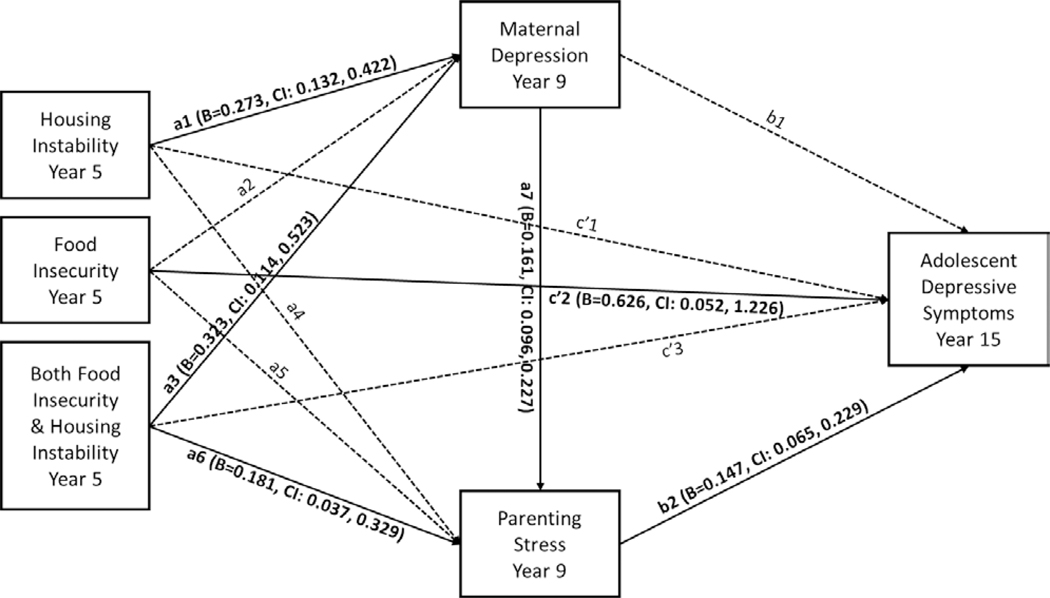
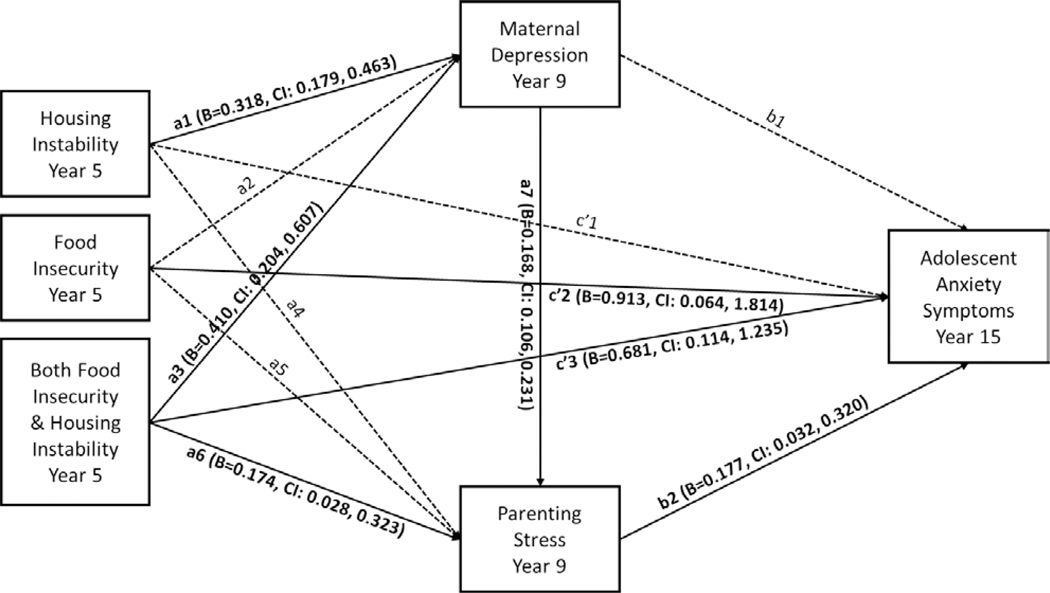
This study examined the effects of food insecurity and housing instability experiences during early childhood on adolescent anxiety and depressive symptoms through maternal depression and parenting stress. This longitudinal study included 4 waves of data from the Fragile Families and Child Well-Being Study (n = 2,626). Food insecurity was measured when the child was 5 years of age using the U.S. Department of Agriculture's 18-item Food Security Scale. Housing instability was also measured when the child was 5 years of age based on an affirmative response to 6 housing adversity items. Maternal depression and parenting stress were measured when the child was 9 years of age. Anxiety and depressive symptoms were assessed when the child (now adolescent) was 15 years of age using 6 items of the Brief Symptom Inventory 18 anxiety subscale and 5 items of the Centers for Epidemiologic Studies Depression Scale, respectively. Two structural equation models assessed the associations between food insecurity and housing instability on adolescent anxiety (Model 1) and depressive symptoms (Model 2) through maternal depression and parenting stress simultaneously, controlling for sociodemographic characteristics. Results suggest that experiencing both food insecurity and housing instability during early childhood increases the risk of long-term adolescent depressive (indirect: B = 0.008, 95% CI [0.002, 0.016]) and anxiety (indirect: B = 0.012, 95% CI [0.002, 0.026]) symptoms through maternal depression to parenting stress. Screening for food insecurity and housing instability during early childhood could potentially identify both mothers who are at risk for depression and parenting stress and children who are at increased risk for anxiety or depressive symptoms during adolescence. (PsycInfo Database Record (c) 2020 APA, all rights reserved).
Figures
References
-
- Abidin R. (1995). Parent Stress Inventory, 3rd Edition Psychological Assessment Resources; Odessa, FL.
-
- American Psychiatric Association. (2013). Diagnostic and Statistical Manual of Mental Disorders, Fourth Edition American Psychiatric Association; Washington, DC.
-
- Axelson DA, & Birmaher B. (2001). Relation between anxiety and depressive disorders in childhood and adolescence. Depression and Anxiety, 14(2), 67–78. - PubMed
-
- Ben-Shlomo Y, & Kuh D. (2002). A life course approach to chronic disease epidemiology: Conceptual models, empirical challenges and interdisciplinary perspectives. International Journal of Epidemiology, 31(2), 285–293. - PubMed
-
- Bendheim-Thoman Center for Research on Child Wellbeing. (2018). User’s Guide for Fragile Families and Child Wellbeing Study Public Data, Year 9. Retrieved from https://fragilefamilies.princeton.edu/sites/fragilefamilies/files/year_9...