


Creatine kinase rate constant in the human heart at 7T with 1D-ISIS/2D CSI localization
- PMID: 32191723
- PMCID: PMC7081998
- DOI: 10.1371/journal.pone.0229933
Creatine kinase rate constant in the human heart at 7T with 1D-ISIS/2D CSI localization
Abstract
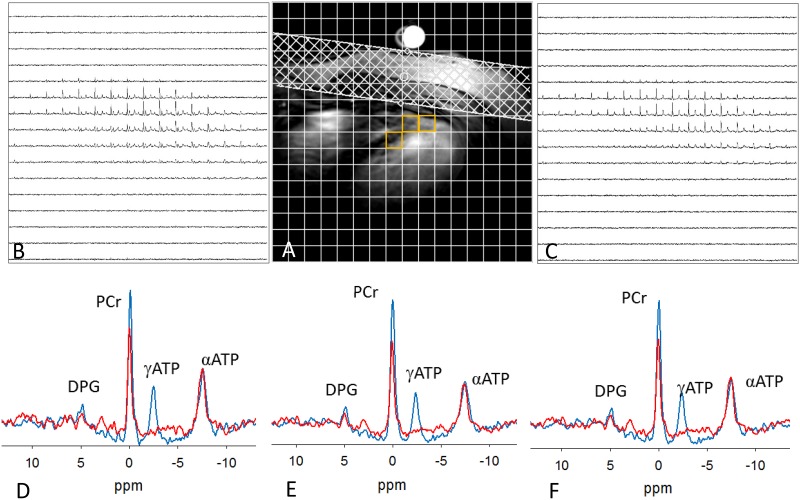
Purpose: Creatine Kinase (CK) reaction plays an important role in energy metabolism and estimate of its reaction rate constant in heart provides important insight into cardiac energetics. Fast saturation transfer method ([Formula: see text] nominal) to measure CK reaction rate constant (kf) was previously demonstrated in open chest swine hearts. The goal of this work is to further develop this method for measuring the kf in human myocardium at 7T. [Formula: see text] approach is combined with 1D-ISIS/2D-CSI for in vivo spatial localization and myocardial CK forward rate constant was then measured in 7 volunteers at 7T.
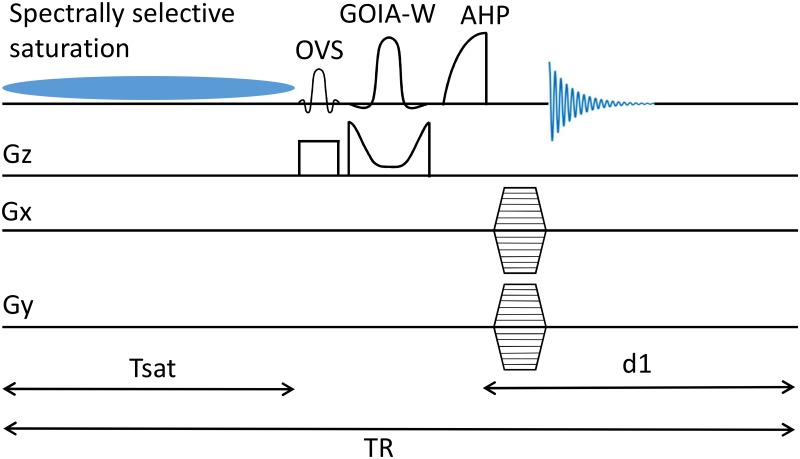
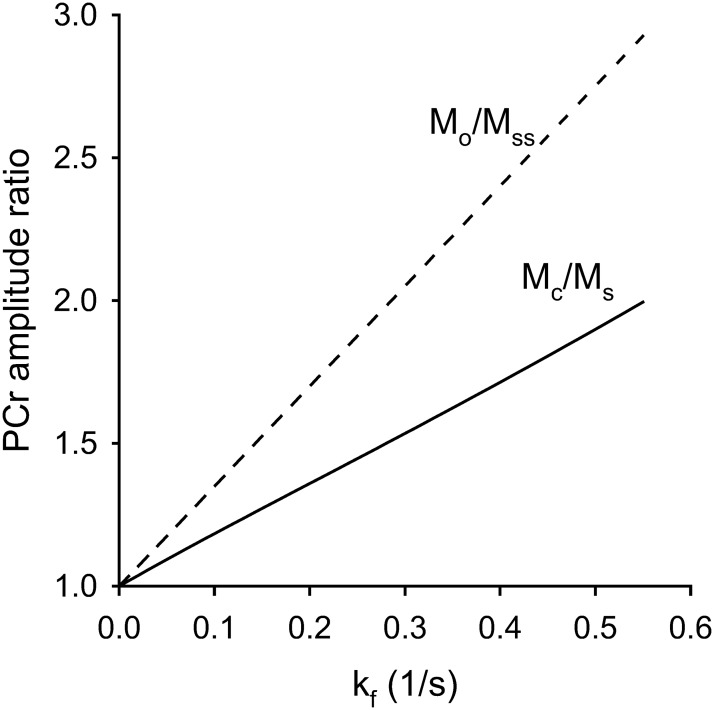
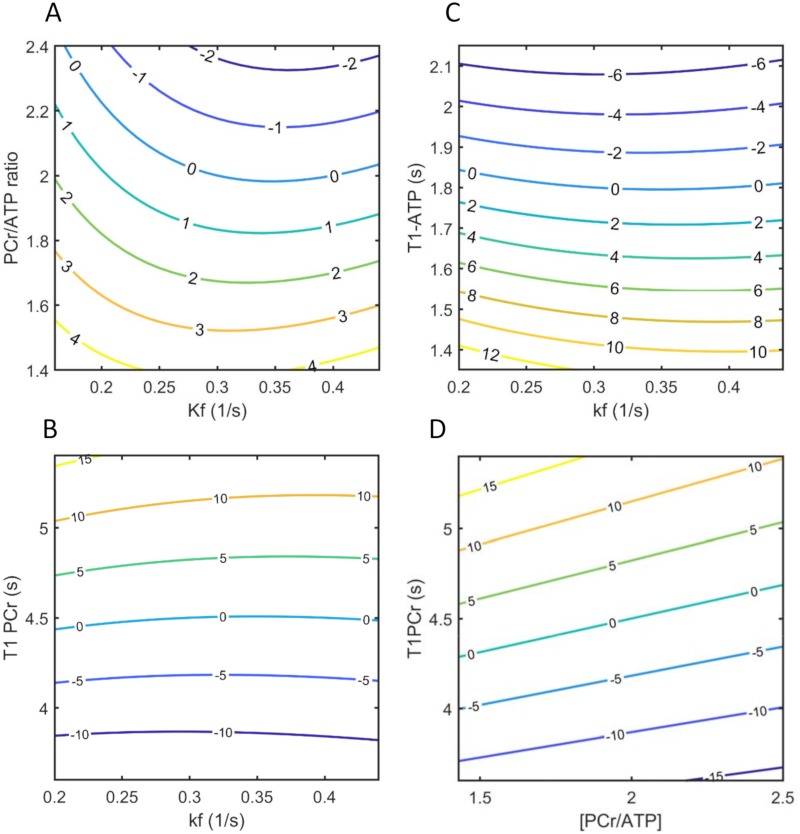
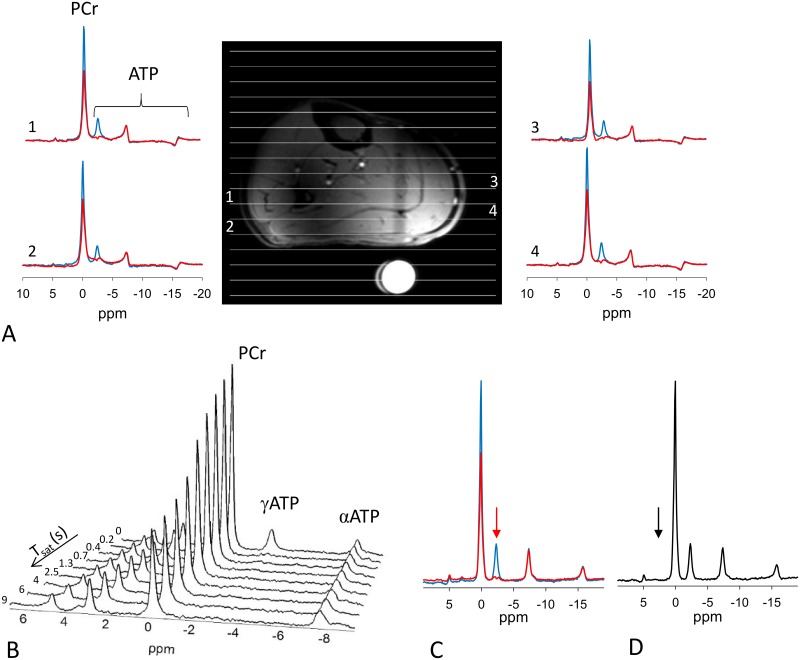
Methods: [Formula: see text] method uses two partially relaxed saturation transfer (ST) spectra and correction factor to determine CK rate constant. Correction factor is determined by numerical simulation of Bloch McConnell equations using known spin and experimental parameters. Optimal parameters and error estimate in calculation of CK reaction rate constant were determined by simulations. The technique was validated in calf muscles by direct comparison with saturation transfer measurements. [Formula: see text] pulse sequence was incorporated with 1D-image selected in vivo spectroscopy, combined with 2D-chemical shift spectroscopic imaging (1D-ISIS/2D-CSI) for studies in heart. The myocardial CK reaction rate constant was then measured in 7 volunteers.
Results: Skeletal muscle kf determined by conventional approach and [Formula: see text] approach were the same 0.31 ± 0.02 s-1 and 0.30 ± 0.04 s-1 demonstrating the validity of the technique. Results are reported as mean ± SD. Myocardial CK reaction rate constant was 0.29 ± 0.05 s-1, consistent with previously reported studies.
Conclusion: [Formula: see text] method enables acquisition of 31P saturation transfer MRS under partially relaxed conditions and enables 2D-CSI of kf in myocardium. This work enables applications for in vivo CSI imaging of energetics in heart and other organs in clinically relevant acquisition time.
Conflict of interest statement
NO authors have competing interests.
Figures
References
-
- Neubauer S, Krahe T, Schindler R, Horn M, Hillenbrand H, Entzeroth C, et al. 31P magnetic resonance spectroscopy in dilated cardiomyopathy and coronary artery disease. Altered cardiac high-energy phosphate metabolism in heart failure. Circulation. 1992;86(6):1810–8. 10.1161/01.cir.86.6.1810 - DOI - PubMed
-
- Bertero E, Maack C. Reply to ‘Metabolic remodelling in heart failure revisited’. Nature reviews Cardiology. 2018. - PubMed
-
- Bottomley PA. MRS Studies of Creatine Kinase Metabolism in Human Heart. Emagres. 2016;5(2):1183–202.
MeSH terms
Substances
LinkOut - more resources
Full Text Sources
Research Materials
