


Current Development Status of Forest Therapy in China
- PMID: 32192040
- PMCID: PMC7151138
- DOI: 10.3390/healthcare8010061
Current Development Status of Forest Therapy in China
Abstract
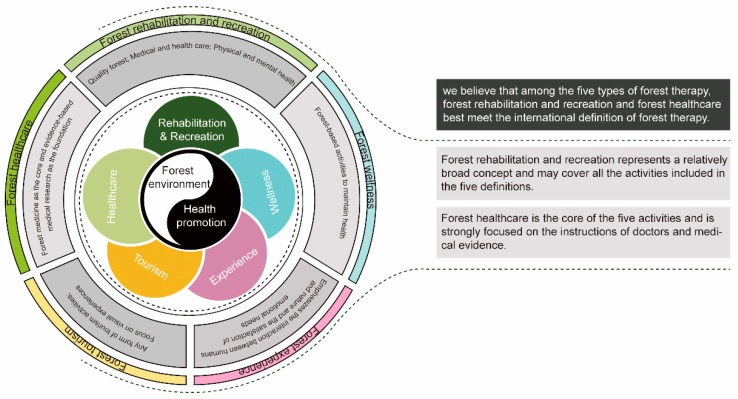
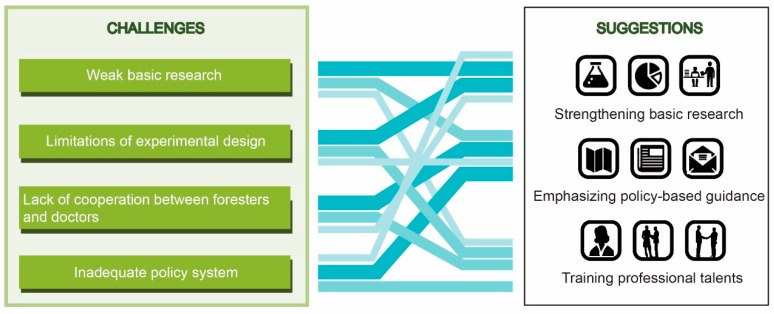
As a result of rapid urbanization and urban sprawl, natural ecosystems are shrinking or are fragmented, affecting people's health and quality of life. Modern people prefer to live in large cities rather than rural areas because of greater convenience and more comfortable living conditions. As a consequence, people are suffering from many psycho-physiological health problems and have a longing for natural environments to escape the concrete jungle. Forest therapy has emerged as a preventive and alternative therapy to cope with stress and enhance people's health and wellbeing as a result of spending time in a green and healthy environment. Here, we review the activities related to forest therapy in China and discuss the commonalities and differences between the forest therapy types. Furthermore, we summarize the current achievements of forest therapy in basic research and the development of the forest therapy industry. We also describe the challenges that forest therapy has been facing. Finally, we provide suggestions for further development in research and industry.
Keywords: challenges; definition; forest therapy; forest wellness; policy suggestions; public health.
Conflict of interest statement
The authors declare no conflict of interest.
Figures
References
-
- Yang Y., Xue D., Zhang H., XU Z., TANG G. Analysis on dynamic development of landscape fragmentation for urban forest in fast-urbanization regions. J. South China Agric. Univ. 2016;4:97–104. (In Chinese)
-
- Fu G., Xiao N., Qiao M., Qin Y., Yan B., Liu G., Gao X., Li J. Spatial-temporal changes of landscape fragmentation patterns in Beijing in the last two decades. Acta Ecol. Sin. 2017;37:2551–2562. (In Chinese)
-
- Wu J. Urban sustainability: An inevitable goal of landscape research. Landsc. Ecol. 2010;25:1–4. doi: 10.1007/s10980-009-9444-7. - DOI
-
- Filgueiras B.K.C., Tabarelli M., Leal I.R., Vaz-de-MellO F.Z., Lannuzzi L. Dung beetle persistence in human-modified landscapes: Combining indicator species with anthropogenic land use and fragmentation-related effects. Ecol. Indic. 2015;55:65–73. doi: 10.1016/j.ecolind.2015.02.032. - DOI
Publication types
Grants and funding
LinkOut - more resources
Full Text Sources
Research Materials
