


Priority Setting for Management of Hazardous Biocides in Korea Using Chemical Ranking and Scoring Method
- PMID: 32192129
- PMCID: PMC7143513
- DOI: 10.3390/ijerph17061970
Priority Setting for Management of Hazardous Biocides in Korea Using Chemical Ranking and Scoring Method
Abstract
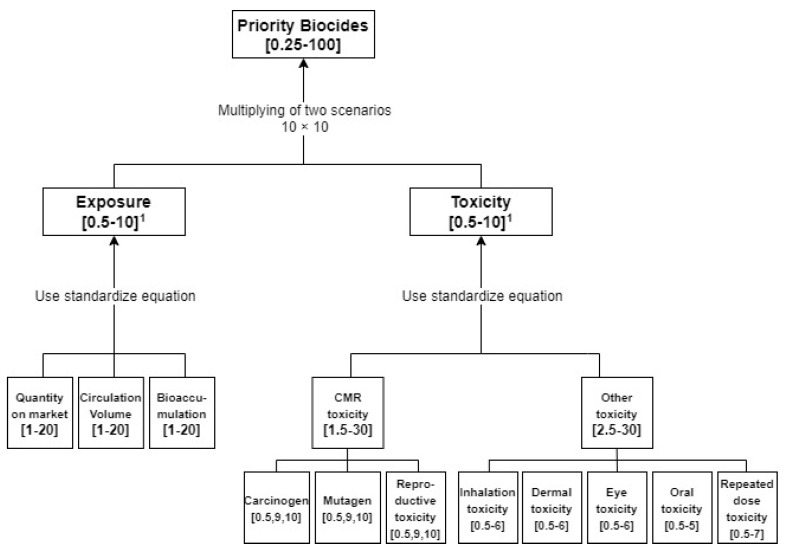
Biocides are non-agricultural chemical agents for the prevention of unhygienic pests. The worldwide demand for biocidal products has been rapidly increasing. Meanwhile, biocides have been causing negative health effects for decades, resulting in public health scares. Therefore, governments around the world have tried to strictly control biocides, and it is necessary to prioritize the health risks of biocides for efficient management. Chemical ranking and scoring (CRS) methods have been developed for the effective management of chemicals. However, existing methods do not use suitable variables to evaluate biocides, thus possibly underestimating or overestimating the actual health risks. We developed a new CRS method that reflects the exposure and toxicity characteristics of biocides. Eleven indicators were chosen as appropriate for prioritizing biocides, and scoring based on the globally harmonized system of classification and labeling of chemicals (GHS) improved the efficiency of the method. Correlations between individual indicators in this study were low (-0.151-0.325), indicating that each indicator was independent and well-chosen for prioritizing biocides. The effect of each indicator on the total score showed that carcinogenicity, mutagenicity, and reproductive toxicity (CMR) chemicals ranked high with r = 0.558. This result demonstrated that the most dangerous toxicants should play a more decisive role in the top ranking than the others. We expect that our method can be efficiently used to screen regulated biocides by prioritizing their health hazards, thus leading to better policy decision making about biocide use.
Keywords: GHS; biocide; chemical ranking and scoring method; health hazard; risk priority.
Conflict of interest statement
The authors declare no conflict of interest.
Figures
References
-
- Ministry of Food and Drug Safety . Regulation on Quasi-Drugs Approval Act No. 2013-175. Ministry of Food and Drug Safety; Seoul, Korea: 2013.
-
- Acmite Market Intelligence . Global Biocide Market. Acmite Market Intelligence; Ratingen, Germany: 2012.
-
- Research and Markets . Global Biocides Report. Research and Markets; Dublin, Ireland: 2018.
-
- Parker Waichman Dimethyl Fumarate Allergy. [(accessed on 4 January 2019)]; Available online: https://www.yourlawyer.com/other-topic/dimethyl-fumarate-allergy.
Publication types
MeSH terms
Substances
LinkOut - more resources
Full Text Sources
