. 2020 Oct;146(4):884-893.e5.
doi: 10.1016/j.jaci.2020.02.032. Epub 2020 Mar 16.

Omeprazole inhibits IgE-mediated mast cell activation and allergic inflammation induced by ingested allergen in mice

Affiliations

Omeprazole inhibits IgE-mediated mast cell activation and allergic inflammation induced by ingested allergen in mice

Cynthia Kanagaratham et al. J Allergy Clin Immunol. 2020 Oct.

Abstract

Background: Patients with eosinophilic esophagitis have increased numbers of mucosal mast cells. Administration of the proton pump inhibitor omeprazole can reduce both esophageal mast cell and eosinophil numbers and attenuate type 2 inflammation in these subjects.

Objective: Given that maintenance of an acidic environment within granules is important for mast cell homeostasis, we sought to evaluate the effects of omeprazole on mast cell functions including development, IgE:FcεRI-mediated activation, and responses to food allergen.

Methods: Mast cell degranulation, cytokine secretion, and early signaling events in the FcεRI pathway, including protein kinase phosphorylation and Ca2+ flux, were measured after IgE crosslinking in murine bone marrow-derived mast cells and human cord blood-derived mast cells. The effects of omeprazole on these responses were investigated as was its impact on mast cell-dependent anaphylaxis and food allergy phenotypes in vivo.

Results: Murine and human mast cells treated with omeprazole exhibited diminished degranulation and release of cytokines and histamine in response to allergen. In murine mast cells, phosphorylation of protein kinases, ERK and SYK, was decreased. Differentiation of mast cells from bone marrow progenitors was also inhibited. IgE-mediated passive anaphylaxis was blunted in mice treated with omeprazole as was allergen-induced mast cell expansion and mast cell activation in the intestine in a model of food allergy.

Conclusions: Our findings suggest that omeprazole targets pathways important for the differentiation and activation of murine mast cells and for the manifestations of food allergy and anaphylaxis.

Keywords: Food allergy; anaphylaxis; mast cell; omeprazole; proton pump inhibitor.


Figures

Figure 1.
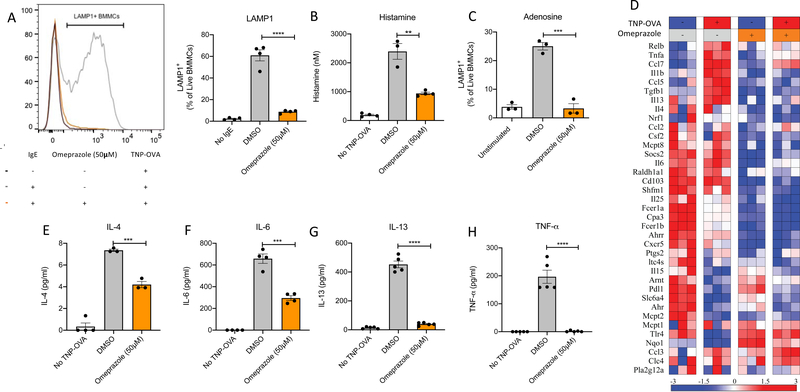
Figure 1.. Omeprazole blocks IgE-induced mast cell degranulation, cytokine secretion and transcriptional changes.
A) Representative histogram and bar plots for LAMP-1 expression by BMMCs following sensitization with IgE anti-TNP, treatment with drug vehicle (DMSO) or omeprazole, and challenge with TNP-OVA for 10 minutes. B) Histamine release into culture supernatant from IgE anti-TNP sensitized BMMCs following activation with TNP-OVA for 5 minutes. C) LAMP-1 expression of BMMCs following activation with adenosine. D) Heatmap of transcriptional changes in IgE sensitized BMMCs pre-treated with and without omeprazole followed by antigen stimulation for two hours. Direct mRNA counts as measured by the nCounter® Digital Analyzer System (NanoString) were normalized to internal positive, negative and housekeeping gene controls and presented as standard deviation from the row mean. E-H) Release of cytokines (IL-4, IL-6, IL-13, TNF-α) by IgE-sensitized BMMCs following omeprazole treatment and antigen stimulation for six hours. Statistical analysis by one-way analysis of variance. Data are shown for one experiment representative of two independent experiments for LAMP1, histamine and cytokine secretion assay; transcriptional profiling by NanoString was performed once. *P<0.05, **P<0.01, ***P<0.001, and ****P<0.0001
Figure 2.
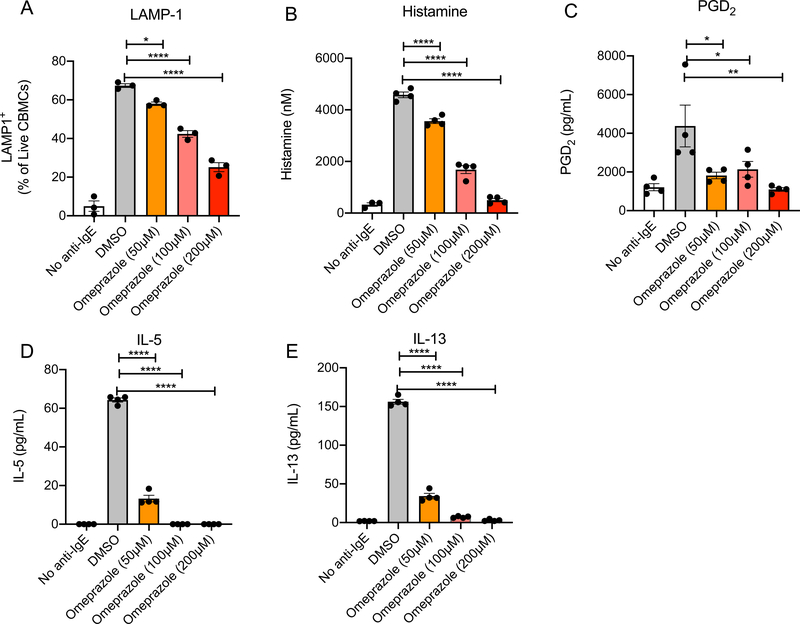
Figure 2.. Omeprazole blocks IgE-induced human mast cell degranulation and cytokine secretion.
Bar plots showing LAMP-1 expression (A) and histamine release (B) by human mast cells following sensitization with IgE, treatment with drug vehicle (DMSO) or omeprazole, and challenge with anti-IgE for 10 and 5 minutes, respectively. Secretion of PGD2 (C), IL-5 (D) and IL-13 (E) by IgE-sensitized human mast cells following omeprazole treatment and stimulation with anti-IgE for six hours. Statistical analysis by one-way analysis of variance. *P<0.05, **P<0.01, ***P<0.001, and ****P<0.0001.
Figure 3.
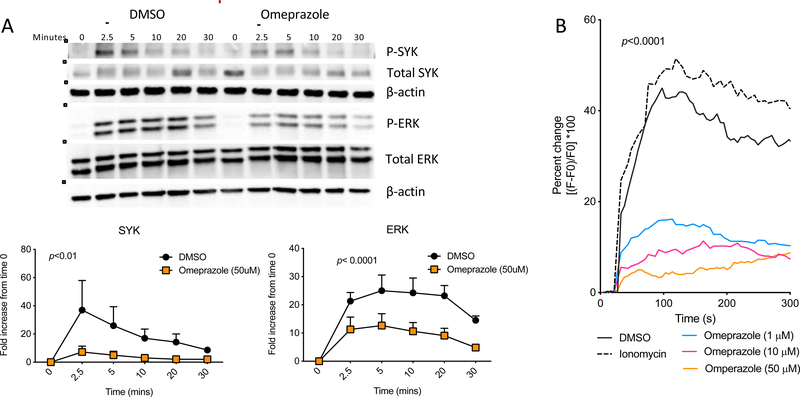
Figure 3.. Effect of omeprazole on calcium flux and signaling pathways downstream of FcεRI.
A) Representative SYK and ERK phosphorylation blots and compiled ratios of phospho protein/total protein intensities in IgE-sensitized BMMCs treated or untreated (DMSO) with omeprazole for two hours. Statistics calculated following two-way ANOVA. B) Mobilization of calcium from intracellular stores following antigen stimulation of IgE-sensitized BMMCs treated with omeprazole for two hours or untreated (DMSO). P-value calculated by two-way ANOVA between DMSO and omeprazole (50 μM). Data are shown for one experiment representative of at least 2 independent experiments.
Figure 4.
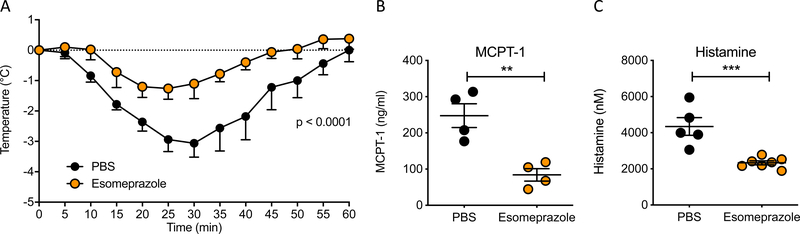
Figure 4.. Effect of omeprazole on passive systemic anaphylaxis.
A) Change in core body temperature of mice treated with omeprazole or drug vehicle, sensitized with SPE-7, and challenged with DNP-BSA. Statistical analysis by two-way analysis of variance. B) Serum concentration of MCPT-1 in animals from PSA experiment at endpoint. C) Plasma histamine concentration in animals 5 minutes after allergen challenge. Statistical analysis by unpaired t-test. Data are from one experiment representative of 2 independent experiments with n = 4–5 for temperature drop and MCPT1 levels; histamine levels are from one experiment with n = 3–4 animals. **P<0.01 and ***P<0.001
Figure 5.
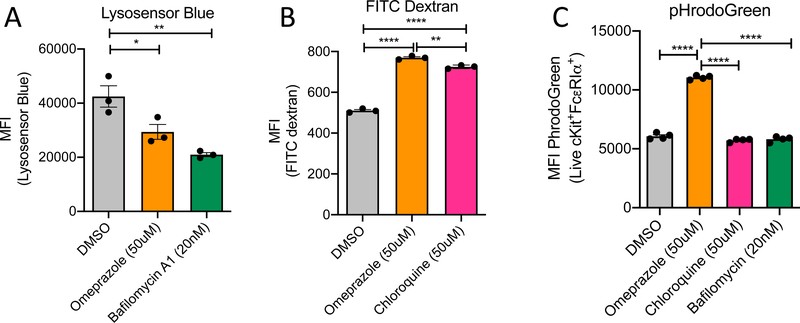
Figure 5.. pH of cellular compartments following omeprazole treatment of BMMCs.
A) Measurement of changes in pH by of intracellular vesicles by Lysosensor blue following treatment with omeprazole and bafilomycin. B) Loss of quenching of FITC-dextran in BMMCs treated with omeprazole or chloroquine. C) Measurement of changes in cytosolic pH by pHrodoGreen following treatment with omeprazole, chloroquine or bafilomycin. Statistical analysis by one-way analysis of variance. Data are shown from one representative of two experiments. MFI, mean fluorescence intensity. *P<0.05, **P<0.01, ***P<0.001 , and ****P<0.0001
Figure 6.
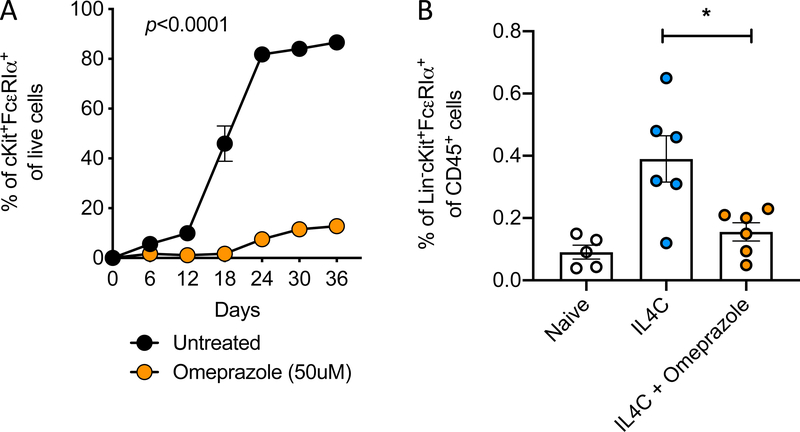
Figure 6.. Omeprazole inhibits differentiation of myeloid precursor cells to mast cells.
A) Maturation of precursor cells to BMMCs in the presence or absence of omeprazole. Statistical analysis by two-way analysis of variance. B) Percentage of small intestinal mast cells among CD45+ cells in mice intraperitoneally injected with immune complexes of IL-4 and anti-IL-4 (IL4C) to induce mastocytosis and intragastrically treated with omeprazole. For in vitro mast cell differentiation, data is from one experiment involving three independent cultures; the in vivo experiment was repeated twice, and data are shown for one experiment. *P<0.05
Figure 7.
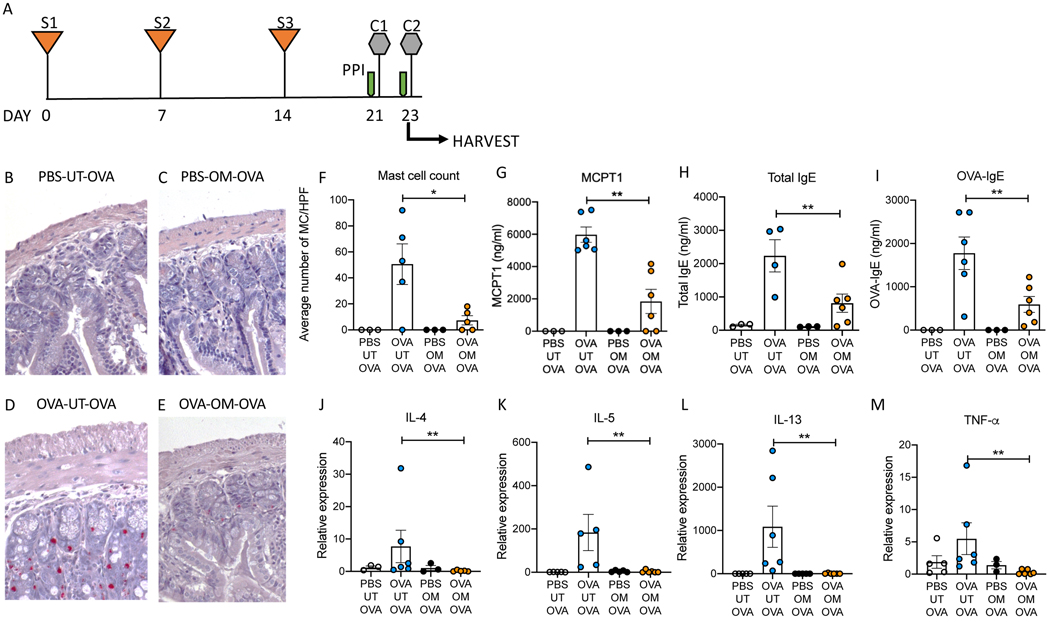
Figure 7.. Treatment with omeprazole blocks inflammation in a mouse model of ovalbumin-induced food allergy.
A) Experimental design (S: sensitization, C: challenge, PPI: proton pump inhibitor). B-E) Representative CAE-stained histological sections of small intestine from mice from each experimental group. F) Summary of average counts of mast cells per high power field. G) Serum concentrations of MCPT-1 at the experimental endpoint. H and I) Serum total and OVA-specific IgE concentrations at experimental endpoint. J-M) Expression of cytokine transcripts in the small intestines of mice from each experimental group at study endpoint. UT: Untreated, OM: Omeprazole, OVA: Ovalbumin. Data are shown are from one experiment representative of three independent experiments with n = 3–6 per group. Statistical analysis by one-way analysis of variance. *P<0.05, **P<0.01

Comment in

References

    1. Sicherer SH, Sampson HA. Food allergy: recent advances in pathophysiology and treatment. Annu Rev Med 2009; 60:261–77. - PubMed
    1. Sicherer SH, Sampson HA. Food allergy: Epidemiology, pathogenesis, diagnosis, and treatment. J Allergy Clin Immunol 2014; 133:291–307; quiz 8. - PubMed
    1. Renz H, Allen KJ, Sicherer SH, Sampson HA, Lack G, Beyer K, et al. Food allergy. Nat Rev Dis Primers 2018; 4:17098. - PubMed
    1. Oettgen HC, Burton OT. IgE receptor signaling in food allergy pathogenesis. Curr Opin Immunol 2015; 36:109–14. - PMC - PubMed
    1. Furuta GT, Katzka DA. Eosinophilic Esophagitis. N Engl J Med 2015; 373:1640–8. - PMC - PubMed

Publication types

MeSH terms