


Clinical effects of Shou-Wu Jiang-Qi Decoction combined acupuncture on the treatment of Polycystic Ovarian Syndrome with kidney deficiency, phlegm and blood stasisness: Study protocol clinical trial (SPIRIT Compliant)
- PMID: 32195930
- PMCID: PMC7220733
- DOI: 10.1097/MD.0000000000019045
Clinical effects of Shou-Wu Jiang-Qi Decoction combined acupuncture on the treatment of Polycystic Ovarian Syndrome with kidney deficiency, phlegm and blood stasisness: Study protocol clinical trial (SPIRIT Compliant)
Abstract
Background: Polycystic ovary syndrome (PCOS) is a female endocrine disease with a high incidence. At present, drug treatment is still the main therapeutic strategy for PCOS. Traditional Chinese medicine has a long history in the treatment of menstrual disorders. Shouwu Jiangqi Decoction (SWJQD) is a traditional herbal medicine prescribed in a clinical setting as a remedy for PCOS. Acupuncture also plays an important role in regulating the menstrual cycle and treating PCOS. This study aims to examine the efficacy and safety of the combination of SWJQD and acupuncture in the treatment of PCOS.
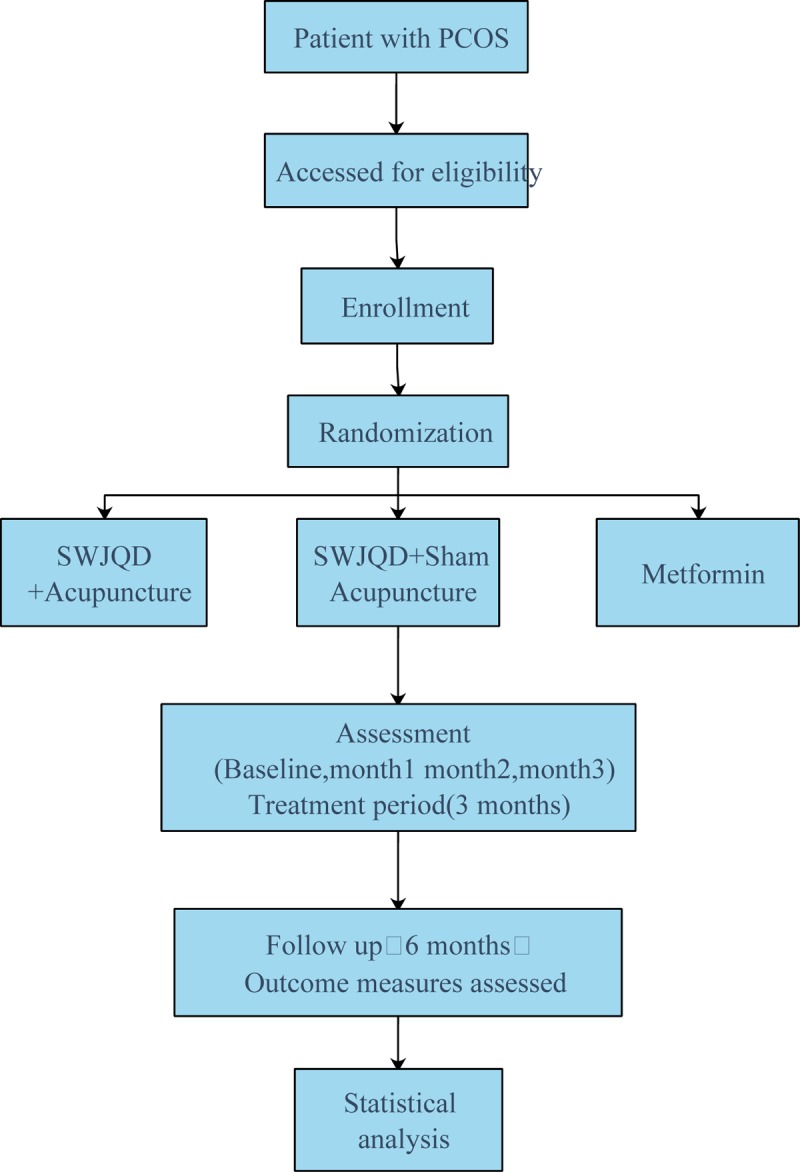
Methods: This randomized controlled trial will be conducted with a total of 81 participants diagnosed with PCOS. The participants will be randomly divided into 3 treatment groups: group A will receive SWJQD combined with acupuncture; group B, SWJQD combined with sham acupuncture; and group C, metformin. Each treatment will last 3 months. The primary outcomes include the Homeostatic Model Assessment of Insulin Resistance (HOMA-IR) index and the Oral Glucose Tolerance Test. The secondary outcome measures include sex hormone levels, body mass index, ovulation rate, clinical pregnancy rate, and complete genome sequencing data. Adverse events will be recorded during the intervention and follow-up.
Results: This study will investigate whether the combination of SWJQD and acupuncture can alleviate the clinical symptoms and improve insulin resistance in patients with PCOS. The results of this study are expected to provide clinical evidence for the application of the combination of SWJQD and acupuncture in patients with PCOS.
Trial registration: Chinese Clinical Trial Registry: ChiCTR1900028106, ChiMCT1900002826 (registered on December 12, 2019).
Conflict of interest statement
The authors have no conflicts of interest to disclose.
References
-
- Popovic M, Sartorius G, Christ-Crain M. Chronic low-grade inflammation in polycystic ovary syndrome: is there a (patho)-physiological role for interleukin-1? Semin Immunopathol 2019;41:447–59. - PubMed
-
- Barrea L, Marzullo P, Muscogiuri G, et al. Source and amount of carbohydrate in the diet and inflammation in women with polycystic ovary syndrome. Nutr Res Rev 2018;31:291–301. - PubMed
Publication types
MeSH terms
Substances
LinkOut - more resources
Full Text Sources
Medical
