


Live Feeds Used in the Larval Culture of Red Cusk Eel, Genypterus chilensis, Carry High Levels of Antimicrobial-Resistant Bacteria and Antibiotic-Resistance Genes (ARGs)
- PMID: 32197370
- PMCID: PMC7142716
- DOI: 10.3390/ani10030505
Live Feeds Used in the Larval Culture of Red Cusk Eel, Genypterus chilensis, Carry High Levels of Antimicrobial-Resistant Bacteria and Antibiotic-Resistance Genes (ARGs)
Abstract
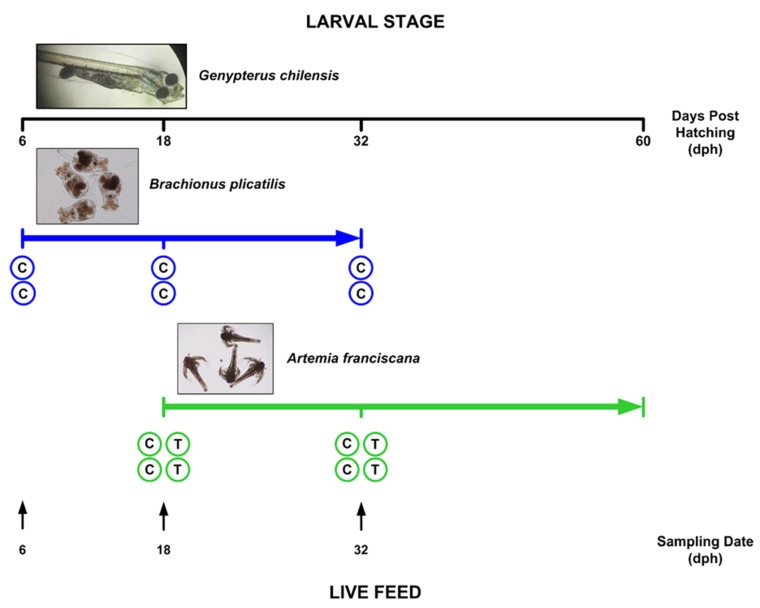
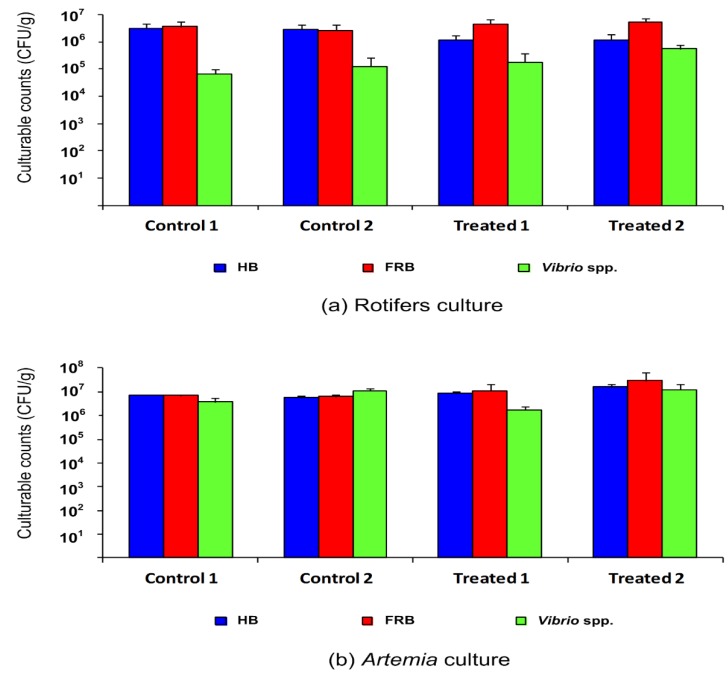
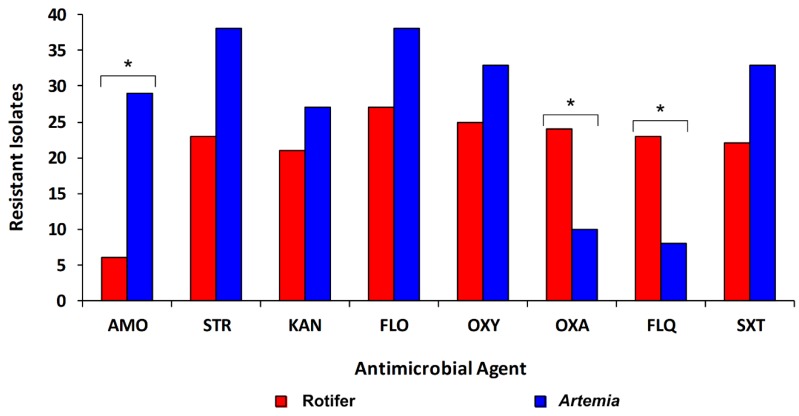
The culture of red cusk eel Genypterus chilensis is currently considered a priority for Chilean aquaculture but low larval survival rates have prompted the need for the continuous use of antibacterials. The main aim of this study was to evaluate the role of live feed as a source of antibacterial-resistant bacteria in a commercial culture of G. chilensis. Samples of rotifer and Artemia cultures used as live feed were collected during the larval growth period and culturable bacterial counts were performed using a spread plate method. Rotifer and Artemia cultures exhibited high levels of resistant bacteria (8.03 × 10⁴ to 1.79 × 10⁷ CFU/g and 1.47 × 10⁶ to 3.50 × 10⁸ CFU/g, respectively). Sixty-five florfenicol-resistant isolates were identified as Vibrio (81.5%) and Pseudoalteromonas (15.4%) using 16S rRNA gene sequence analysis. A high incidence of resistance to streptomycin (93.8%), oxytetracycline (89.2%), co-trimoxazole (84.6%), and kanamycin (73.8%) was exhibited by resistant isolates. A high proportion of isolates (76.9%) carried the florfenicol-resistance encoding genes floR and fexA, as well as plasmid DNA (75.0%). The high prevalence of multiresistant bacteria in live feed increases the incidence of the resistant microbiota in reared fish larvae, thus proper monitoring and management strategies for live feed cultures appear to be a priority for preventing future therapy failures in fish larval cultures.
Keywords: Artemia; Genypterus chilensis; fexA; floR; florfenicol; live feed; red cusk eel; resistant bacteria; rotifer; vibrios.
Conflict of interest statement
The authors declare no conflict of interest.
Figures
References
-
- Jara-Seguel P., Ubilla A., Estrada J.M., Ramírez D., Valdebenito I. Nuclear DNA content in the red conger eel Genypterus chilensis (Guichenot, 1881) (Actinopterygii: Ophidiidae) Gayana. 2011;75:198–200. doi: 10.4067/S0717-65382011000200010. - DOI
-
- Córdova-Alarcón V.R., Araneda C., Jilberto F., Magnolfi P., Toledo M.I., Lam N. Genetic Diversity and Population Structure of Genypterus chilensis, a Commercial Benthic Marine Species of the South Pacific. Front. Mar. Sci. 2019;6:748. doi: 10.3389/fmars.2019.00748. - DOI
-
- Levican A., Avendaño-Herrera R. Bacteria associated with mass mortality of post-larvae of red conger eel (Genypterus chilensis) cultured in a Chilean farm. Bull. Eur. Assoc. Fish Pathol. 2015;35:162–169.
-
- Levican A., Lasa A., Irgang R., Romalde J.L., Poblete-Morales M., Avendaño-Herrera R. Isolation of Vibrio tapetis from two native fish species (Genypterus chilensis and Paralichthys adspersus) reared in Chile and description of Vibrio tapetis subsp. quintayensis subsp. nov. Int. J. Syst. Evol. Microbiol. 2017;67:716–723. doi: 10.1099/ijsem.0.001705. - DOI - PubMed
Grants and funding
LinkOut - more resources
Full Text Sources
