


Detection of Early Disease Risk Factors Associated with Metabolic Syndrome: A New Era with the NMR Metabolomics Assessment
- PMID: 32197513
- PMCID: PMC7146483
- DOI: 10.3390/nu12030806
Detection of Early Disease Risk Factors Associated with Metabolic Syndrome: A New Era with the NMR Metabolomics Assessment
Abstract
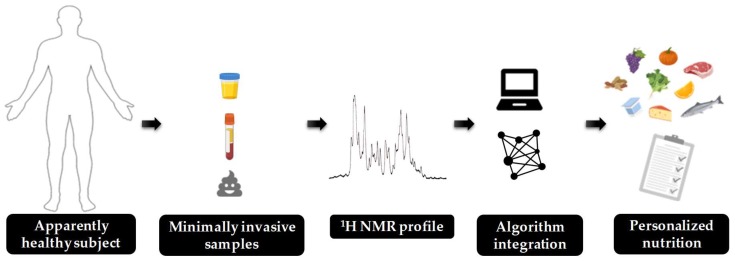
The metabolic syndrome is a multifactorial disease developed due to accumulation and chronification of several risk factors associated with disrupted metabolism. The early detection of the biomarkers by NMR spectroscopy could be helpful to prevent multifactorial diseases. The exposure of each risk factor can be detected by traditional molecular markers but the current biomarkers have not been enough precise to detect the primary stages of disease. Thus, there is a need to obtain novel molecular markers of pre-disease stages. A promising source of new molecular markers are metabolomics standing out the research of biomarkers in NMR approaches. An increasing number of nutritionists integrate metabolomics into their study design, making nutrimetabolomics one of the most promising avenues for improving personalized nutrition. This review highlight the major five risk factors associated with metabolic syndrome and related diseases including carbohydrate dysfunction, dyslipidemia, oxidative stress, inflammation, and gut microbiota dysbiosis. Together, it is proposed a profile of metabolites of each risk factor obtained from NMR approaches to target them using personalized nutrition, which will improve the quality of life for these patients.
Keywords: carbohydrate dysfunction; dyslipidemia; gut microbiota; inflammation; metabolic syndrome; metabolism deregulation; metabolomics; molecular biomarker; nutritional habits; oxidative stress; prevention.
Conflict of interest statement
The authors declare no conflict of interest.
Figures
References
Publication types
MeSH terms
Substances
LinkOut - more resources
Full Text Sources
Medical
