


Effects of HIV status on non-metastatic cervical cancer progression among patients in Lusaka, Zambia
- PMID: 32200353
- PMCID: PMC7773152
- DOI: 10.1136/ijgc-2019-000987
Effects of HIV status on non-metastatic cervical cancer progression among patients in Lusaka, Zambia
Abstract
Introduction: Sub-Saharan Africa has the highest global incidence of cervical cancer. Cervical cancer is the most common cause of cancer morbidity and mortality among women in Zambia. HIV increases the risk for cervical cancer and with a national Zambian adult HIV prevalence of 16%, it is important to investigate the impact of HIV on the progression of cervical cancer. We measured differences in cervical cancer progression between HIV-positive and HIV-negative patients in Zambia.
Methods: This study included 577 stage I and II cervical cancer patients seen between January 2008 and December 2012 at the Cancer Diseases Hospital in Lusaka, Zambia. The inclusion criteria for records during the study period included known HIV status and FIGO stage I and II cervical cancer at initial date of registration in the Cancer Diseases Hospital. Medical records were abstracted for clinical and epidemiological data. Cancer databases were linked to the national HIV database to assess HIV status among cervical cancer patients. Logistic regression examined the association between HIV and progression, which was defined as metastatic or residual tumor after 3 months of initial treatment.
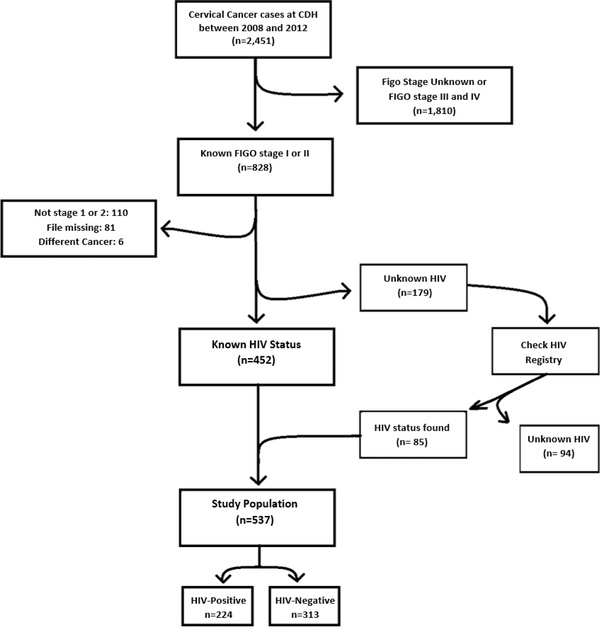
Results: A total of 2451 cervical cancer cases were identified, and after exclusion criteria were performed the final analysis population totaled 537 patients with stage I and II cervical cancer with known HIV status (224 HIV-positive and 313 HIV-negative). HIV-positive women were, on average, 10 years younger than HIV-negative women who had a median age of 42, ranging between 25 and 72. A total of 416 (77.5%) patients received external beam radiation, and only 249 (46.4%) patients received the recommended treatment of chemotherapy, external beam radiation, and brachytherapy. Most patients were stage II (85.7%) and had squamous cell carcinoma (74.7%). HIV-positive patients were more likely to receive lower doses of external beam radiation than HIV-negative patients (47% vs 37%; P<0.05, respectively). The median total dose of external beam radiation for HIV-positive and HIV-negative patients was 46 Gy and 50 Gy, respectively. HIV positivity did not lead to tumor progression (25.4% in HIV-positive vs 23.9% in HIV-negative, OR 1.04, 95% CI [0.57, 1.92]). However, among a subset of HIV-positive patients, longer duration of infection was associated with lower odds of progression.
Conclusion: There was no significant impact on non-metastatic cervical cancer progression by HIV status among patients in Lusaka, Zambia. The high prevalence of HIV among cervical cancer patients suggest that HIV-positive patients should be a primary target group for HPV vaccinations, screening, and early detection.
Keywords: carcinoma; cervical cancer; cervix uteri.
© IGCS and ESGO 2020. No commercial re-use. See rights and permissions. Published by BMJ.
Conflict of interest statement
Competing interests: None declared.
Figures
References
-
- Torre LA, Bray F, Siegel RL, et al. Global cancer statistics, 2012. CA Cancer J Clin 2015;65:87–108. - PubMed
-
- Bray F, Ferlay J, Soerjomataram I, et al. Global cancer statistics 2018: GLOBOCAN estimates of incidence and mortality worldwide for 36 cancers in 185 countries. CA Cancer J Clin 2018;68:394–424. - PubMed
